In the works since 1999, the Centennial Project by Tejon Ranch Co. seemed to have cleared its final hurdle in 2018, but a Los Angeles County court ruling has created another hurdle for the sprawling development.


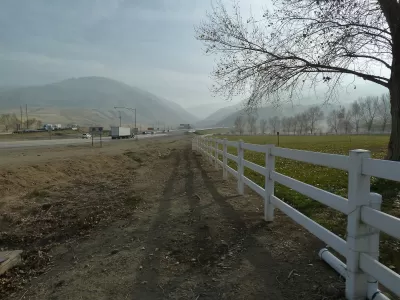
Los Angeles County Superior Court Judge Mitchell Beckloff rejected the environmental impact report (EIR) for the massive Centennial project planned for northern Los Angeles County, one of the most controversial and closely watched master planning developments in Southern California in recent memory.
Louis Sahagun reports on the latest twist in the long saga of the Centennial project, a proposal approved by the county of Los Angeles to allow Tejon Ranch Co. to build 19,300 homes on 6,700 acres on the border with Kern County to the north.
The county approved the EIR for the project in 2018, a decade after a historic agreement between the developer and environmental groups cleared the way for the developer to move forward free of resistance from most of the high-profile conservation organizations.
Since the approval of the EIR, the project has been frequently referenced in conversations about development in the state's wildland-urban interface as wildfires have worsened around the state in recent years. The court decision specifically cited wildfire risk, in addition to the greenhouse gas emissions caused by additional vehicle miles traveled as a result of the project, in its decision.
"Beckloff found that the environmental review failed to buttress its conclusion that the project would not significantly increase the risk of wildfire in a region prone to wildfires. Although the judge found the developer’s on-site analysis to be 'sufficient,' he found discussion of surrounding off-site impacts, such as wind-driven embers, to be 'problematic,'" explains Sahagun in more detail. "The judge also found that the developer mistakenly claimed that the cap-and-trade program would reduce 96% of its greenhouse gas emissions, which cause climate change."
Sahagun also reports that the developer isn't abandoning the project, stating after the ruling its intentions to work with the county to resolve remaining issues in the project proposal.
FULL STORY: Citing high wildfire risk, judge halts construction of massive Tejon Ranch development


Nearly a third of US housing is in the wildland-urban interface — and at growing risk of wildfire
As suburbs increasingly mingle with undeveloped land, homes face a higher risk from destructive fires.

California Adopts CEQA Reforms for Infrastructure, Leaves Out Residential
The state of California adopted reforms to the California Environmental Quality Act (CEQA) pertaining to climate-friendly infrastructure projects, but residential development interests hoping for relief from CEQA will have to wait.

Planning for Proximity, for the Climate’s Sake
A new global platform will help the world identify and encourage opportunities for more proximity in the built environment—development patterns that can help reduce sources of greenhouse gas emissions and other forms of pollution if built well.

The state-sanctioned urbicide of Austin
People don’t kill cities. Freeways do.

US to reduce Colorado River water deliveries to Mexico
A new Colorado Treaty amendment reduces Mexico’s Colorado River water allocation by 250,000 acre feet.

New Jersey’s second-largest city bans standalone data centers
Jersey City will continue to allow co-location facilities, such as those meant for research institutions that store their own data.

Amtrak not solely to blame for New Jersey commuter rail's unreliability, report finds
A new study from the Garden State Initiative found that NJ Transit’s budget grew 20% across a 4 year period, but reliability declined significantly over the same period.

EPA erases limits on planet-warming pollution from power plants
Under Monday’s plan, power plants would still have some limits on how much mercury, arsenic and other contaminants they can emit.

Phoenix announces new on-demand transit service, more frequent RAPID buses
Both new services will launch in October, and are part of Phoenix's Project Effective Access Solutions for Easing Congestion.

FREE Course: Walkable City 1: Why Walkability?
After describing his path towards focusing on walkability as the essence of good planning, Jeff Speck marches through his five principal reasons for making more walkable places.
Reinventing Malls: Planning Alchemy—Turning Gray Fields Into Gold
The course focuses on the opportunities and imperatives that shape reinvention of mall sites.


Eagle County Government
Harvard University Graduate School of Design
Nashville Planning Department
The Architects Foundation
University of Cincinnati Online
The Pocatello Development Authority
The Urban Renewal Agency of the City of Pocatello
Journal of the American Planning Association