Planners are working quickly to refine a proposal for a $1.8 billion project connecting the 680 corridor in the East Bay Area to bedroom communities in the Central Valley.



"A newly-formed transit authority is moving at a lightning pace to design and build a rail link between the Dublin/Pleasanton BART station and Lathrop in the Central Valley," reports Erin Baldassari. The newly formed rail authority is known as the Tri-Valley-San Joaquin Valley Regional Rail Authority.
"The authority’s governing board last month released its vision for the Valley Link: a 10-station commuter line, with BART-like service in the Tri-Valley, that could start carrying passengers in five to seven years."
According to Baldassari, the new rail link could come as welcome relief to super commuters traveling between the far East Bay and the Central Valley, which is an increasingly common practice in what officials are calling the "megaregion."
The article includes a lot more details on what the new rail line could deliver in terms of service, and what to expect from next steps in the planning process.
FULL STORY: Meet the Valley Link: Your ticket out of mega-commuting hell

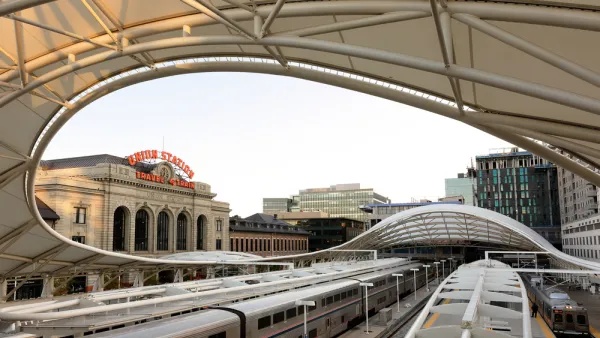
B Line Commuter Rail Extension Gets a Green Light in Colorado
The Board of Directors for the Regional Transportation District has given a preliminary green light to accelerate planning work on the B Line extension from Denver to Boulder and Longmont.
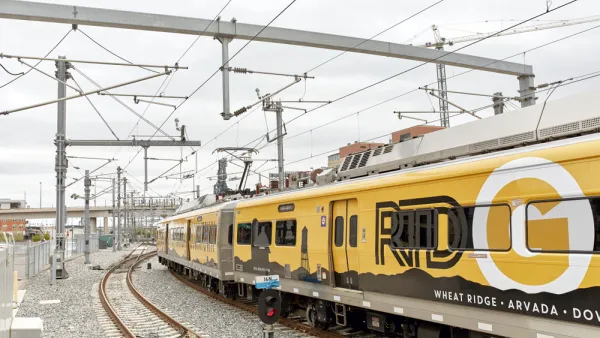
Political Pressure Reinvigorates B Line Extension Plans in Colorado
The CEO of the Regional Transportation District speculated recently about whether a planned extension of the B Line to Boulder was necessary or desirable. The governor doesn't think the speculation was necessary or desirable.

San Diego High-Speed Rail Plan Counts on Future Density
Despite slowing population growth statewide, officials believe the region will "grow into" the new rail system if cities promote dense development around transit stations.

Planetizen Federal Action Tracker
A weekly monitor of how Trump’s orders and actions are impacting planners and planning in America.

The state-sanctioned urbicide of Austin
People don’t kill cities. Freeways do.

US to reduce Colorado River water deliveries to Mexico
A new Colorado Treaty amendment reduces Mexico’s Colorado River water allocation by 250,000 acre feet.

5 New England states march closer to 800 megawatt wind energy project
Securing federal approval for the project may be complicated under the Trump administration, which has historically been hostile towards domestic wind power.

Baltimore to break ground on $50 million Transit Priority Project
The project will bring faster bus trips, safer streets and better bike connections to Baltimore.

Airbnb launches $250 million 'last-dollar financing' housing accelerator, makes first investment in Austin
The company will put $6.4 million towards affordable housing development in Texas’ capital.

FREE Course: Walkable City 1: Why Walkability?
After describing his path towards focusing on walkability as the essence of good planning, Jeff Speck marches through his five principal reasons for making more walkable places.
Reinventing Malls: Planning Alchemy—Turning Gray Fields Into Gold
The course focuses on the opportunities and imperatives that shape reinvention of mall sites.

Eagle County Government
Harvard University Graduate School of Design
Nashville Planning Department
The Architects Foundation
University of Cincinnati Online
The Pocatello Development Authority
The Urban Renewal Agency of the City of Pocatello
Journal of the American Planning Association