This year’s round of Safe Streets for All grant criteria come with some changes.


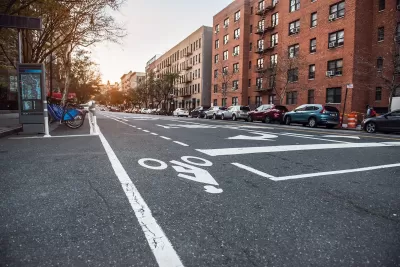
Wondering what’s going on with the Safe Streets and Roads for All (SS4A) grant program? An explainer from Transportation for America outlines changes to the program, which released its Notice of Funding Opportunity (NOFO) for the FY2025 round earlier this month.
According to the article, “Of the available funding, $580 million is intended for implementation grants, while $402.3 million (or 40 percent) is set aside for planning and demonstration grants. Applicants can seek planning funds for road safety action plans, supplemental planning, or quick-build demonstration projects.”
The program has eliminated some prior criteria related to “Economic competitiveness, equity considerations, workforce, and the climate.” The program will also take a negative view of projects that would reduce car lanes or capacity.
SS4A’s funding has been instrumental in helping cities deploy quick-build pilot projects that can provide data before cities make permanent changes. The article also includes some strategies for applicants seeking out these grants.
Read the full story: What to know about this year’s SS4A funding
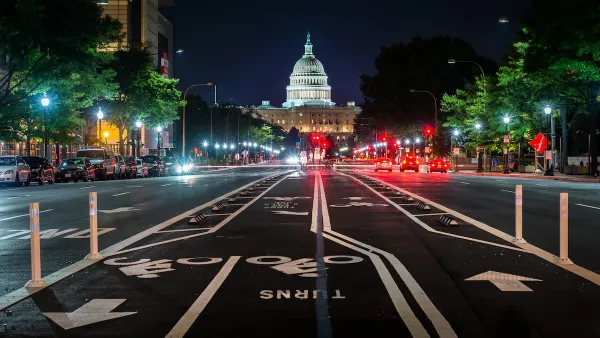
Safe Streets Funding in Jeopardy
The Trump administration is specifically targeting bike infrastructure and other road safety projects in its funding cuts.
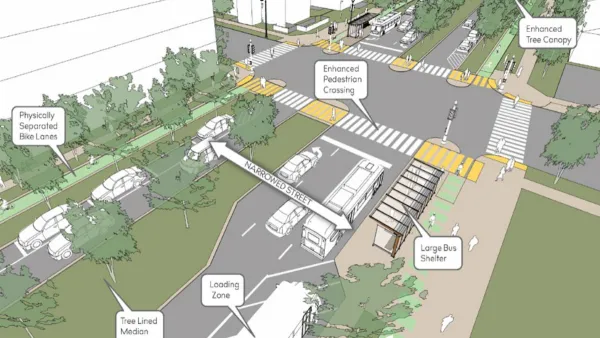
Trump Killed Funding for Milwaukee's Dreamy Multimodal Street. They're Determined to Make it Happen Anyway.
The administration rescinded a $36 million Reconnecting Communities grant aimed at redesigning a 2.6-mile segment of 6th Street.
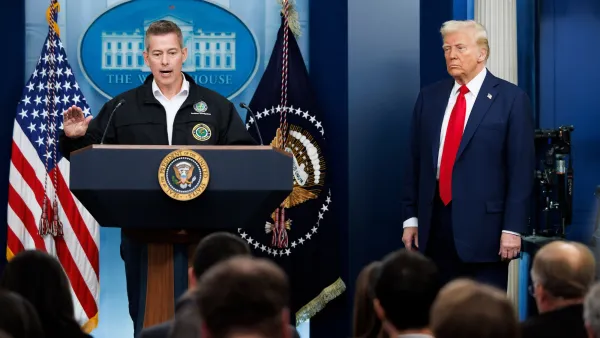
USDOT secretary plans to pull $1.73B from 'DEI bike lanes'
The move jeopardizes dozens of road safety projects around the country.

Planetizen Federal Action Tracker
A weekly monitor of how Trump’s orders and actions are impacting planners and planning in America.

Washington state to charge fee to drivers with fuel-efficient cars
Revenue from the fee will go towards supporting the state’s highways.

Illinois considers spending $1 billion in taxpayer money on data center
A quantum computing campus and data center are currently under construction in Chicago.

Trump to blast ‘hydrocarbon highway’ through ‘world’s longest art gallery’
Environmental and historic preservation groups are suing to stop the project.

25 states cast bids to be the home of U.S. Space Academy
The academy will train scientists, officers and astronauts for the U.S. Space Force.

Trump’s emergency orders to resuscitate coal plants cost ratepayers $593 million
Keeping coal plants on life support in Florida has cost ratepayers there $25.6 million.

FREE Course: Walkable City 1: Why Walkability?
After describing his path towards focusing on walkability as the essence of good planning, Jeff Speck marches through his five principal reasons for making more walkable places.
Reinventing Malls: Planning Alchemy—Turning Gray Fields Into Gold
The course focuses on the opportunities and imperatives that shape reinvention of mall sites.

City of Charlotte
City of Rosemead
Rutgers University, Edward J. Bloustein School of Planning and Public Policy
University of Michigan School for Environment and Sustainability (SEAS)
Hunter College, City University of New York (CUNY)
The Architects Foundation
University District Partnership