The law could set a new precedent for speed limiting tech on U.S. vehicles.


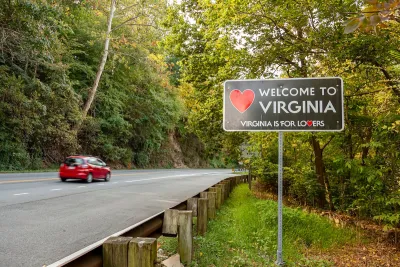
A Virginia state law expected to go into effect in 2026 allows judges to mandate speed limiting devices on the vehicles of drivers convicted of driving 100 miles per hour or more. “Advocates said the measure would not only prevent deadly crashes and minimize reckless driving, but also serve as a model for future legislation,” writes Aaron Short in Streetsblog USA.
According to Short, “The new rule, approved by Republican Gov. Glenn Youngkin late last month and expected to go into effect in July 2026, will enable judges to force drivers convicted of going over 100 miles per hour to install a ‘speed governor’ in their vehicles.”
Washington, D.C. approved the devices in February 2024, and other states — New York, Washington State, Maryland, Georgia, Arizona, and California — are considering similar legislation. In 2022, the National Transportation Safety Board (NTSB) suggested the federal government should require or incentivize speed limiter systems on cars.
FULL STORY: Virginia’s new speed-limiting device law could inspire other states


After San Francisco installed traffic cameras, speeding dropped by 80%
The city was allowed to install speed cameras as part of a five-year pilot program approved by California in 2023.

Hard-to-Trace ‘Ghost Cars’ Cost NYC Over $100M in Annual Revenue
Cars with illegal or missing license plates are more likely to drive dangerously and owe unpaid fines.

Data Shows Chicago Speed Cameras Reduce Speeding, Crashes
Countering claims made by the Chicago Tribune that automated enforcement doesn’t improve safety, Streetsblog Chicago lays out the data showing how traffic safety fared in camera zones.

Planetizen Federal Action Tracker
A weekly monitor of how Trump’s orders and actions are impacting planners and planning in America.

The state-sanctioned urbicide of Austin
People don’t kill cities. Freeways do.

US to reduce Colorado River water deliveries to Mexico
A new Colorado Treaty amendment reduces Mexico’s Colorado River water allocation by 250,000 acre feet.

5 New England states march closer to 800 megawatt wind energy project
Securing federal approval for the project may be complicated under the Trump administration, which has historically been hostile towards domestic wind power.

Baltimore to break ground on $50 million Transit Priority Project
The project will bring faster bus trips, safer streets and better bike connections to Baltimore.

Airbnb launches $250 million 'last-dollar financing' housing accelerator, makes first investment in Austin
The company will put $6.4 million towards affordable housing development in Texas’ capital.

FREE Course: Walkable City 1: Why Walkability?
After describing his path towards focusing on walkability as the essence of good planning, Jeff Speck marches through his five principal reasons for making more walkable places.
Reinventing Malls: Planning Alchemy—Turning Gray Fields Into Gold
The course focuses on the opportunities and imperatives that shape reinvention of mall sites.

Eagle County Government
Harvard University Graduate School of Design
Nashville Planning Department
The Architects Foundation
University of Cincinnati Online
The Pocatello Development Authority
The Urban Renewal Agency of the City of Pocatello
Journal of the American Planning Association