Residents can swap depleted batteries for fully charged ones as well as charge and park their devices at two pilot sites.


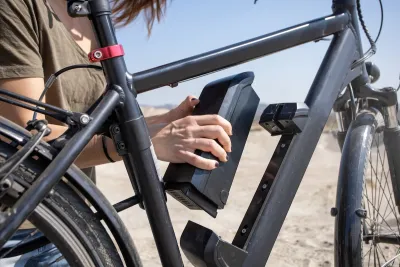
Jersey City is launching an e-bike and scooter battery swap program, offering residents a way to quickly exchange depleted batteries and reduce the risk of battery fires in indoor settings.
According to a piece by Dan Zukowski in Smart Cities Dive, a pilot program in New York City last year that offered battery swaps to some delivery workers saw 12,000 uses and reduced at-home charging by over one-third.
“The Jersey City battery swapping program, offered at two locations, will allow commuters, delivery workers and other micromobility users to access fully charged batteries that are UL certified as safe.” The sites also offer charging and parking for micromobility devices.
A $3.8 million federal grant from the U.S. Joint Office of Energy and Transportation meant to fund bike parking and battery swapping stations in Jersey City and Minneapolis is on hold after executive actions targeted sustainable transportation programs for elimination.
FULL STORY: Jersey City launches battery swapping program for e-bikes, scooters

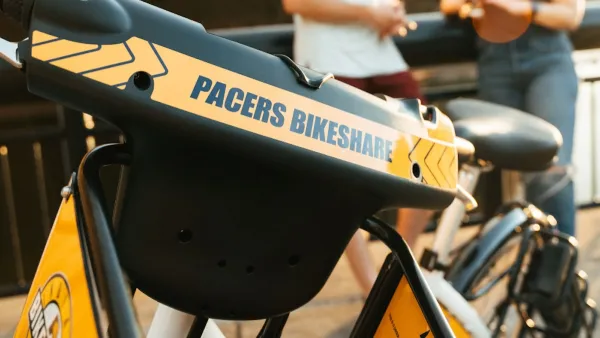
Indy Bike Share Sees Sharp Growth Thanks to Free Pass Program
A new fleet of e-bikes and free access for Marion County residents are getting more people on bikes.
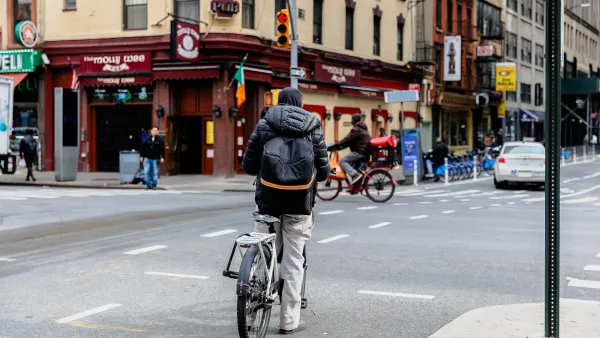
NYC e-bike injury study highlights 'critical infrastructure deficiencies'
The sharp rise in e-mobility injuries points to a need for safer roads, not more punitive laws.
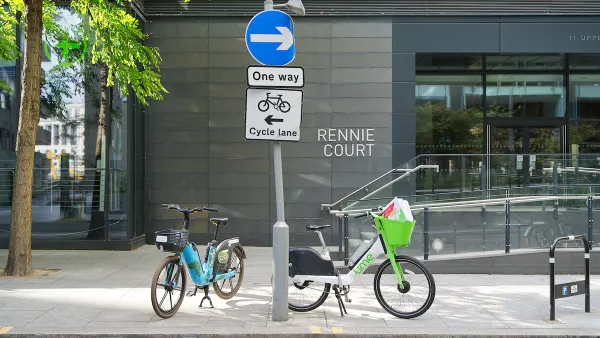
Dockless Bikes Seized as City of London Cracks Down on Parking
Lime and Forest paid £25,000 in fines to retrieve their property and are negotiating solutions with transportation authorities.

Planetizen Federal Action Tracker
A weekly monitor of how Trump’s orders and actions are impacting planners and planning in America.

The state-sanctioned urbicide of Austin
People don’t kill cities. Freeways do.

US to reduce Colorado River water deliveries to Mexico
A new Colorado Treaty amendment reduces Mexico’s Colorado River water allocation by 250,000 acre feet.

5 New England states march closer to 800 megawatt wind energy project
Securing federal approval for the project may be complicated under the Trump administration, which has historically been hostile towards domestic wind power.

Baltimore to break ground on $50 million Transit Priority Project
The project will bring faster bus trips, safer streets and better bike connections to Baltimore.

Airbnb launches $250 million 'last-dollar financing' housing accelerator, makes first investment in Austin
The company will put $6.4 million towards affordable housing development in Texas’ capital.

FREE Course: Walkable City 1: Why Walkability?
After describing his path towards focusing on walkability as the essence of good planning, Jeff Speck marches through his five principal reasons for making more walkable places.
Reinventing Malls: Planning Alchemy—Turning Gray Fields Into Gold
The course focuses on the opportunities and imperatives that shape reinvention of mall sites.

Eagle County Government
Harvard University Graduate School of Design
Nashville Planning Department
The Architects Foundation
University of Cincinnati Online
The Pocatello Development Authority
The Urban Renewal Agency of the City of Pocatello
Journal of the American Planning Association