City officials acknowledge Dallas lags behind in bicycle infrastructure, but a new plan could change that.


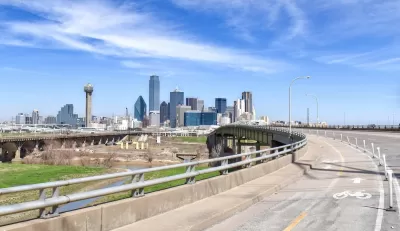
Dallas officials are proposing a new bike plan that would add 200 miles of bike lanes to the city over the next two decades, noting that Dallas, with its 204 miles of existing bike lanes, lags far behind other Texas cities like Houston (518 miles) and Austin (538 miles) in bike infrastructure.
According to a WFAA article by Rachel Snyder, “The first phase of the city’s new bike plan, to add 27 miles of new bike lanes, trails and more to the city’s network over the next five years, is mostly funded, city officials say.”
A 2022 survey ranked Dallas as the least bikeable of 50 major U.S. cities. “According to Share The Road Texas, an organization focused on bike safety on college campuses, there were 21 deaths in Dallas County from bicycle crashes from 2010 to 2016 and 1,439 crashes. Harris, Travis, Bexar, Dallas and Tarrant Counties saw the most bicycle crashes in the state during that period.”
Read the full story: Dallas bike plan to add hundreds of miles of new bike lanes and trails moves forward


USDOT secretary plans to pull $1.73B from 'DEI bike lanes'
The move jeopardizes dozens of road safety projects around the country.

El Paso has Built 1,000 Miles of Bike Lanes in 10 Years
The city is now asking the public for input on updates to its bike plan.
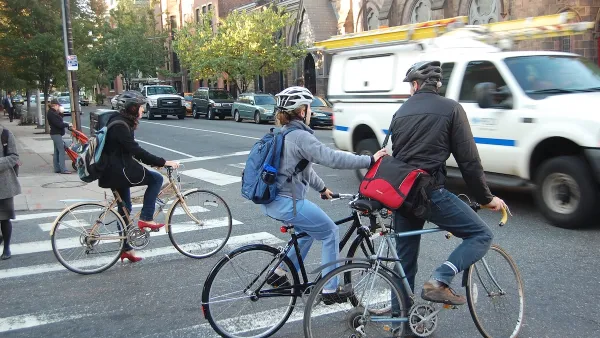
Philadelphia Swaps Car Lanes for Bikeways in Unanimous Vote
The project will transform one of the handful of streets responsible for 80% of the city’s major crashes.

Planetizen Federal Action Tracker
A weekly monitor of how Trump’s orders and actions are impacting planners and planning in America.

California plans to bury El Niño’s downpour
If the state plays its cards right, it may be able to store a billion acre-feet of El Niño’s water in aquifers.

Desperate measures: Advocates weigh draining Lake Powell to fill Colorado River
Draining the reservoir could reduce evaporation losses by a couple hundred thousand acre-feet.

After public outcry, Massachusetts city releases housing development tracker
Cambridge’s tracker currently shows 250 housing projects in various stages of development.

40 years after approval, Chicago breaks ground on new park
The park honors Jean Baptiste Point du Sable, the city’s first permanent non-native settler.

‘Hoodwinked:’ New Mexico bill aimed at microgrids paves way for data center development
In an interview with High Country News, Padilla said the legislation “ignited” New Mexico's economy.

FREE Course: Walkable City 1: Why Walkability?
After describing his path towards focusing on walkability as the essence of good planning, Jeff Speck marches through his five principal reasons for making more walkable places.
Reinventing Malls: Planning Alchemy—Turning Gray Fields Into Gold
The course focuses on the opportunities and imperatives that shape reinvention of mall sites.

City of Rosemead
Rutgers University, Edward J. Bloustein School of Planning and Public Policy
One Hundred Miles
Hunter College, City University of New York (CUNY)
The Architects Foundation
University of Cincinnati Online
City of Cambridge
Montrose County
The Pocatello Development Authority