Metro officials say the new plan for the Iner Katy Project addresses more immediate needs by replacing dedicated bus lanes with HOV lanes.



The Harris County Metropolitan Transportation Authority (Metro) is backpedaling on plans to add dedicated bus lanes as part of its Inner Katy Project, opting instead for high occupancy vehicle (HOV) lanes.
As Janet Miranda explains in the Houston Chronicle, “The new project tweaks the two elevated bus-only lanes to be built adjacent to the freeway into HOV lanes as part of the agency's push for "METRONow" initiatives. The change seems to prioritize car drivers first, leaving bus riders out of the equation, at least at first.” The project still includes high-speed bus stations along the HOV lanes.
The agency defended the decision by saying “It is our responsibility to the greater Houston area to focus on mobility solutions that prioritize ridership, provide services that are useful, and address community needs that exist now.” Although voters approved a plan called METRONext in 2019 that calls for 75 miles of BRT across the city, the agency is dubbing its new plan METRONow, saying it more closely aligns with current needs.
The city has been ‘quietly shelving’ multimodal projects including the University BRT line and bike lanes on McGowen, prompting an outcry from mobility and road safety advocates.
FULL STORY: METRO's Inner Katy Line project scraps bus-only lanes for HOV lanes

Making Space for Buses
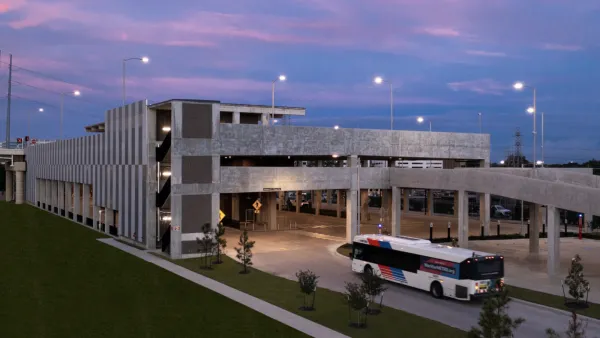
In Houston, transit officials are working to balance plans for a new bus rapid transit line with existing street trees and traffic lanes.

Experts Reject Florida Study That Killed St. Pete Bus Lane as ‘Incomplete,’ ‘Unfair’
A transit activist has filed a suit against FDOT, which used a a one-page study to justify removing a dedicated bus lane.
Madison BRT a Midwest Rarity
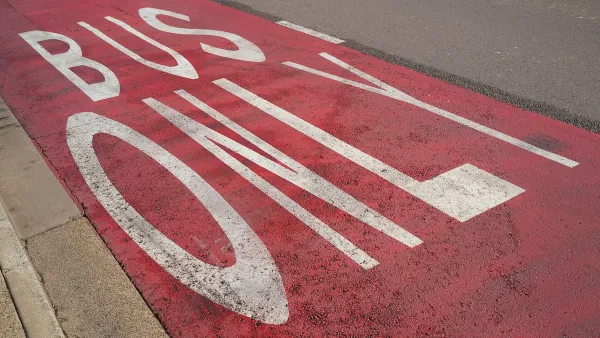
Despite the benefits, just three Midwestern cities have bus rapid transit lines.

The state-sanctioned urbicide of Austin
People don’t kill cities. Freeways do.

US to reduce Colorado River water deliveries to Mexico
A new Colorado Treaty amendment reduces Mexico’s Colorado River water allocation by 250,000 acre feet.

New Jersey’s second-largest city bans standalone data centers
Jersey City will continue to allow co-location facilities, such as those meant for research institutions that store their own data.

Amtrak not solely to blame for New Jersey commuter rail's unreliability, report finds
A new study from the Garden State Initiative found that NJ Transit’s budget grew 20% across a 4 year period, but reliability declined significantly over the same period.

EPA erases limits on planet-warming pollution from power plants
Under Monday’s plan, power plants would still have some limits on how much mercury, arsenic and other contaminants they can emit.

Phoenix announces new on-demand transit service, more frequent RAPID buses
Both new services will launch in October, and are part of Phoenix's Project Effective Access Solutions for Easing Congestion.

FREE Course: Walkable City 1: Why Walkability?
After describing his path towards focusing on walkability as the essence of good planning, Jeff Speck marches through his five principal reasons for making more walkable places.
Reinventing Malls: Planning Alchemy—Turning Gray Fields Into Gold
The course focuses on the opportunities and imperatives that shape reinvention of mall sites.

Eagle County Government
Harvard University Graduate School of Design
Nashville Planning Department
The Architects Foundation
University of Cincinnati Online
The Pocatello Development Authority
The Urban Renewal Agency of the City of Pocatello
Journal of the American Planning Association