Despite the benefits, just three Midwestern cities have bus rapid transit lines.


Writing in Streetsblog Chicago, Steven Vance describes his experience using Madison, Wisconsin’s bus rapid transit (BRT) system, whose new Rapid Route A line opened last September.
The line features dedicated center bus lanes, level boarding, and faster ticketing and service. “The first thing I noticed at the First Street station was the extensive shelter. Not only was there a canopy, but side walls enclosing the shelter from the ‘roof’ to the ground, overhead heating, skylights, and openings aligned with the buses’ doors.”
Riders can pay by tapping their cards on readers after boarding the bus. As Vance explains, “Being able to alight via any door is part of the BRT standard, which was created and stays updated by the Institute for Transportation Development Policy (ITDP).”
The buses also include a designated area for bikes inside the bus, whereas most buses have bike riders use front-mounted exterior racks. What most impressed Vance was the speed and efficiency of the bus line, which is due to its dedicated lanes and signal prioritization.
Vance notes that only two other Midwest cities have true BRT: Indianapolis and Cleveland. While Chicago had plans for multiple BRT lines, they’ve all been scrapped in favor of other projects.
FULL STORY: Taking a ride on Madison’s new (and quick) bus rapid transit line


Experts Reject Florida Study That Killed St. Pete Bus Lane as ‘Incomplete,’ ‘Unfair’
A transit activist has filed a suit against FDOT, which used a a one-page study to justify removing a dedicated bus lane.
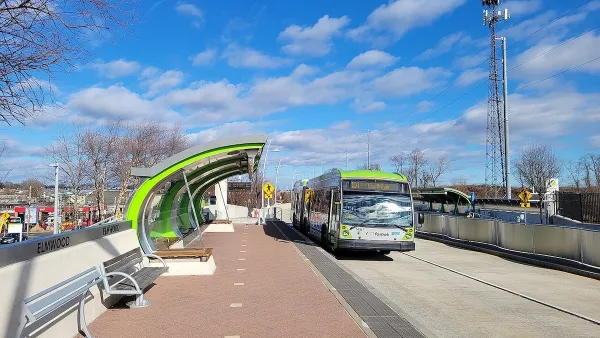
Connecticut Bus System Earns Top Ranking
Hartford’s CTfastrak system wins out over other US bus networks for service quality and connectivity.
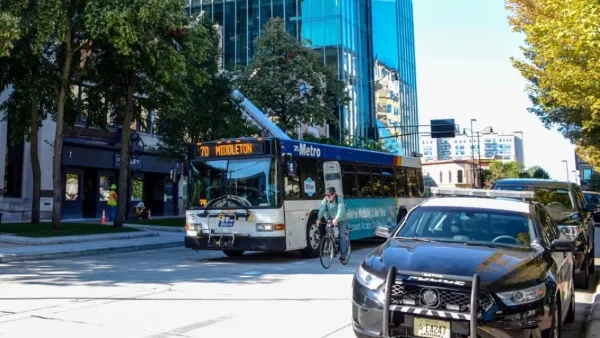
Madison BRT Line to Open Next Year
The city’s bus rapid transit service will be the second BRT system in Wisconsin.

Planetizen Federal Action Tracker
A weekly monitor of how Trump’s orders and actions are impacting planners and planning in America.

The state-sanctioned urbicide of Austin
People don’t kill cities. Freeways do.

US to reduce Colorado River water deliveries to Mexico
A new Colorado Treaty amendment reduces Mexico’s Colorado River water allocation by 250,000 acre feet.

Airbnb launches $250 million 'last-dollar financing' housing accelerator, makes first investment in Austin
The company will put $6.4 million towards affordable housing development in Texas’ capital.

Guerilla urbanists are building DIY bus stop benches in Chicago
A before-and-after of one of the bus stops with a new bench. The new benches are not officially sanctioned or permitted, but the residents who placed them hope they will be the start of a network of DIY benches across the city.

Mamdani overhauls NYC's Vision Zero plan with 100 new policy goals
The overhaul aims to reduce traffic deaths and make streets safer for pedestrians, cyclists and drivers through lower speed limits, new safety infrastructure and more.

FREE Course: Walkable City 1: Why Walkability?
After describing his path towards focusing on walkability as the essence of good planning, Jeff Speck marches through his five principal reasons for making more walkable places.
Reinventing Malls: Planning Alchemy—Turning Gray Fields Into Gold
The course focuses on the opportunities and imperatives that shape reinvention of mall sites.

Eagle County Government
Harvard University Graduate School of Design
Nashville Planning Department
The Architects Foundation
University of Cincinnati Online
The Pocatello Development Authority
The Urban Renewal Agency of the City of Pocatello
Journal of the American Planning Association