A new megaproject hopes to bring new life to a former industrial site.


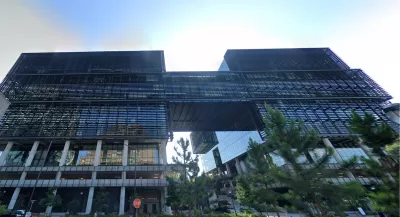
In a piece for Metropolis, Sam Lubell describes the latest ‘megaproject’ on Atlanta’s Beltline, a former rail corridor that Lubell calls “the most successful urban regenerator since New York’s High Line.”
The project, Fourth Ward, will be a mixed-use development with the now familiar mix of green spaces, community amenities, and a 2-acre lake and retention pond.
According to Lubell, “Fourth Ward’s biggest new addition is a 1.1 million-square-foot, 11-story commercial high rise designed by Seattle firm Olson Kundig. The sleek black, metal-edged edifice, containing retail at its base and several levels of sub-surface parking, is two bridged masses, separated by a wide swath of sloping greenery (a collaboration with Future Green.)” The building, which is aiming for LEED Gold certification, includes “intensive thermal and solar modeling” designed to cut energy use.
“Up next for Fourth Ward, in addition to Olson Kundig’s addition, are a collection of multifamily housing buildings by German architects Barkow Liebinger, sited on the development’s lower level. Per local inclusionary zoning rules, each will contain 10 percent affordable units,” as calculated based on Area Median Income (AMI).
FULL STORY: Behind the Latest Megaproject to Rise Along Atlanta’s Beltline

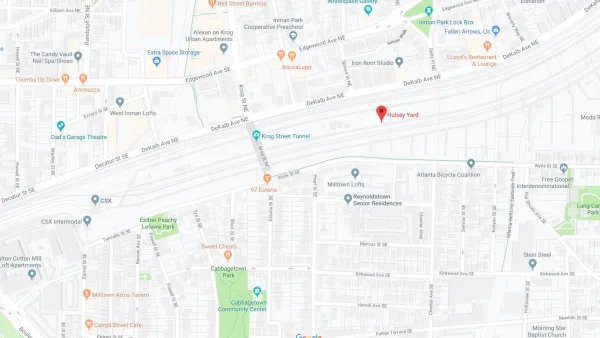
Big Development Opportunities Envisioned for Atlanta's Hulsey Yard
CSX moved operations away from Hulsey Yard, so what should the land become?

Why Urban History Matters
Chuck Wolfe's recent reconnaissance of Edinburgh provides a foil for his rallying cry: Going forward, let’s not discount the influence of history’s recurring themes in how we redevelop the urban realm.

Atlanta launches autonomous Beltline shuttle
The ATL Spoke service connects the Beltline to a MARTA rail station.

Planetizen Federal Action Tracker
A weekly monitor of how Trump’s orders and actions are impacting planners and planning in America.

The state-sanctioned urbicide of Austin
People don’t kill cities. Freeways do.

US to reduce Colorado River water deliveries to Mexico
A new Colorado Treaty amendment reduces Mexico’s Colorado River water allocation by 250,000 acre feet.

5 New England states march closer to 800 megawatt wind energy project
Securing federal approval for the project may be complicated under the Trump administration, which has historically been hostile towards domestic wind power.

Baltimore to break ground on $50 million Transit Priority Project
The project will bring faster bus trips, safer streets and better bike connections to Baltimore.

Airbnb launches $250 million 'last-dollar financing' housing accelerator, makes first investment in Austin
The company will put $6.4 million towards affordable housing development in Texas’ capital.

FREE Course: Walkable City 1: Why Walkability?
After describing his path towards focusing on walkability as the essence of good planning, Jeff Speck marches through his five principal reasons for making more walkable places.
Reinventing Malls: Planning Alchemy—Turning Gray Fields Into Gold
The course focuses on the opportunities and imperatives that shape reinvention of mall sites.

Eagle County Government
Harvard University Graduate School of Design
Nashville Planning Department
The Architects Foundation
University of Cincinnati Online
The Pocatello Development Authority
The Urban Renewal Agency of the City of Pocatello
Journal of the American Planning Association