Small, localized interventions such as changes to signal timing and crosswalk improvements are saving lives and improving traffic safety.


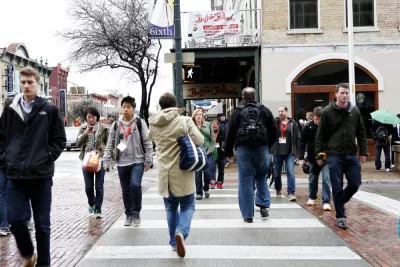
The city of Austin has completed its first round of bond-funded street safety projects as part of its Vision Zero initiative, reports Kelsey Thompson for KXAN.
The projects followed a $15 million Vision Zero allocation as part of a mobility bond passed in 2016. “Through the program, Meyer said Vision Zero has taken a more holistic approach toward transportation improvements, focusing on investments that not only benefit drivers but pedestrians, cyclists and other forms of commuters.”
The funds were focused on safety improvements such as crosswalks, shared-use paths, signal timing, and street lighting. City officials say low-cost, quick-build improvements have shown impressive effectiveness at reducing crashes, deaths, and serious injuries.
“Some of those with the most bang for their buck include traffic signal timing changes, leading pedestrian intervals (LPIs) and protected left-turn lanes,” Thompson adds. “Over the next three years, Vision Zero will be tackling a dozen more intersection safety projects courtesy of the city’s 2018 and 2020 mobility bonds.”
Read the full story: Austin’s Vision Zero wraps 2016 mobility bond safety projects

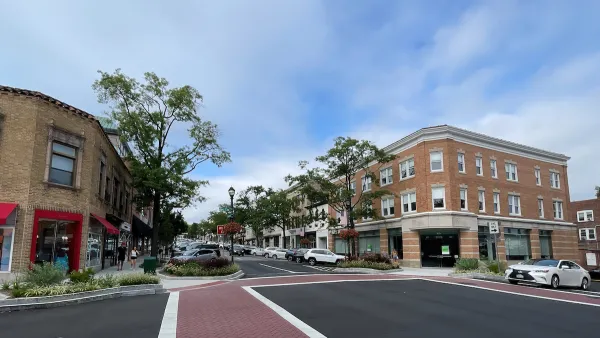
Connecticut Launches Complete Streets Standards
The new policy calls for sidewalks, bike lanes, and crosswalks on state roads and state-funded road projects.
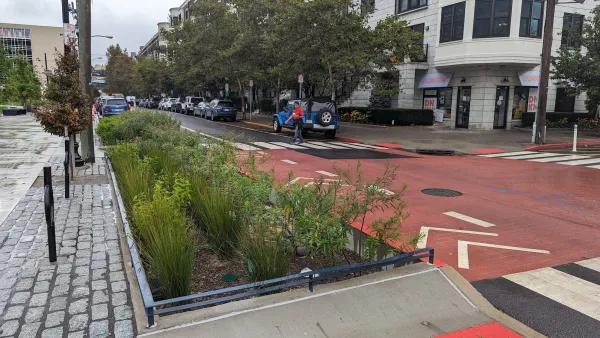
Hoboken's $20 Vision Zero fix
The New Jersey city eliminated traffic deaths for the last nine years in a row.
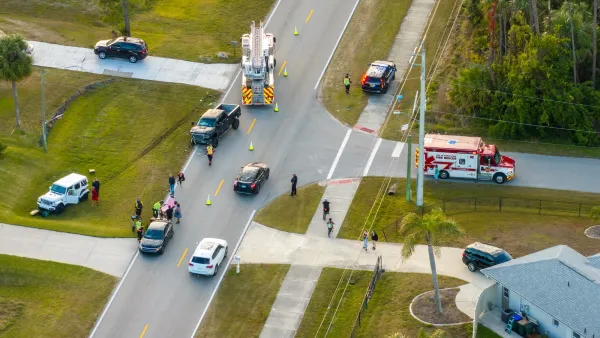
Pedestrian Deaths Fell by Largest Percentage in 15 Years, but Remain Above Pre-Pandemic Levels
After a spike in deaths during the Covid-19 years, road deaths fell to 3,024 in the first half of 2025.

Planetizen Federal Action Tracker
A weekly monitor of how Trump’s orders and actions are impacting planners and planning in America.

Data reveals that NYC’s bet on congestion pricing has paid off
After almost two years of the program, reports show positive impacts on traffic and air quality and no disruptions to parking.

Denver is solving homelessness. Why aren't the rest of us?
Since 2023, Denver's street homeless population has decreased by 64%, proving that effective tools exist to support those in need of housing.

Chicago's streets are littered with dead birds. Will the city protect them?
Chicago sits in the route of migratory birds traveling south. Its abundance of glass buildings and bright lights make it particularly disorienting for the animals.

CA city to shut down airport, transform it into utopian park
The western side of the 200-acre park will feature a dog park, nature education center and arboretum.

NYC to vote on supporting outdoor dining, streamlining bus and bike lane creation
The city has five proposed amendments to its municipal constitution on the ballot this November.

FREE Course: Walkable City 1: Why Walkability?
After describing his path towards focusing on walkability as the essence of good planning, Jeff Speck marches through his five principal reasons for making more walkable places.
Reinventing Malls: Planning Alchemy—Turning Gray Fields Into Gold
The course focuses on the opportunities and imperatives that shape reinvention of mall sites.

City of Rosemead
Rutgers University, Edward J. Bloustein School of Planning and Public Policy
One Hundred Miles
The Architects Foundation
University of Cincinnati Online
Montrose County
Northern Illinois Transit Authority (NITA)
The Pocatello Development Authority