The online tool can help city and state officials understand where zoning codes need reform and how they compare to other localities.


The National Zoning Atlas, a project that seeks to help citizens and policymakers understand the zoning landscape in their areas, is expanding its reach rapidly, reports Elizabeth Daigneau in Route Fifty.
“Last week, the project announced the launch of the Arizona Zoning Atlas. Roughly 36 states have been mapped, some in their entirety and others just in certain metro areas or jurisdictions.” Data is almost complete for New Mexico and Nevada, with metro areas in the works in Colorado, New York, and North Carolina.
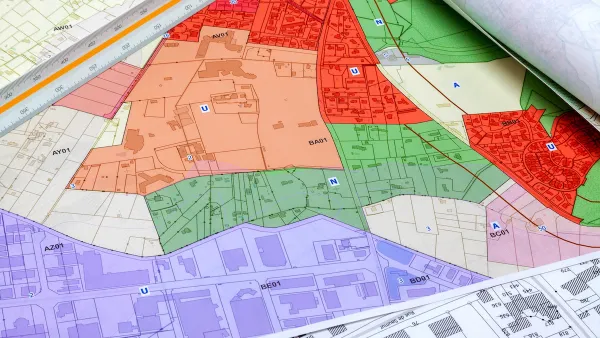
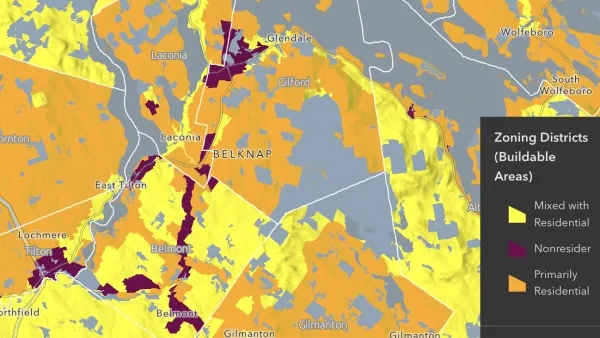
The project lets viewers compare zoning codes and access data about lot sizes, parking requirements, and other regulations. Vermont, the state with the largest average lot size at 1.8 acres, used the atlas maps to highlight the need for reduced lot sizes. “State officials used the Vermont Zoning Atlas to show residents how most Vermont towns disappear from the map when a user selects for areas where single-family homes are allowed on lots less than one-quarter acre.”
FULL STORY: See how your state uses zoning codes to control land use

How a National Zoning Atlas Can Clarify a Legal Patchwork
A massive effort is underway to compile local zoning regulations and other laws that impact how and where housing is built.
National Zoning Atlas Makes Headway
The project aims to bring zoning data from around the country into one database, making it easier for planners and researchers to compare policies and their impacts.

San Diego wants to limit upzoning law to just 16% of transit-adjacent parcels
The city's planning director says some areas are unfit for immediate upzoning due to a lack of resources or hazards such as wildfire risk.

Planetizen Federal Action Tracker
A weekly monitor of how Trump’s orders and actions are impacting planners and planning in America.

The state-sanctioned urbicide of Austin
People don’t kill cities. Freeways do.

US to reduce Colorado River water deliveries to Mexico
A new Colorado Treaty amendment reduces Mexico’s Colorado River water allocation by 250,000 acre feet.

5 New England states march closer to 800 megawatt wind energy project
Securing federal approval for the project may be complicated under the Trump administration, which has historically been hostile towards domestic wind power.

Baltimore to break ground on $50 million Transit Priority Project
The project will bring faster bus trips, safer streets and better bike connections to Baltimore.

Airbnb launches $250 million 'last-dollar financing' housing accelerator, makes first investment in Austin
The company will put $6.4 million towards affordable housing development in Texas’ capital.

FREE Course: Walkable City 1: Why Walkability?
After describing his path towards focusing on walkability as the essence of good planning, Jeff Speck marches through his five principal reasons for making more walkable places.
Reinventing Malls: Planning Alchemy—Turning Gray Fields Into Gold
The course focuses on the opportunities and imperatives that shape reinvention of mall sites.

Eagle County Government
Harvard University Graduate School of Design
Nashville Planning Department
The Architects Foundation
University of Cincinnati Online
The Pocatello Development Authority
The Urban Renewal Agency of the City of Pocatello
Journal of the American Planning Association