The grant brings the project closer to reality, but delays and cost overruns are putting a completion date more than a decade away.


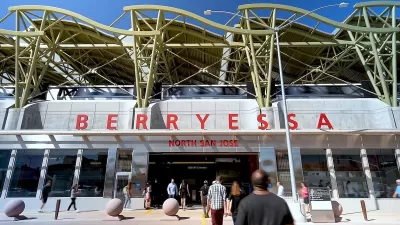
The Federal Transit Administration (FTA) will contribute over $5 billion to a project that will bring a Bay Area Rapid Transit (BART) line to Santa Clara, California, reports Joseph Geha for KQED.
Officials from the Silicon Valley city celebrated the announcement, which will contribute significantly to the estimated $12.7 billion cost of the project. “VTA’s origins estimate, in 2014, pegged the cost at $4.7 billion and aimed for a completion date in 2026. As recently as spring 2022, VTA still touted a $6.9 billion estimate before facing multiple schedule delays and ballooning cost increases to the current figure.”
The project has been in the works for close to three decades and is scheduled for completion in 2037. Much of the track will run underground. “As currently planned, the project will extend BART from its current end of the line at Berryessa Station in North San José and will run west to create four new stations: 28th Street/Little Portugal near East San José, Downtown San José, Diridon Station and Santa Clara.”
FULL STORY: Feds Commit $5.1 Billion to South Bay BART Extension

Change of Plans: Transit Funding Priorities Shift in the Silicon Valley
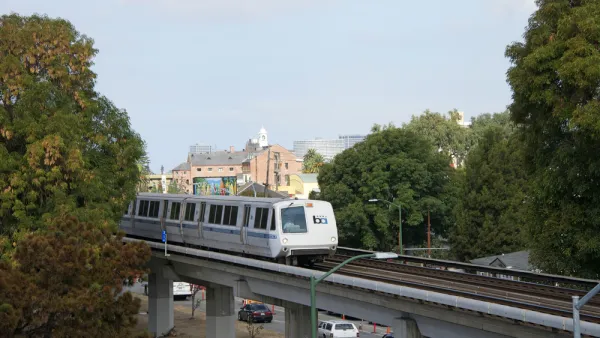
Santa Clara County cities rebel against the agency's proposed plan to spend most of the Measure B funds on a Silicon Valley BART extension.
New South Bay BART Stations See Disappointing Ridership
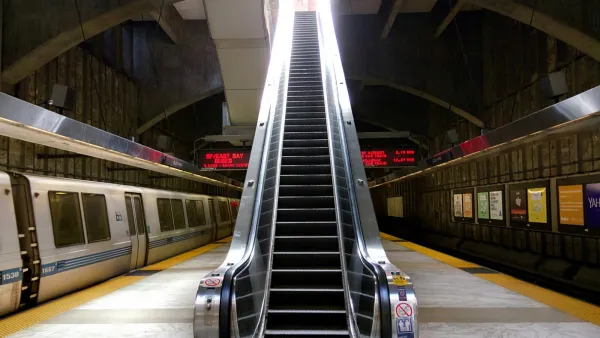
Introduced during the pandemic in an area where many residents now work remotely, the new stations have failed to attract new commuters.
BART San Jose Extension Faces Delays and Ballooning Costs
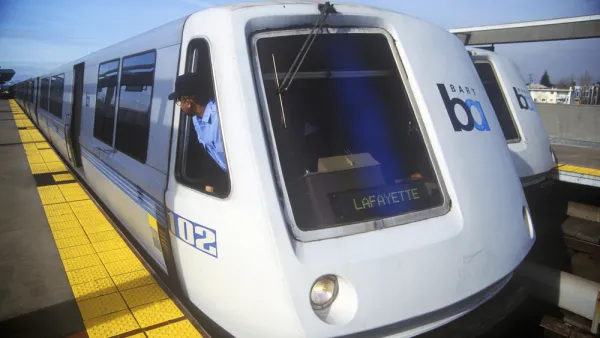
The extension to downtown is a complex and ambitious project facing many challenges and questions about feasibility.

Planetizen Federal Action Tracker
A weekly monitor of how Trump’s orders and actions are impacting planners and planning in America.

The state-sanctioned urbicide of Austin
People don’t kill cities. Freeways do.

US to reduce Colorado River water deliveries to Mexico
A new Colorado Treaty amendment reduces Mexico’s Colorado River water allocation by 250,000 acre feet.

5 New England states march closer to 800 megawatt wind energy project
Securing federal approval for the project may be complicated under the Trump administration, which has historically been hostile towards domestic wind power.

Baltimore to break ground on $50 million Transit Priority Project
The project will bring faster bus trips, safer streets and better bike connections to Baltimore.

Airbnb launches $250 million 'last-dollar financing' housing accelerator, makes first investment in Austin
The company will put $6.4 million towards affordable housing development in Texas’ capital.

FREE Course: Walkable City 1: Why Walkability?
After describing his path towards focusing on walkability as the essence of good planning, Jeff Speck marches through his five principal reasons for making more walkable places.
Reinventing Malls: Planning Alchemy—Turning Gray Fields Into Gold
The course focuses on the opportunities and imperatives that shape reinvention of mall sites.


Eagle County Government
Harvard University Graduate School of Design
Nashville Planning Department
The Architects Foundation
University of Cincinnati Online
The Pocatello Development Authority
The Urban Renewal Agency of the City of Pocatello
Journal of the American Planning Association