In what should come as a surprise to no one, drivers are much more likely to yield to pedestrians when they can actually see them.


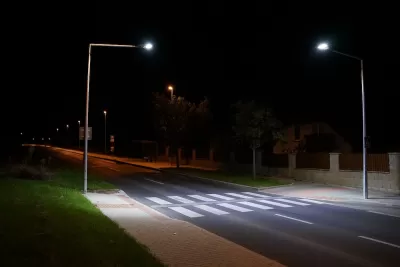
A new study from the Insurance Institute for Highway Safety emphasizes the importance of crosswalk lighting for pedestrian safety, reports Dan Zukowski in Smart Cities Dive.
The study analyzed four intersections in Kalamazoo, Michigan. “At these intersections, none of which had traffic signals, researchers found that drivers slowed where flashing beacons or any type of lighting were present, but a combination of flashing beacons and crosswalk lighting triggered by the pedestrian resulted in the highest yielding behavior.” At one dimly lit site, flashing beacons and crosswalk lighting made drivers 13 times more likely to yield to pedestrians.
The study highlights how simple, relatively inexpensive fixes can help stem the epidemic of traffic deaths facing most U.S. communities. According to IIHS President David Harkey, “We can stop pedestrians from being killed if we make sure drivers see them — but first city planners and road designers have to see the light.”
FULL STORY: Lighted crosswalks improve pedestrian safety at night, study shows

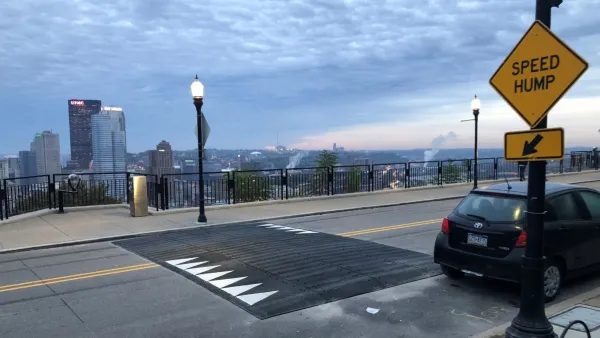
Pittsburgh Excels at Low-Cost, Quick-Build Traffic Calming
The city’s traffic calming initiative has led to a 6 percent average reduction in speeds on corridors with recent interventions.
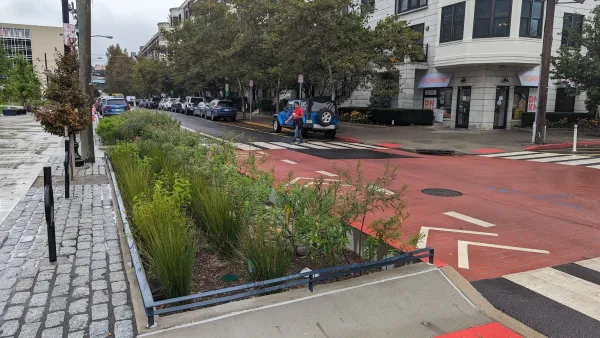
Hoboken's $20 Vision Zero fix
The New Jersey city eliminated traffic deaths for the last nine years in a row.
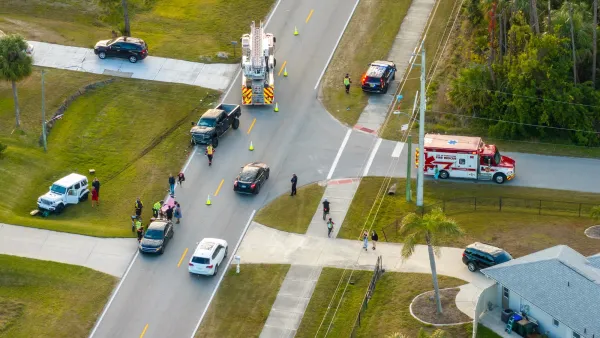
Pedestrian Deaths Fell by Largest Percentage in 15 Years, but Remain Above Pre-Pandemic Levels
After a spike in deaths during the Covid-19 years, road deaths fell to 3,024 in the first half of 2025.

The state-sanctioned urbicide of Austin
People don’t kill cities. Freeways do.

US to reduce Colorado River water deliveries to Mexico
A new Colorado Treaty amendment reduces Mexico’s Colorado River water allocation by 250,000 acre feet.

New Jersey’s second-largest city bans standalone data centers
Jersey City will continue to allow co-location facilities, such as those meant for research institutions that store their own data.

Amtrak not solely to blame for New Jersey commuter rail's unreliability, report finds
A new study from the Garden State Initiative found that NJ Transit’s budget grew 20% across a 4 year period, but reliability declined significantly over the same period.

EPA erases limits on planet-warming pollution from power plants
Under Monday’s plan, power plants would still have some limits on how much mercury, arsenic and other contaminants they can emit.

Phoenix announces new on-demand transit service, more frequent RAPID buses
Both new services will launch in October, and are part of Phoenix's Project Effective Access Solutions for Easing Congestion.

FREE Course: Walkable City 1: Why Walkability?
After describing his path towards focusing on walkability as the essence of good planning, Jeff Speck marches through his five principal reasons for making more walkable places.
Reinventing Malls: Planning Alchemy—Turning Gray Fields Into Gold
The course focuses on the opportunities and imperatives that shape reinvention of mall sites.

Eagle County Government
Harvard University Graduate School of Design
Nashville Planning Department
The Architects Foundation
University of Cincinnati Online
The Pocatello Development Authority
The Urban Renewal Agency of the City of Pocatello
Journal of the American Planning Association