A number of factors explain the partisan divide in support for transit.


Writing in Governing, Jared Brey examines the partisan divide over public transit. “It’s not a perfect partisan divide — transit investments have Republican supporters and Democratic detractors — but it’s been a feature of transportation planning going back decades.”
As Brey explains, “The reason for it has as much to do with geography as politics,” with support for transit largely splitting along rural-urban lines. “Republicans may also be less receptive to environmental arguments in favor of public transit than Democrats. But the ideological lines are messy: Advocates often point out that transit service gives people more choices for how to get around, while roads designed for private vehicles require huge public investments, too.”
Meanwhile, rural voters are unlikely to support state-level investments in public transit that primarily serves rural areas. “But it isn’t just a disinterest in big-city issues that makes transit a tough sell for rural legislators.” Rural communities have a harder time raising the matching funds needed for many state and federal grants, and rural transit — which can be a lifeline for many residents — is rarely cost-effective.
Read the full story: What Drives Republican Opposition to Transit?

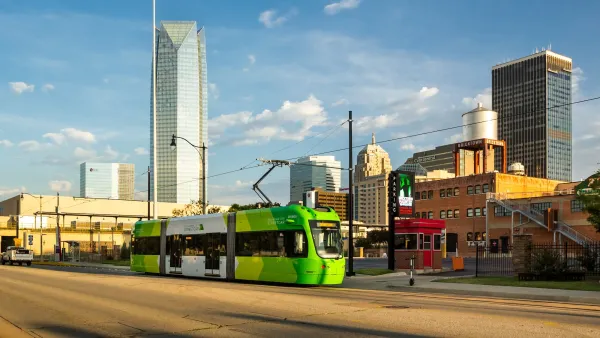
Oklahoma City bets on transit
The city's mayor is urging residents to support a new sales tax that would fund transit expansion in the growing city.
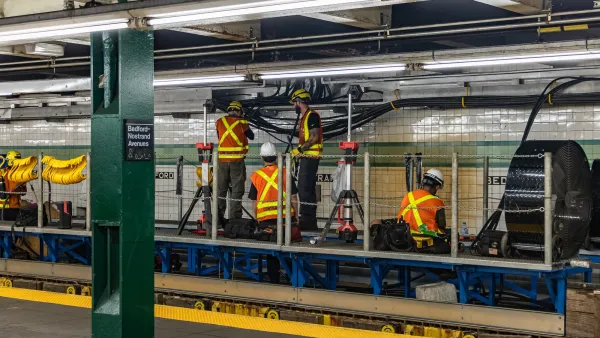
Report: BUILD Act would strip over $2B in transit projects from California and New York alone
The proposed federal transportation bill would eliminate billions in funding from the Federal Transit Administration, the Federal Railroad Administration and other federal agencies that fund transit and multimodal transportation programs.
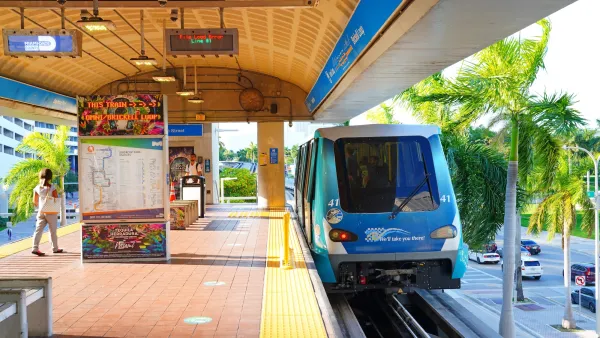
Miami-Dade budget proposes draining rail fund, bus service cuts
The county mayor says the diversion of rail funds is necessary to prevent deeper service cuts.

Planetizen Federal Action Tracker
A weekly monitor of how Trump’s orders and actions are impacting planners and planning in America.

Amtrak, CN end decades-long dispute with eight-year agreement
The new operating agreement establishes an updated framework for the companies to work together, including processes to resolve disputes.

Judges permit Denver to divert 77,000 acre feet from the Colorado River for reservoir expansion
Overuse and climate change have caused the Colorado River’s water levels to plummet.

NYC DOT wants faster, more permanent street upgrades
The city is examining ways to build more concrete infrastructure without getting entangled in 'decades-long' projects.

'Something we’ve never seen before:' rising utility rates could strain city finances nationwide
Data centers, climate change and other factors have caused utility rates in the United States to increase by 38% since 2020.

Trump to overrule local leaders, lease millions of acres of America’s Pacific Island territories’ seafloors to mining companies
International law says that the Indigenous people of America’s territories have a right to prior and informed consent regarding projects that impact their countries.

FREE Course: Walkable City 1: Why Walkability?
After describing his path towards focusing on walkability as the essence of good planning, Jeff Speck marches through his five principal reasons for making more walkable places.
Reinventing Malls: Planning Alchemy—Turning Gray Fields Into Gold
The course focuses on the opportunities and imperatives that shape reinvention of mall sites.

Harvard University Graduate School of Design
KFH Group Inc.
Greater Baltimore Committee
The Architects Foundation
University of Cincinnati Online
The Pocatello Development Authority
The Urban Renewal Agency of the City of Pocatello