An argument for better bike infrastructure from a healthcare perspective.


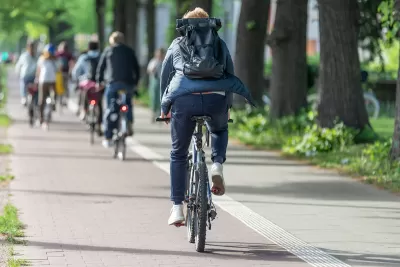
An article by Adamo Anthony Donovan, Cole-Atma Dev, and Samuel Gagnon-Smith in Healthy Debate calls on health professionals to promote cycling as a way to improve public and environmental health. “Better bike infrastructure would increase physical activity levels; reduce carbon, air and noise pollution; and support Vision Zero initiatives that aim to prevent all serious injuries and road deaths, a top 10 cause of global mortality.”
According to the authors, “Health-care teams are well-positioned to educate the public about the positive externalities of cycling and can help dispel many of the misconceptions, based on societal norms and anecdotal lived experience, that discriminate against vulnerable road users.”
The article debunks popular misconceptions, including the belief that helmet laws improve safety, that ‘scofflaw cyclists’ put themselves in danger, and that people wouldn’t bike in adverse weather conditions. Statistics belie the falsity of these common beliefs. For example, “Far from cyclists being rule-breakers, cyclists respect traffic laws just as much if not more than drivers. In Québec, in collisions between drivers and pedestrians, the driver was distracted 68 per cent of the time while both parties were distracted 17 per cent of the time.”
FULL STORY: Public health and urban planning go hand in hand. Why aren’t we doing more to promote cycling?

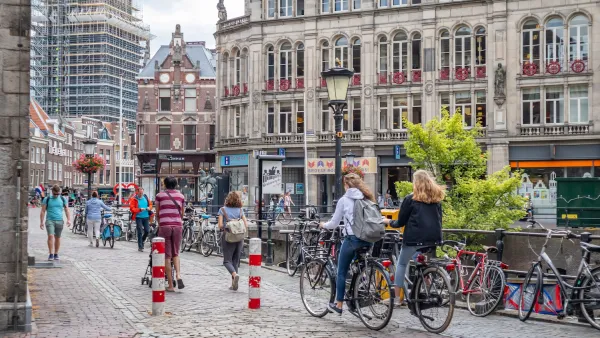
2025's 30 Most Bike-friendly Cities
Copenhagenize has released its list of top cities for cyclists. Spoiler alert: the United States doesn’t make the list.
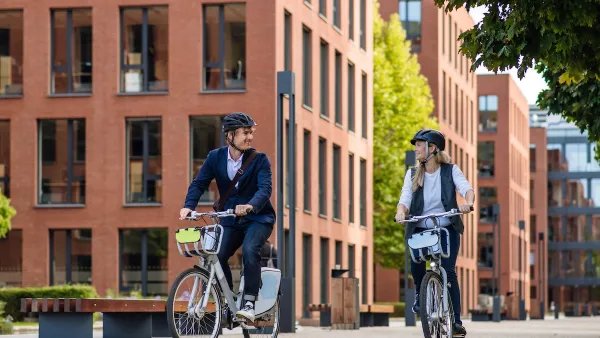
7 Ways Cyclists are Winning in the AI Revolution
For individual cyclists and transportation planners, AI offers some useful tools for understanding bike riders’ behavior and assessing gaps in a city’s bike infrastructure.

The Rippling Effects of Bike-to-Work Subsidies
A European movement to incentivize people to commute by bicycle is changing travel patterns and making mobility more sustainable.

Planetizen Federal Action Tracker
A weekly monitor of how Trump’s orders and actions are impacting planners and planning in America.

The state-sanctioned urbicide of Austin
People don’t kill cities. Freeways do.

US to reduce Colorado River water deliveries to Mexico
A new Colorado Treaty amendment reduces Mexico’s Colorado River water allocation by 250,000 acre feet.

5 New England states march closer to 800 megawatt wind energy project
Securing federal approval for the project may be complicated under the Trump administration, which has historically been hostile towards domestic wind power.

Baltimore to break ground on $50 million Transit Priority Project
The project will bring faster bus trips, safer streets and better bike connections to Baltimore.

Airbnb launches $250 million 'last-dollar financing' housing accelerator, makes first investment in Austin
The company will put $6.4 million towards affordable housing development in Texas’ capital.

FREE Course: Walkable City 1: Why Walkability?
After describing his path towards focusing on walkability as the essence of good planning, Jeff Speck marches through his five principal reasons for making more walkable places.
Reinventing Malls: Planning Alchemy—Turning Gray Fields Into Gold
The course focuses on the opportunities and imperatives that shape reinvention of mall sites.

Eagle County Government
Harvard University Graduate School of Design
Nashville Planning Department
The Architects Foundation
University of Cincinnati Online
The Pocatello Development Authority
The Urban Renewal Agency of the City of Pocatello
Journal of the American Planning Association