The city’s congestion pricing program could change transportation and land use in radical ways. A comprehensive plan would make the most of those changes.



In an op-ed in Crain’s New York Business, Donovan Finn argues that New York City’s congestion pricing program, set to take effect next year, offers an opportunity for the city to create a citywide comprehensive plan.
As Finn explains, “Because cities are interconnected systems, land use patterns and commerce will also change, unlocking improvements to the processes that sustain daily life. Deliveries, waste management, education, emergency services, stormwater and many other systems will experience ripple effects from congestion pricing, providing opportunities for smart and forward-thinking solutions.” Thus, “The entire layout of the city will need to evolve in response.”
A comprehensive plan, Finn argues, is the most effective way to build communication between public agencies and create “a consensus-based vision for the city that is innovative but also sustainable and just.” Many U.S. cities have comprehensive plans that they update regularly, Finn notes.
With the congestion pricing program set to change mobility patterns and bring in new revenue, “harnessing this opportunity to address many of New York’s grand challenges will require coordinated governance with meaningful opportunities for participation by civic groups, advocates, business interests and the general public.”
Read the full story: Op-ed: Congestion pricing will create an opportunity for comprehensive planning

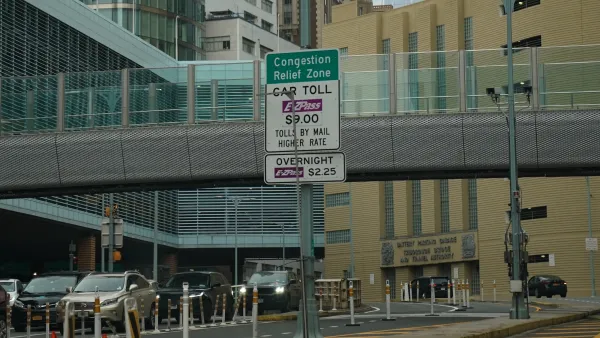
Judge Rules to Keep NYC Congestion Pricing, Ending Trump's Legal Challenge
The decision likely deals a fatal blow to efforts to end the program, but the Trump administration says it will explore other avenues for reversing the congestion pricing scheme.

One-Year Numbers Show Clear Win for NYC Congestion Pricing
While the Trump administration continues trying to kill the program, data one year out shows that the new toll dramatically decreased traffic and improved transit travel times.
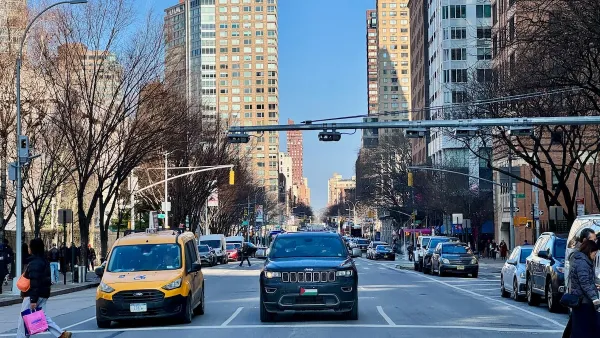
NYC’s ‘Rare and Comprehensive’ Public Data Reveals Congestion Pricing's Success
The Metropolitan Transportation Authority’s analytics and data team maintains over 180 regularly updated datasets about the city’s transportation system.

Planetizen Federal Action Tracker
A weekly monitor of how Trump’s orders and actions are impacting planners and planning in America.

California plans to bury El Niño’s downpour
If the state plays its cards right, it may be able to store a billion acre-feet of El Niño’s water in aquifers.

Desperate measures: Advocates weigh draining Lake Powell to fill Colorado River
Draining the reservoir could reduce evaporation losses by a couple hundred thousand acre-feet.

40 years after approval, Chicago breaks ground on new park
The park honors Jean Baptiste Point du Sable, the city’s first permanent non-native settler.

‘Hoodwinked:’ New Mexico bill aimed at microgrids paves way for data center development
In an interview with High Country News, Padilla said the legislation “ignited” New Mexico's economy.

California’s ‘unrecognizable’ water plan may go down the drain
After four years of regulatory processes, water agencies say the plan to overhaul how cities and farms take water from the Sacramento-San Joaquin Delta has changed dramatically.

FREE Course: Walkable City 1: Why Walkability?
After describing his path towards focusing on walkability as the essence of good planning, Jeff Speck marches through his five principal reasons for making more walkable places.
Reinventing Malls: Planning Alchemy—Turning Gray Fields Into Gold
The course focuses on the opportunities and imperatives that shape reinvention of mall sites.

City of Rosemead
Rutgers University, Edward J. Bloustein School of Planning and Public Policy
One Hundred Miles
Hunter College, City University of New York (CUNY)
The Architects Foundation
University of Cincinnati Online
City of Cambridge
Montrose County
The Pocatello Development Authority