New York's long-awaited congestion pricing program could break open the controversial practice in the United States.



New York City’s congestion pricing program, set to launch next year, could pave the way for similar programs in other U.S. cities, which have been reluctant to implement cordon pricing despite its popularity in other parts of the world, writes Adie Tomer in Bloomberg CityLab.
“Congestion pricing isn’t just a new fee on driving; it’s the single most powerful transportation experiment America has not yet tried,” Tomer claims. This demand-driven approach to traffic management can reduce congestion, boost public transit use, and raise revenue. In New York, “the state plans to reinvest nearly 100% of the congestion revenues back into the MTA system, shoring up annual budgets today and unlocking expansion plans in the future.”
Tomer believes that once the benefits of the program become evident, more cities will quickly follow suit. “Once congestion pricing gets off the ground, it can unlock the Holy Grail of transportation pricing: vehicle miles traveled (VMT) fees, which would charge for every mile driven, not just those in specific zones.”
FULL STORY: NYC Congestion Pricing Could Unleash a Transportation Revolution

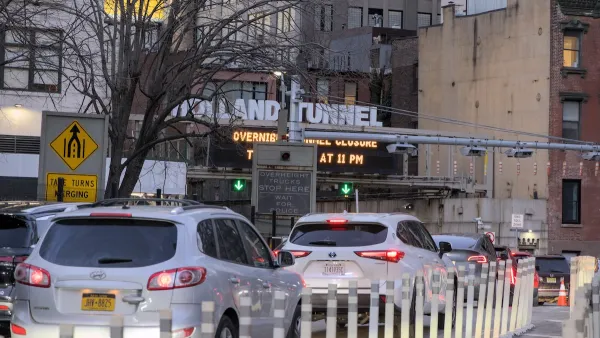
NYC Congestion Pricing Continues to Show Positive Results
While the Trump administration attempts to revoke the program’s federal approval, congestion pricing continues to reduce traffic, speed up bus travel times, and improve air quality in Manhattan.
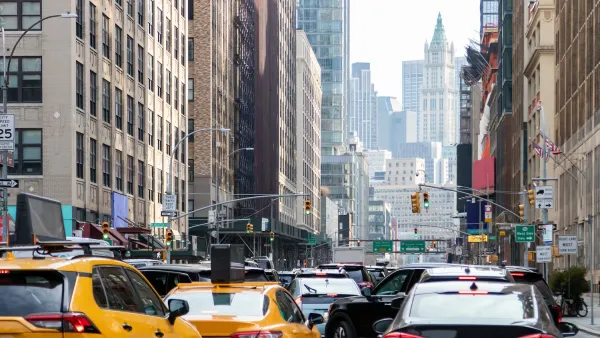
Agreement Keeps NYC Congestion Pricing Alive Through Summer
The tolling program will continue while a court considers the city’s lawsuit against the Trump administration.

Tri-State Economies to Lose Billions From Congestion Pricing Pause
New York City’s congestion pricing program, suspended by Governor Hochul earlier this year, would have pumped $12 billion into local projects and jobs.

The state-sanctioned urbicide of Austin
People don’t kill cities. Freeways do.

US to reduce Colorado River water deliveries to Mexico
A new Colorado Treaty amendment reduces Mexico’s Colorado River water allocation by 250,000 acre feet.

New Jersey’s second-largest city bans standalone data centers
Jersey City will continue to allow co-location facilities, such as those meant for research institutions that store their own data.

Amtrak not solely to blame for New Jersey commuter rail's unreliability, report finds
A new study from the Garden State Initiative found that NJ Transit’s budget grew 20% across a 4 year period, but reliability declined significantly over the same period.

EPA erases limits on planet-warming pollution from power plants
Under Monday’s plan, power plants would still have some limits on how much mercury, arsenic and other contaminants they can emit.

Phoenix announces new on-demand transit service, more frequent RAPID buses
Both new services will launch in October, and are part of Phoenix's Project Effective Access Solutions for Easing Congestion.

FREE Course: Walkable City 1: Why Walkability?
After describing his path towards focusing on walkability as the essence of good planning, Jeff Speck marches through his five principal reasons for making more walkable places.
Reinventing Malls: Planning Alchemy—Turning Gray Fields Into Gold
The course focuses on the opportunities and imperatives that shape reinvention of mall sites.

Eagle County Government
Harvard University Graduate School of Design
Nashville Planning Department
The Architects Foundation
University of Cincinnati Online
The Pocatello Development Authority
The Urban Renewal Agency of the City of Pocatello
Journal of the American Planning Association