The battery-powered excavator could replace diesel-powered machinery to reduce construction emissions and noise.



A Los Angeles rail project has begun using a zero-emissions excavator for work, according to a press release from the construction firm Skanska. “Participating in this pilot allows us to continue to be a part of the transition to low-carbon, zero-emission construction. Doing so on a large-scale project like the Purple (D Line) Extension Transit Project will provide a unique insight to inform sustainable innovation moving forward.”
“Because it is powered by batteries, not an engine, using the Volvo EC230 will lower emissions on the job site and reduce noise during construction.” The excavator replaces diesel-powered equipment for a 90-day pilot program that will test the success of an electric excavator on a large-scale project. Skanska is already using the excavator on projects in Europe and China.
Read the full story: Skanska deploys zero-emission construction machinery on active Los Angeles project
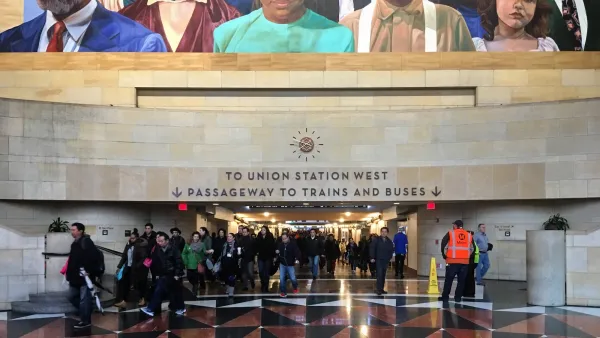
Weekend ridership on LA's D Line surged 80% after extension opened
World Cup attendees took roughly 45,000 rides to and from the first two games at the Los Angeles Stadium.
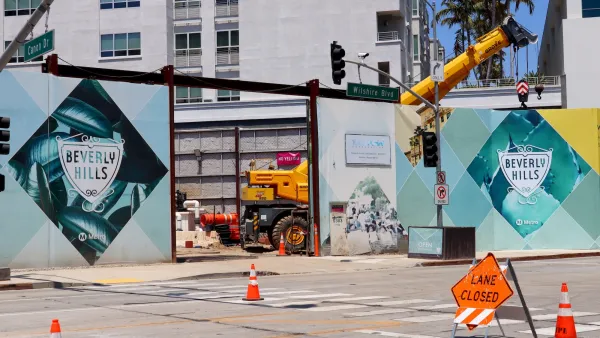
LA Metro Approves Another Major Rail Extension — This Time to Hollywood
The 9.7-mile K Line segment would connect major employment and commercial centers in mid-city Los Angeles and West Hollywood.
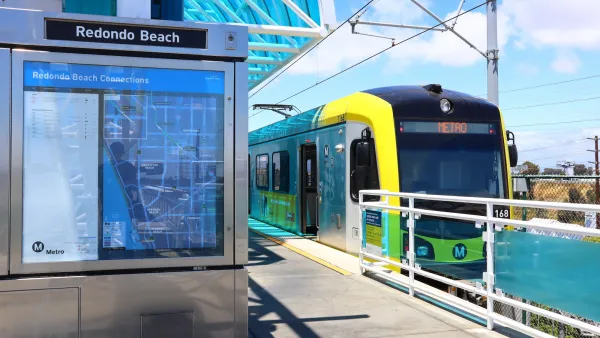
LA Metro Greenlights South Bay Light Rail Extension
When complete, the K Line extension will offer a 19-minute ride from Torrance to LAX.

Planetizen Federal Action Tracker
A weekly monitor of how Trump’s orders and actions are impacting planners and planning in America.

California plans to bury El Niño’s downpour
If the state plays its cards right, it may be able to store a billion acre-feet of El Niño’s water in aquifers.

Desperate measures: Advocates weigh draining Lake Powell to fill Colorado River
Draining the reservoir could reduce evaporation losses by a couple hundred thousand acre-feet.

Mamdani’s pied-à-terre tax survives legal challenge
A panel of judges found that the plaintiffs failed to demonstrate injury as a result of New York City's implementation of the tax.

Eastern Nebraska is running out of electricity
Data centers and electrification are straining eastern Nebraska’s grid, throttling economic development.

Seattle passes record-breaking transit services expansion
Proposition 1 will double the city’s transit tax to add 95,000 more bus trips and preserve 180,000 bus trips annually.

FREE Course: Walkable City 1: Why Walkability?
After describing his path towards focusing on walkability as the essence of good planning, Jeff Speck marches through his five principal reasons for making more walkable places.
Reinventing Malls: Planning Alchemy—Turning Gray Fields Into Gold
The course focuses on the opportunities and imperatives that shape reinvention of mall sites.

City of Rosemead
Rutgers University, Edward J. Bloustein School of Planning and Public Policy
One Hundred Miles
University of Michigan School for Environment and Sustainability (SEAS)
Hunter College, City University of New York (CUNY)
The Architects Foundation
City of Cambridge
Montrose County
The Pocatello Development Authority