The agency hopes cracking down on fare evasion will improve safety on the system, but riders aren’t so sure.


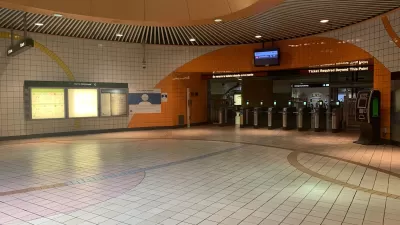
A new initiative aimed at reducing fare evasion on Los Angeles Metro trains is facing criticism from transit riders who say having to scan proof of payment upon exiting a station won’t help make the city’s transit system safer.
Marina Watanabe describes the program in L.A. Taco, writing that “Metro’s pilot program, which will run for 90 days, comes after a highly publicized string of violent assaults on both Metro riders and employees.”
Metro will now require riders exiting the North Hollywood station to scan their TAP access cards to leave. Riders responded with angry comments to a Metro Instagram reel explaining the decision: “This is a total waste of resources and will only further hurt our system,” said one commenter. “Fare evasion should be last on your list of concerns,” said another.
FULL STORY: Will Metro’s Latest Crack Down On Fare Evasion Help Improve Safety For Riders?

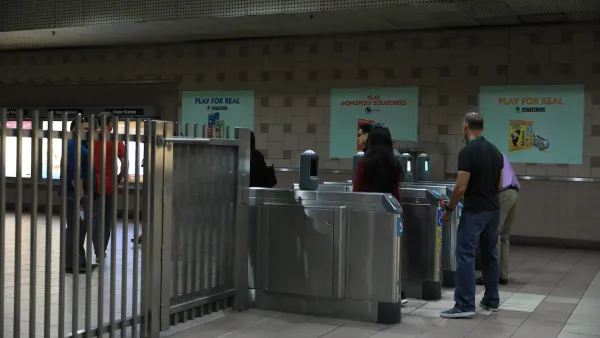
Commentary: By Quietly Ignoring Fare Evasion, LA Metro Inadvertently Became the Nation’s Largest Free Transit Experiment
Since the agency switched to in-house security, fare enforcement citations have plummeted.
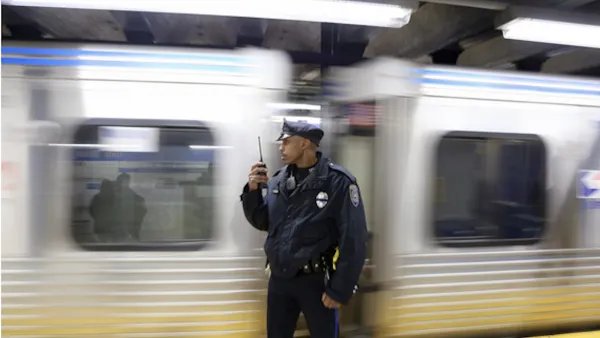
New Philly Fare Gates ‘Astonishingly Easy to Beat’
A set of high-tech gates aimed at limiting fare evasion is already failing.
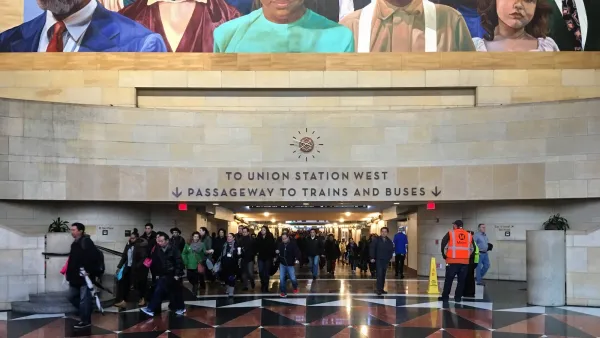
Weekend ridership on LA's D Line surged 80% after extension opened
World Cup attendees took roughly 45,000 rides to and from the first two games at the Los Angeles Stadium.

Planetizen Federal Action Tracker
A weekly monitor of how Trump’s orders and actions are impacting planners and planning in America.

The state-sanctioned urbicide of Austin
People don’t kill cities. Freeways do.

US to reduce Colorado River water deliveries to Mexico
A new Colorado Treaty amendment reduces Mexico’s Colorado River water allocation by 250,000 acre feet.

5 New England states march closer to 800 megawatt wind energy project
Securing federal approval for the project may be complicated under the Trump administration, which has historically been hostile towards domestic wind power.

Baltimore to break ground on $50 million Transit Priority Project
The project will bring faster bus trips, safer streets and better bike connections to Baltimore.

Airbnb launches $250 million 'last-dollar financing' housing accelerator, makes first investment in Austin
The company will put $6.4 million towards affordable housing development in Texas’ capital.

FREE Course: Walkable City 1: Why Walkability?
After describing his path towards focusing on walkability as the essence of good planning, Jeff Speck marches through his five principal reasons for making more walkable places.
Reinventing Malls: Planning Alchemy—Turning Gray Fields Into Gold
The course focuses on the opportunities and imperatives that shape reinvention of mall sites.


Eagle County Government
Harvard University Graduate School of Design
Nashville Planning Department
The Architects Foundation
University of Cincinnati Online
The Pocatello Development Authority
The Urban Renewal Agency of the City of Pocatello
Journal of the American Planning Association