The ¾-mile segment will allow electric shuttles and buses to charge while driving.



“California’s first wireless charging roadway is coming to UCLA thanks to a state grant that will help support electric transit projects at the university,” according to an article by Iman Palm in KTLA. “The project follows the deployment of the nation’s first public electric vehicle-charging roadway, which launched in November 2023 in Detroit, Michigan.” A similar project is underway in Indiana.
The school’s Events and Transportation program will install inductive charging coils on a 3/4-mile section of roadway on campus, which will allow electric passenger shuttles and buses to charge wirelessly.
“The grant will also support building a new transit hub between the UCLA bus depot and the planned UCLA/Westwood station. The hub will directly connect with L.A. Metro’s D Line light rail extension, the first direct rail connection from downtown Los Angeles to Beverly Hills, Century City, and Westwood,” Palm adds.
The transit hub is expected to be completed before Los Angeles hosts the 2028 Summer Olympics. Part of the grant will support electrifying UCLA’s Bruin Bus fleet.
Read the full story: California’s first wireless charging roadway is coming to UCLA


Federal Plan Takes Aim at Transportation Emissions
The U.S. National Blueprint for Transportation Decarbonization is designed to guide federal investment and regulations, focusing on electrification with a nod to transit investment and walkability.
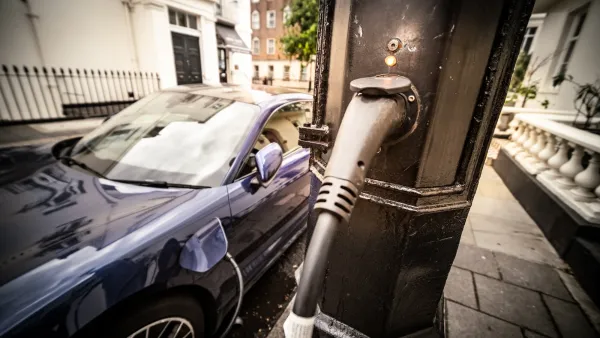
DC light poles will soon charge your electric car
The city awarded three grants to companies that will install more publicly available EV chargers.
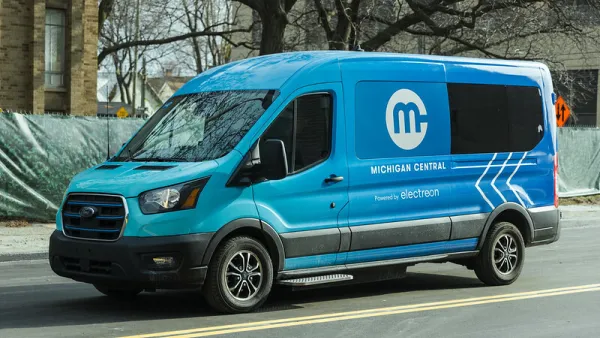
Detroit Tests the Nation’s First Public EV Charging Street
A quarter-mile segment of test roadway can charge EVs as they drive over it.

Planetizen Federal Action Tracker
A weekly monitor of how Trump’s orders and actions are impacting planners and planning in America.

California plans to bury El Niño’s downpour
If the state plays its cards right, it may be able to store a billion acre-feet of El Niño’s water in aquifers.

Chicago breaks ground on $3 billion megadevelopment
The new neighborhood, titled Foundry Park, will one day host 3,700 residences.

Satanic Place Names
From streams and lakes to valleys and canyons, I mapped more than 1,000 places named after the Devil.

California High-Speed Rail Authority CEO resigns after $600,000 scandal
Under Ian Choudri, the authority used taxpayer dollars to fund first class flights and trips to nightclubs.

Want to study the Missouri River? Soon, you may need unanimous approval from 10 states
Legislation would require 10 governors’ permission to study or build projects moving water outside the basin.

FREE Course: Walkable City 1: Why Walkability?
After describing his path towards focusing on walkability as the essence of good planning, Jeff Speck marches through his five principal reasons for making more walkable places.
Reinventing Malls: Planning Alchemy—Turning Gray Fields Into Gold
The course focuses on the opportunities and imperatives that shape reinvention of mall sites.

City of Rosemead
Rutgers University, Edward J. Bloustein School of Planning and Public Policy
One Hundred Miles
Hunter College, City University of New York (CUNY)
The Architects Foundation
University of Cincinnati Online
City of Cambridge
Montrose County
The Pocatello Development Authority