Public perceptions about noise and drugs have led the city of Kaplan in Louisiana to prohibit walking and biking at night.


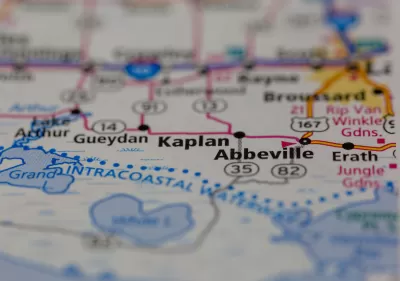
Kaplan, a city of just over 4,000 people in Vermilion Parish, Louisiana, recently set a curfew for pedestrians and people on bikes.
“Kaplan residents are under a permanent curfew to ban the riding of bikes and walking from 11 p.m. until 4 a.m. which went into effect July 1,” according to an article by Rodricka Taylor for KLFY.
Kaplan Police Chief Joshua Hardy said that the curfew was created in response to noise complaints, but cautioned that officers in the city would use discretion to allow people to walk home from work late at night, for example.
The reasoning behind the curfew didn’t stop with noise complaints, however: “Hardy told News 10 the curfew is to stop people from walking into others’ yards and stealing. In addition, police want to control the drug activity that occurs at night,” adds Taylor.
According to the article, the police chief introduced the curfew with support from the mayor and City Council.
Joe Taravella, a Kaplan resident for 12 years, is cited in the article as a supporter of the curfew.
“There’s a fraction of people that believe that is infringing on people’s rights, but at the same time, I think people can sit back and put a little perspective on the situation and agree that the good simply has to pay for the bad right now,” says Taravella in the article.
Read the full story: Kaplan starts permanent curfew against late night walking and bike traffic

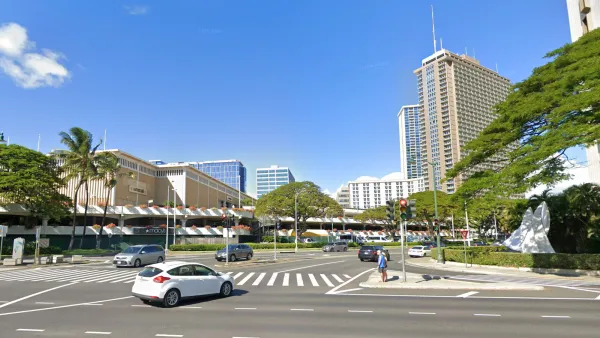
Hawaii DOT takes action after reporters call attention to dangerous crosswalk
The state made changes to a treacherous intersection after reporting revealed that traffic light timing was posting a threat to pedestrians.

April must-reads: Top 10 articles from last month
The world's longest car-free bridge opens in Finland, Amtrak's new Mardi Gras line shatters ridership predictions, and Bay Area commuters could lose a third of Caltrain stations.
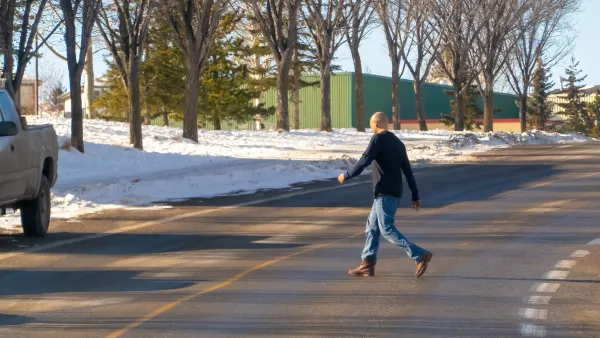
Study: Midblock pedestrian crossings are more common than we think
One in six crossings in the study took place outside of a marked crosswalk.

Planetizen Federal Action Tracker
A weekly monitor of how Trump’s orders and actions are impacting planners and planning in America.

The state-sanctioned urbicide of Austin
People don’t kill cities. Freeways do.

US to reduce Colorado River water deliveries to Mexico
A new Colorado Treaty amendment reduces Mexico’s Colorado River water allocation by 250,000 acre feet.

Nation's most wind-powered state turns to coal as data centers increase energy demand
For the first time in decades, Iowa has increased its generation of coal power.

NYC cools commuters with city's first rain garden above a bus stop
New York City officials say the plants in the rain garden can absorb 16 gallons of rainwater during heavy storms.

Brightline West’s future may rely on $6 billion federal loan
The company has until Nov. 2 to make a $400 million equity investment into its proposed high-speed rail line.

FREE Course: Walkable City 1: Why Walkability?
After describing his path towards focusing on walkability as the essence of good planning, Jeff Speck marches through his five principal reasons for making more walkable places.
Reinventing Malls: Planning Alchemy—Turning Gray Fields Into Gold
The course focuses on the opportunities and imperatives that shape reinvention of mall sites.

Eagle County Government
Harvard University Graduate School of Design
Nashville Planning Department
The Architects Foundation
University of Cincinnati Online
The Pocatello Development Authority
The Urban Renewal Agency of the City of Pocatello
Journal of the American Planning Association