Good and bad news can be found in the most recent demographic report from the California Department of Finance. The population dropped by nearly 140,000 last year while housing grew at the highest rate in 14 years.


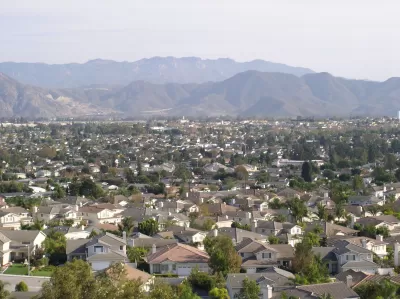
“The total population dropped to an estimated 38.9 million at the start of 2023, down from 39.1 million at the start of 2022, a 0.3% decline,” reports Sophia Bollag for the San Francisco Chronicle on May 1.
“The 0.35-percent population decline for 2022, roughly 138,400 persons, marks a slowdown compared to the recent decline during the COVID-19 Pandemic,” states the 20-page report [pdf] released on May 1 by the demographic unit of the state Department of Finance.
Between 2021 and 2022, California’s population decreased 0.53 percent or 207,800 persons, due mainly to sharp declines in natural increase and foreign immigration.
All but 12 of the state's 58 counties continued to lose population. Among the 10 most populous counties, Riverside (#4), San Bernardino (#5), and Fresno (#10) saw population increases.
“Among California’s 10 largest cities, just three grew: Sacramento, Fresno and Bakersfield, with Sacramento seeing the largest increase at 0.2%,” adds Bollag. Anaheim (#10) saw the largest percentage drop, 2.2%, followed by Los Angeles (#1) at 1%.
On the housing front, the data was more positive, according to the state report.
Over the same [12-month] period [ending on Jan. 1, 2023], statewide housing growth increased to 0.85 percent – its highest level since 2008. California added 123,350 housing units on net, including 20,683 accessory dwelling units (ADUs), to bring total housing in the state to 14,707,698 units.
However, the growth fell short of the governor's goal, notes Bollag.
That’s still a far slower rate of growth than Gov. Gavin Newsom and experts have said could alleviate the state’s housing shortage. For comparison, Newsom campaigned for governor on a platform that included building 3.5 million new housing units by 2025, which would have required the state to build more than half a million more units each year since he took office.
Political ramifications
POLITICO's California Playbook noted in their May 1 newsletter that “the Department of Finance’s most recent forecasts suggest the state’s population decline could continue into 2023 but stabilize the year after, with California picking up a couple thousand people in 2024.”
But even slow growth in the latter half of the decade could cause California to shed a second congressional seat after the 2030 [pdf] Census, a fate it narrowly avoided in 2020.
California was one of seven states to lose congressional seats following the 2020 Census.
Correspondent's note: Click on the tag, 'California Population,' for the latest demographic data from both the state and the U.S. Census Bureau.
Read the full story: California’s population is still shrinking. These Bay Area counties lost people


An Unexpected Turn for California's New State Population Report
Population data released May 1 by the Department of Finance reveals the Golden State's lowest population growth rate on record, at 0.47 percent.
California Halts Three Years of Population Loss
The Golden State grew by 67,000 people, or 0.17%, last year, to just over 39.1 million on Jan. 1, 2024, according to a demographic report released April 30 by the California Department of Finance.
California Decline: Population Likely Peaked Three Years Ago
A July projection from the state's Demographic Research Unit indicates that the population in 2060 may be about what it is today.

Planetizen Federal Action Tracker
A weekly monitor of how Trump’s orders and actions are impacting planners and planning in America.

California plans to bury El Niño’s downpour
If the state plays its cards right, it may be able to store a billion acre-feet of El Niño’s water in aquifers.

Chicago breaks ground on $3 billion megadevelopment
The new neighborhood, titled Foundry Park, will one day host 3,700 residences.

Satanic place names
From streams and lakes to valleys and canyons, I mapped more than 1,000 places named after the Devil.

California High-Speed Rail Authority CEO resigns after $600,000 scandal
Under Ian Choudri, the authority used taxpayer dollars to fund first class flights and trips to nightclubs.

Want to study the Missouri River? Soon, you may need unanimous approval from 10 states
Legislation would require 10 governors’ permission to study or build projects moving water outside the basin.

FREE Course: Walkable City 1: Why Walkability?
After describing his path towards focusing on walkability as the essence of good planning, Jeff Speck marches through his five principal reasons for making more walkable places.
Reinventing Malls: Planning Alchemy—Turning Gray Fields Into Gold
The course focuses on the opportunities and imperatives that shape reinvention of mall sites.


City of Rosemead
Rutgers University, Edward J. Bloustein School of Planning and Public Policy
One Hundred Miles
Hunter College, City University of New York (CUNY)
The Architects Foundation
University of Cincinnati Online
City of Cambridge
Montrose County
The Pocatello Development Authority