An automated traffic enforcement pilot program caught drivers illegally using transit lanes more than 110,000 times in less than a year.


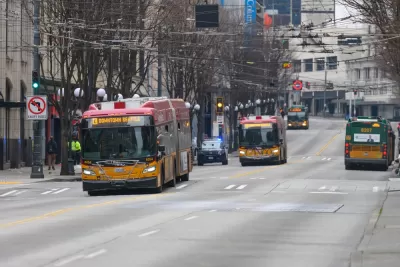
After installing traffic cameras aimed at catching drivers illegally entering transit-only lanes at five intersections, the city of Seattle issued 84,076 warnings and 26,092 tickets for bus lane violations between March and December 2022.
According to an article by Melissa Santos in Axios, “That amounted to about $825,000 in revenue, a small part of which goes toward the cost of running the cameras. Half of the remaining revenue goes to a state fund dedicated to bike and pedestrian improvements.”
Santos adds that “The city also started using cameras last year to catch people illegally blocking crosswalks and intersections, sometimes called ‘blocking the box.’” These cameras only issued 58 citations over roughly eight months.
The state legislature will decide in January 2025 whether to allow the city to continue using automated enforcement, which supporters say can improve road safety and help reduce violent interactions between citizens and law enforcement.
FULL STORY: Cameras caught drivers illegally using bus lanes 110,000 times

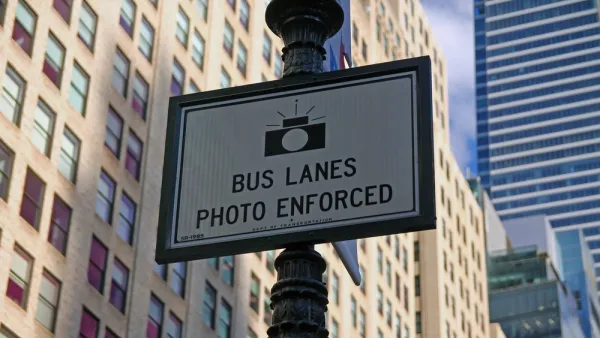
New York To Crack Down on Bus Lane Blocking Violations
The city hopes to improve the speed of its notoriously slow buses by using traffic cameras to ticket drivers who drive or park in dedicated bus lanes.
Traffic Camera Revenues to Fund Capacity-Building Programs in Washington State
Revenue from Washington's traffic enforcement cameras will go in part toward efforts to assist small communities in applying for grants and accessing funding opportunities.
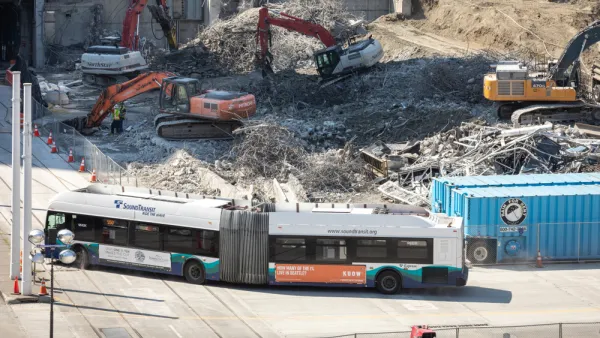
Editorial Calls for Automated Enforcement for Bus Lanes
The Seattle Times Editorial Board argues that automated enforcement would remove scofflaws from blocking bus commuters.

The state-sanctioned urbicide of Austin
People don’t kill cities. Freeways do.

US to reduce Colorado River water deliveries to Mexico
A new Colorado Treaty amendment reduces Mexico’s Colorado River water allocation by 250,000 acre feet.

New Jersey’s second-largest city bans standalone data centers
Jersey City will continue to allow co-location facilities, such as those meant for research institutions that store their own data.

Amtrak not solely to blame for New Jersey commuter rail's unreliability, report finds
A new study from the Garden State Initiative found that NJ Transit’s budget grew 20% across a 4 year period, but reliability declined significantly over the same period.

EPA erases limits on planet-warming pollution from power plants
Under Monday’s plan, power plants would still have some limits on how much mercury, arsenic and other contaminants they can emit.

Phoenix announces new on-demand transit service, more frequent RAPID buses
Both new services will launch in October, and are part of Phoenix's Project Effective Access Solutions for Easing Congestion.

FREE Course: Walkable City 1: Why Walkability?
After describing his path towards focusing on walkability as the essence of good planning, Jeff Speck marches through his five principal reasons for making more walkable places.
Reinventing Malls: Planning Alchemy—Turning Gray Fields Into Gold
The course focuses on the opportunities and imperatives that shape reinvention of mall sites.

Eagle County Government
Harvard University Graduate School of Design
Nashville Planning Department
The Architects Foundation
University of Cincinnati Online
The Pocatello Development Authority
The Urban Renewal Agency of the City of Pocatello
Journal of the American Planning Association