The City of London’s efforts to increase biking and reduce driving has finally achieved a long-term goal: a preference for biking over driving.


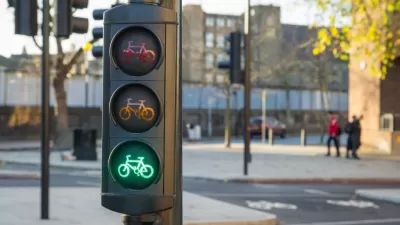
People on bikes outnumber drivers in the City of London, according to a recent report.
An article by Carlton Reid shares news of the report to the transportation committee of the City of London Corporation that presents the latest traffic figures for the central square mile of London.
“At peak times, people cycling represent 40% of road traffic in the City and 27% throughout the day,” according to Reid. The trends are a result of a concerted effort to restrict automobile travel and increase biking in the City of London.
“Walking remains the main way people travel on the City’s streets, says the report to councilors,” writes Reid. “However, the number of pedestrians is currently below pre-pandemic figures, with the volumes of motor vehicles also 80% of what they were in 2019.”
The real progress is with people on bikes. “However, cyclist numbers are at 102% of pre-pandemic levels. The number of motorists has fallen by 64% since 1999, while the number of cyclists has increased by 386%.”
Planetizen has been tracking the mode shift underway in London since at least 2016.
Read the full story: Cyclists Now Outnumber Motorists In City Of London

Unusual Arrangement Unites Local London Government, Finance Industry
Not many non-Londoners know what the City of London is. Even fewer know about its political ties to the finance industry.
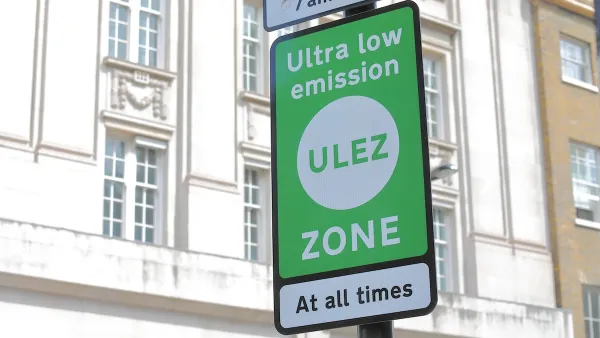
Study: London ULEZ Rapidly Cleaning up Air Pollution
Expanding the city’s ultra low-emission zone has resulted in dramatic drops in particle emissions in inner and outer London.

London Low-Emissions Zone Prompts Shift to Active Modes
More children are using active transportation modes to get to school in the wake of a policy that charges drivers to enter a low-emissions zone in central London.

Planetizen Federal Action Tracker
A weekly monitor of how Trump’s orders and actions are impacting planners and planning in America.

California plans to bury El Niño’s downpour
If the state plays its cards right, it may be able to store a billion acre-feet of El Niño’s water in aquifers.

Chicago breaks ground on $3 billion megadevelopment
The new neighborhood, titled Foundry Park, will one day host 3,700 residences.

California High-Speed Rail Authority CEO resigns after $600,000 scandal
Under Ian Choudri, the authority used taxpayer dollars to fund first class flights and trips to nightclubs.

Want to study the Missouri River? Soon, you may need unanimous approval from 10 states
Legislation would require 10 governors’ permission to study or build projects moving water outside the basin.

Desperate measures: Advocates weigh draining Lake Powell to fill Colorado River
Draining the reservoir could reduce evaporation losses by a couple hundred thousand acre-feet.

FREE Course: Walkable City 1: Why Walkability?
After describing his path towards focusing on walkability as the essence of good planning, Jeff Speck marches through his five principal reasons for making more walkable places.
Reinventing Malls: Planning Alchemy—Turning Gray Fields Into Gold
The course focuses on the opportunities and imperatives that shape reinvention of mall sites.

City of Rosemead
Rutgers University, Edward J. Bloustein School of Planning and Public Policy
One Hundred Miles
Hunter College, City University of New York (CUNY)
The Architects Foundation
University of Cincinnati Online
City of Cambridge
Montrose County
The Pocatello Development Authority