Not many non-Londoners know what the City of London is. Even fewer know about its political ties to the finance industry.


The City of London, a small swatch of land in the heart of the metropolis, has for centuries been run by a local government known as the City of London Corporation. “This little government does more than just run schools and collect what the Brits call rubbish,” Dan Bobkoff explains. “It’s a stealth power.”
Despite having fewer than 7,500 resident constituents, the City of London Corporation holds about $2 billion in its coffers. It also has a troubling relationship with the financial institutions that dominate its geography.
Approximately 300,000 people commute into the City of London each day, most headed for firms like JPMorgan Chase and Bank of China. The City allows those companies to appoint representatives to vote in local elections. It also spends money and time promoting business interests abroad.
East End vicar Father William Taylor is an outspoken critic of the City’s relationship to the finance industry. He and other reformers have been working to change the City’s special status for the last several years, against fierce pushback from local officials.
Read the full story: Are Things Too Cozy in London's 'City' Within a City?

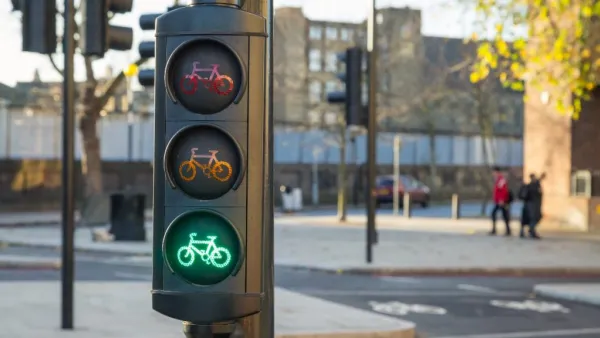
People on Bikes Outnumber Drivers in the City of London
The City of London’s efforts to increase biking and reduce driving has finally achieved a long-term goal: a preference for biking over driving.
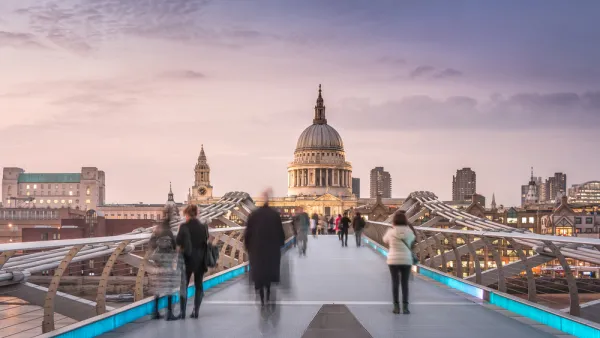
City of London Could Set Speed Limits at 15 MPH
The City of London (not to be confused with the larger area of Greater London) will consider a plan to reduce speed limits throughout the "Square Mile" that outlines its boundaries.
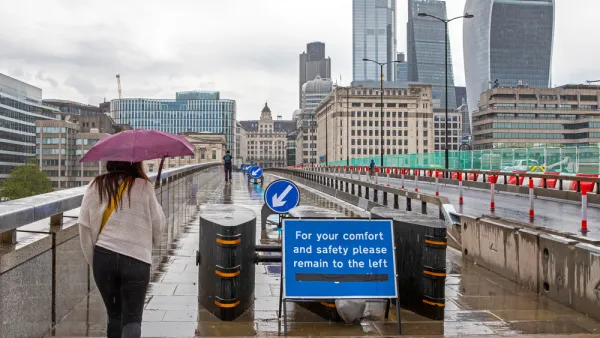
London to Replace 2,000 Car Parking Spots With Bike Storage
London announced another sweeping round of changes to its transportation priority, further cementing the future of active transportation both during and after the pandemic.

Planetizen Federal Action Tracker
A weekly monitor of how Trump’s orders and actions are impacting planners and planning in America.

Amtrak, CN end decades-long dispute with eight-year agreement
The new operating agreement establishes an updated framework for the companies to work together, including processes to resolve disputes.

Judges permit Denver to divert 77,000 acre feet from the Colorado River for reservoir expansion
Overuse and climate change have caused the Colorado River’s water levels to plummet.

Maryland local governments examine if they should have more power to raise property taxes
Maryland’s housing market is out of reach for the majority of moderate-income residents.

Northwest rail fans eager for Sept. 30 debut of Amtrak’s Airo fleet
Get ready for that new train smell and more seats. But they won’t go faster or run more frequently on the Cascades route in Washington and Oregon.

NYC DOT wants faster, more permanent street upgrades
The city is examining ways to build more concrete infrastructure without getting entangled in 'decades-long' projects.

FREE Course: Walkable City 1: Why Walkability?
After describing his path towards focusing on walkability as the essence of good planning, Jeff Speck marches through his five principal reasons for making more walkable places.
Reinventing Malls: Planning Alchemy—Turning Gray Fields Into Gold
The course focuses on the opportunities and imperatives that shape reinvention of mall sites.

Harvard University Graduate School of Design
KFH Group Inc.
Greater Baltimore Committee
The Architects Foundation
University of Cincinnati Online
The Pocatello Development Authority
The Urban Renewal Agency of the City of Pocatello