The Cincinnati Streetcar, now known as the Cincinnati Connector, has come so far.


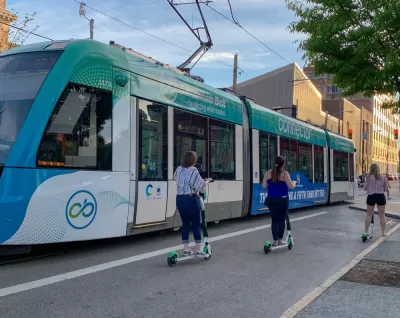
The Cincinnati Connector streetcar, which has attracted controversies and challenges since long before it opened in 2016, set a new ridership record in the month of October.
According to an article by Sharon Coolidge for the Cincinnati Enquirer, the Cincinnati Connector, née Cincinnati Bell Connector, served more than 100,000 monthly riders in October, thanks in part to a special four-day light festival called Blink that attracted 2 million people to the Over-the-Rhine neighborhood.
The Cincinnati Connector is on a little bit of a roll this year. “The ridership total for October was 103,700, eclipsing the streetcar’s previous all-time monthly high of 89,074 passengers set in July of this year, according to a city of Cincinnati press release.”
Prior to the pandemic, the news for the streetcar was mostly dire, with reports of service and fiscal failures dominating the news in 2018. Things started to turn around when the system was made free forever in 2020—a celebrity endorsement from Emilio Estevez didn’t hurt either.
FULL STORY: Cincinnati streetcar sets monthly ridership record

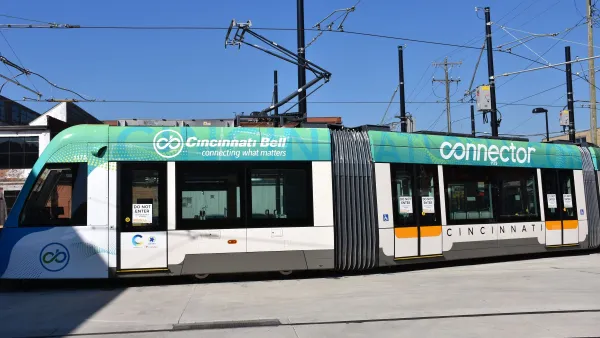
Streetcars Out of Service in Cincinnati
It's been a rough week for the Cincinnati Bell Connector.
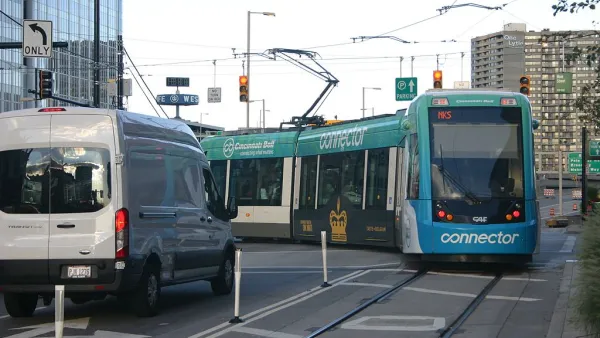
Management Divorce for the Cincinnati Streetcar
Efforts to bolster support for a countywide sales tax levy in Hamilton County, Ohio, are pushing the city to fire SORTA as the manager of the troubled Cincinnati Bell Connector.
Streetcar Facing $1.4 Million Budget Deficit in Cincinnati
The Cincinnati Streetcar, now known as the Bell Connector, weathered numerous controversies on the way to completion. Now it faces the prospect of balancing its budget less than three years after launching.

Planetizen Federal Action Tracker
A weekly monitor of how Trump’s orders and actions are impacting planners and planning in America.

The state-sanctioned urbicide of Austin
People don’t kill cities. Freeways do.

US to reduce Colorado River water deliveries to Mexico
A new Colorado Treaty amendment reduces Mexico’s Colorado River water allocation by 250,000 acre feet.

5 New England states march closer to 800 megawatt wind energy project
Securing federal approval for the project may be complicated under the Trump administration, which has historically been hostile towards domestic wind power.

Baltimore to break ground on $50 million Transit Priority Project
The project will bring faster bus trips, safer streets and better bike connections to Baltimore.

Airbnb launches $250 million 'last-dollar financing' housing accelerator, makes first investment in Austin
The company will put $6.4 million towards affordable housing development in Texas’ capital.

FREE Course: Walkable City 1: Why Walkability?
After describing his path towards focusing on walkability as the essence of good planning, Jeff Speck marches through his five principal reasons for making more walkable places.
Reinventing Malls: Planning Alchemy—Turning Gray Fields Into Gold
The course focuses on the opportunities and imperatives that shape reinvention of mall sites.

Eagle County Government
Harvard University Graduate School of Design
Nashville Planning Department
The Architects Foundation
University of Cincinnati Online
The Pocatello Development Authority
The Urban Renewal Agency of the City of Pocatello
Journal of the American Planning Association