If approved, an ordinance under consideration in Louisville would commit to eventually eliminate traffic fatalities…20 years in the future.


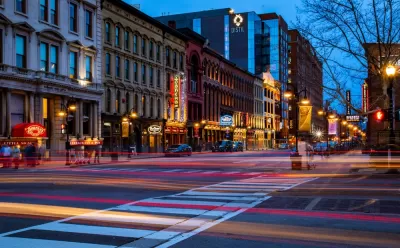
“Louisville Metro Council is debating a proposed ordinance that would commit the city to a goal of eliminating roadway deaths by 2050, an initiative known as Vision Zero,” reports Roberto Roldan for WFPL. “More than 900 people have died from crashes on non-interstate roadways in Louisville since 2014, according to city data, including 185 pedestrians.”
The ordinance would “require city agencies like Public Works and Louisville Metro Police to create an action plan for reducing fatal collisions and provide Metro Council with an annual update,” according to Roldan.
The ordinance has encountered resistance on the Metro Council from elected officials concerned about street reconfigurations might hurt business.
There is also little in the way of evidence that Vision Zero programs in other parts of the country (e.g., Seattle, Portland, New York City, the entire country) have done anything to reduce traffic collisions outside of a few rare examples (e.g., Fremont and Hoboken).
Read the full story: Ordinance would make ending traffic deaths the primary focus of road design in Louisville

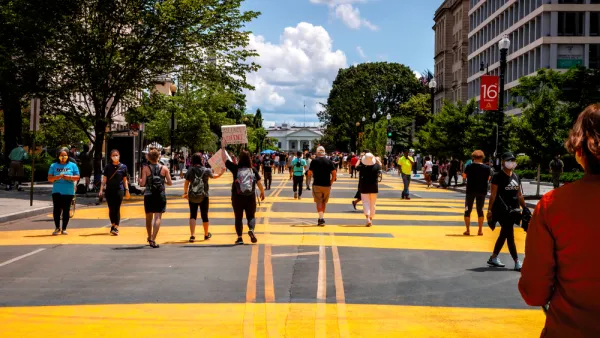
D.C. Revamps its Vision Zero Plan to Eliminate Traffic Fatalities
Washington, D.C. was an early adopter of Vision Zero in the United States, but eventually it became emblematic of the country's lack of progress in reducing traffic collisions.
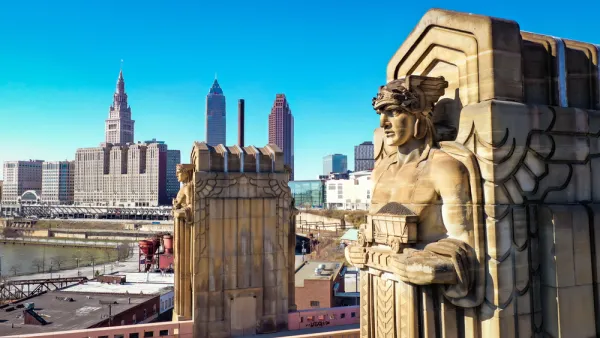
Cleveland Ready for Vision Zero
Cleveland is working to become the latest U.S. city to set a goal to eliminate traffic fatalities.
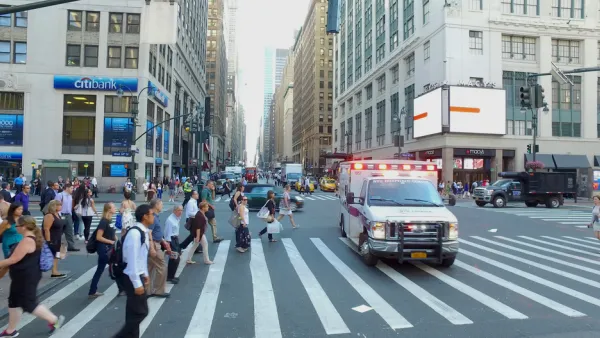
New York City Traffic Fatalities Pass 2019 Totals
The visions of a car-free utopia that might have seemed like a potential silver lining in March and April have given away to a tragic reality.

Planetizen Federal Action Tracker
A weekly monitor of how Trump’s orders and actions are impacting planners and planning in America.

Northwest rail fans eager for Sept. 30 debut of Amtrak’s Airo fleet
Get ready for that new train smell and more seats. But they won’t go faster or run more frequently on the Cascades route in Washington and Oregon.
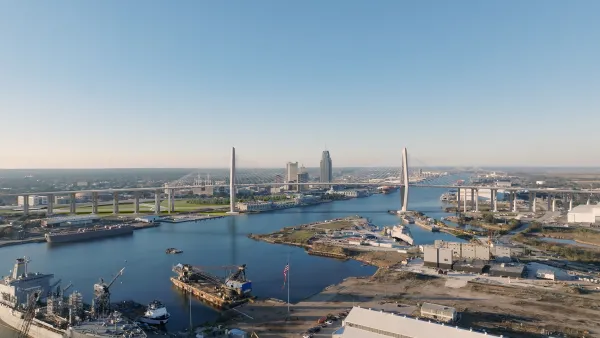
Alabama scores up to $2.5 billion federal loan for largest infrastructure project in state’s history
The Mobile River Bridge and Bayway Project aims to ease congestion at Alabama’s worst bottleneck.

Novel study finds extreme state-by-state disparity in housing construction timelines
The first comprehensive working paper on U.S. construction timelines also found that the permitting process for multi-family projects has slowed nationwide.

California may destroy its beaches trying to save homes from El Niño
Boulders and seawalls can protect homes from waves, but ultimately destroy sandy beaches.

California high-speed rail accomplishes only one legislative goal in 2026
The majority of the agency's failed pitches were never developed into written proposals.

FREE Course: Walkable City 1: Why Walkability?
After describing his path towards focusing on walkability as the essence of good planning, Jeff Speck marches through his five principal reasons for making more walkable places.
Reinventing Malls: Planning Alchemy—Turning Gray Fields Into Gold
The course focuses on the opportunities and imperatives that shape reinvention of mall sites.

City of Thousand Oaks
City of Wisconsin Rapids
Harvard University Graduate School of Design
The Architects Foundation
University of Cincinnati Online
Northern Illinois Transit Authority (NITA)
The Pocatello Development Authority
The Urban Renewal Agency of the City of Pocatello