One Seattle councilmember is calling for more urgency in addressing the city’s rising traffic deaths.


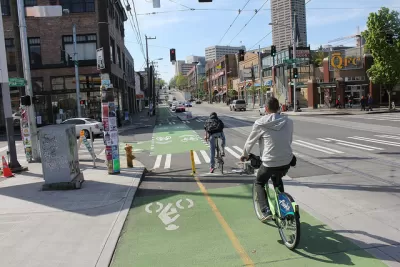
Despite Seattle’s stated commitment to Vision Zero, writes Lizz Giordano in the South Seattle Emerald, the city saw record high traffic fatalities in 2021. “And this year is proving nearly as deadly with 10 traffic deaths so far, averaging out to about one person being killed every other week on Seattle streets,” Giordano adds.
City Councilmember Tammy Morales calls the deaths “unacceptable,” saying the city needs to shift from studies to solutions. “And for her that means acting on the bike and pedestrian master plans the City has developed.”
Giordano points out that less than 1 percent of roads in Seattle have a protected bike lane, while close to 25 percent have no sidewalks. According to Morales, Districts 2 and 5 are disproportionately affected by the lack of safe infrastructure. The article adds that “Of the 19 deaths last year and so far this year in District 2, nearly 75% involved a pedestrian or bicyclist.”
As the only part of the city with at-grade light rail, District 2 would also benefit from rail safety improvements. “Since the line opened in 2009, 10 people have been killed in collisions with light rail trains with 8 of those fatalities occurring in the Rainier Valley.”
Pointing to safety measures in other parts of the city, “Morales wants to see more safety projects like the ones SDOT installed along Rainier Avenue which included crosswalks, flashing beacons, hardened left lane lines to slow turning drivers, and leading pedestrian intervals which give people on foot a head start at traffic signals.”
Read the full story: Funding ‘Solutions Not Studies’ to End Seattle Traffic Deaths – South Seattle Emerald
Traffic Safety Efforts Chug Ahead — Too Slowly for Some
Around the United States, traffic deaths are growing or plateauing, yet efforts to make roads safer still face political opposition.
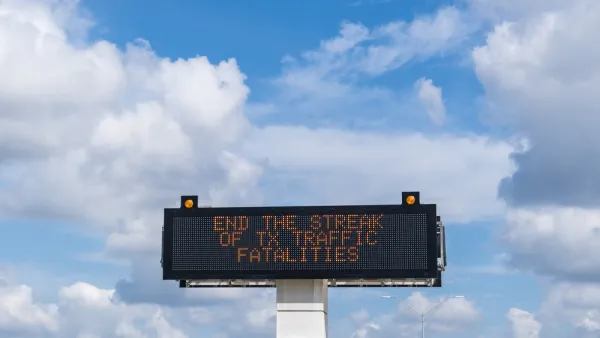
Texas Road Safety Messaging Blames Pedestrians, Ignores Structural Flaws
Critics of the state’s ‘Be Safe. Drive Smart.’ campaign say the messaging puts the onus on pedestrians and cyclists while failing to address the lack of robust pedestrian and bike infrastructure in many of its cities.
New York Legislature To Vote on Complete Streets Bills
A set of proposed laws would make streets safer for all road users in an effort to reduce traffic deaths.

Planetizen Federal Action Tracker
A weekly monitor of how Trump’s orders and actions are impacting planners and planning in America.

California plans to bury El Niño’s downpour
If the state plays its cards right, it may be able to store a billion acre-feet of El Niño’s water in aquifers.

Desperate measures: Advocates weigh draining Lake Powell to fill Colorado River
Draining the reservoir could reduce evaporation losses by a couple hundred thousand acre-feet.

In Texas, data centers are swallowing promised parkland
Residents who moved to Taylor, Texas for a rural community now have to contend with three data centers in their backyard.

How a Chicago-sized wind farm beat the odds and powered on
The project spanned five presidential administrations and a standoff with a U.S. military base.

MTA gives itself 30 days to transform pit into basketball court
The site has been under construction since 2022; the city originally estimated it would finish the court in 2024.

FREE Course: Walkable City 1: Why Walkability?
After describing his path towards focusing on walkability as the essence of good planning, Jeff Speck marches through his five principal reasons for making more walkable places.
Reinventing Malls: Planning Alchemy—Turning Gray Fields Into Gold
The course focuses on the opportunities and imperatives that shape reinvention of mall sites.

City of Rosemead
Rutgers University, Edward J. Bloustein School of Planning and Public Policy
One Hundred Miles
Hunter College, City University of New York (CUNY)
The Architects Foundation
University of Cincinnati Online
City of Cambridge
Montrose County
The Pocatello Development Authority