The unanimous decision by the Coastal Commission on May 12 might have dealt a fatal blow to the costly seawater desalination project proposed for Huntington Beach, but it was not 'a referendum on the future of desalination in California.'


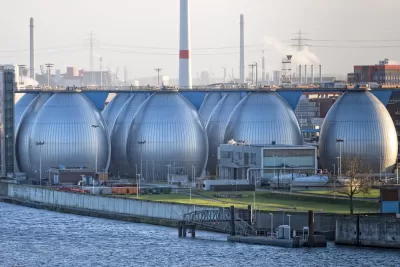
"More than 200 people had lined up to comment on the project, and public comments lasted about six hours," reported Rachel Becker for CalMatters, a nonprofit news organization, on the public hearing held on May 12 by the California Coastal Commission, a state agency within the California Natural Resources Agency focused on protecting and preserving the state's 1,100-mile coastline.
The meeting was held in Costa Mesa , just a few miles from the Huntington Beach Energy Project (power plant) where Poseidon Water has proposed building the Huntington Beach Desalination Plant, which the commission refers to as Poseidon Huntington Beach.
The public and elected officials who spoke at the hearing were divided in their support and opposition of the desalination plant.
Multiple Orange County Water District board members voiced their support of the project at the hearing, with board member Cathy Green saying, “We need this water and we need it now.” Board member Kelly Rowe, however, said “it fundamentally does not make sense.”
The Coastal Commission staff had advised the commission to deny approval [pdf] — citing, among other factors, the high cost of the water and lack of local demand for it, the risks to marine life and the possibility of flooding in the area as sea levels rise.
Marine Life
The effects of the plant would be severe, similar to the impact of wind power on birds and bats if not properly sited and operated properly.
Coastal Commission staff also sounded the alarm about the millions of gallons of larval fish that would be sucked into the plant, and the millions of other marine creatures killed by the water pumped back into the ocean.
“The project would kill marine life in about 275 million gallons of seawater per day, which is about 100 billion gallons of seawater each year,” said Tom Luster, an environmental scientist with the commission. “If this type and scale of impact were to happen on land, it would be highly visible and alarming.”
Governor takes a hit
"In denying Poseidon a permit, the commission demonstrated its independence from the Newsom administration and also sent the message that high costs, vocal opposition and hazards such as sea-level rise can present major hurdles for large desalination plants on the California coast," reported Ian James for the Los Angeles Times on Thursday.
[See related post, March 1, 2021: "Critics of a controversial desalination project planned for Orange County claim Governor Newsom is pressuring officials to support the plant in spite of environmental concerns."]
"The decision, which was recommended by the commission‘s staff, may end the company’s plans for the $1.4-billion plant," adds James, who focuses on water in California and the West. In a earlier deep-dive into the proposal (posted last month), James wrote on April 22:
The long-running fight over the proposal encompasses contentious issues such as the effects on marine life, power requirements and whether the low-lying site is vulnerable to sea-level rise, as well as the company’s heavy political lobbying for the lucrative project. [See March 1, 2021 related post].
Not the end of new desalination proposals
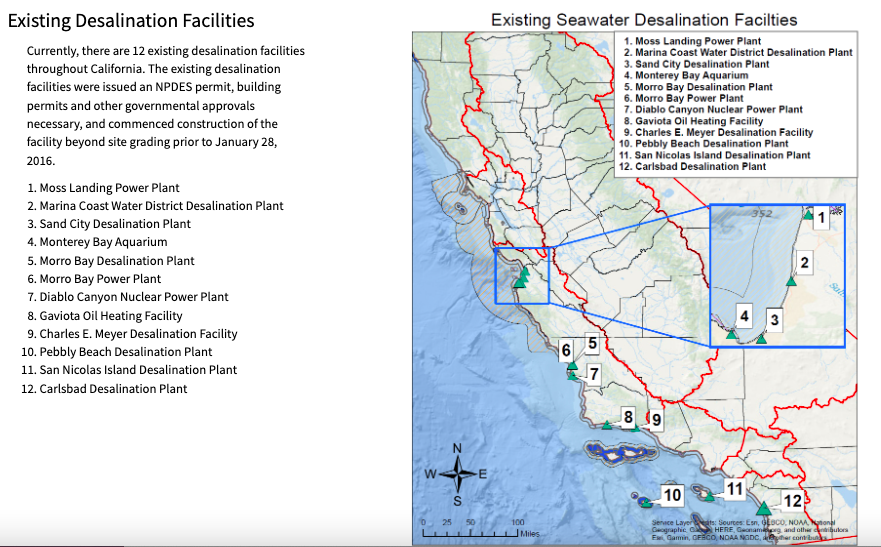
California has 12 seawater desalination facilities in operation as of January 2022, according to the California Water Boards. In addition, there are four proposals, including Poseidon Huntington Beach. [See the map below the existing 12 facilities on the Water Boards' webpage).
The Carlsbad plant, built and operated by Carlsbad-based Poseidon Water, opened in 2015. Its parent company, Brookfield Infrastructure Partners, L.P., is based in Toronto and associated with Brookfield Homes and Brookfield Properties.
[See August 2008 post by Nate Berg, one of Planetizen's first news correspondents: "The California Coastal Commission approved a plan to build the Western Hemisphere's largest desalination plant north of San Diego."]
A better project?
For desal's advocates, particularly those who want to see seawater projects as opposed to brackish desalination projects, take notice – reason for optimism.
"[California Coastal Commission] Executive Director Jack Ainsworth said their recommendation was not a referendum on the future of desalination in California, pointing to more optimistic prospects for another project, the proposed Doheny Desalination Facility in south Orange County’s Dana Point," adds Becker for CalMatters.
"Unlike traditional desalination facilities, the Doheny facility would use advanced slant wells that protect marine life by drawing water from beneath the ocean floor," according to the description of the project by the South Coast Water District in Laguna Beach, Orange County.
Environmentalists and state regulators prefer this technology. Built into the system being considered by the District is also an energy recovery process, resulting in 45 to 55 percent less energy usage than systems without that feature.
Related posts:
- Controversy Follows California's Massive Desalination Plant Proposal, April 25, 2022
- California Ballot Measure Could Streamline Permitting for Water Projects [including desalination plants], November 26, 2021
- Environmentalists Object to California Desalination Plan, March 1, 2021
- Desalination Plants Produce More Brine Than Fresh Water, January 22, 2019
- Desalination Projects Get a Big Boost in California, January 30, 2018
- What Happened to all those Desalination Plants Proposed for California? November 2, 2016
- The Case for Desalination: Option of Last Resort for Some California Cities, April 18, 2015
- Management, Not Technology, Will Solve California's Drought, April 9, 2015
- Desalination Plant Approved in California, August 11, 2008
FULL STORY: A salty dispute: California Coastal Commission unanimously rejects desalination plant

Desalination and Water Recycling Needed to Increase Bay Area Water Supply
In an ongoing drought exacerbated by climate change, the Bay Area needs to look toward two technologies to secure adequate drinking water supply: desalination and wastewater recycling, according to an analysis by the San Francisco Examiner.
Orange County Desalination Plant Wins Key Approval
A desalination plant is moving forward in Orange County with California Coastal Commission approval just a few months after another, uch more expensive project, failed the same test.
What Happened to all those Desalination Plants Proposed for California?
Less than a decade ago, "desal" proposals in California numbered over 22, but only one major one was built—in Carlsbad, serving the San Diego region. A newly released study by the Pacific Institute explains why.

The state-sanctioned urbicide of Austin
People don’t kill cities. Freeways do.

US to reduce Colorado River water deliveries to Mexico
A new Colorado Treaty amendment reduces Mexico’s Colorado River water allocation by 250,000 acre feet.

New Jersey’s second-largest city bans standalone data centers
Jersey City will continue to allow co-location facilities, such as those meant for research institutions that store their own data.

Amtrak not solely to blame for New Jersey commuter rail's unreliability, report finds
A new study from the Garden State Initiative found that NJ Transit’s budget grew 20% across a 4 year period, but reliability declined significantly over the same period.

EPA erases limits on planet-warming pollution from power plants
Under Monday’s plan, power plants would still have some limits on how much mercury, arsenic and other contaminants they can emit.

Phoenix announces new on-demand transit service, more frequent RAPID buses
Both new services will launch in October, and are part of Phoenix's Project Effective Access Solutions for Easing Congestion.

FREE Course: Walkable City 1: Why Walkability?
After describing his path towards focusing on walkability as the essence of good planning, Jeff Speck marches through his five principal reasons for making more walkable places.
Reinventing Malls: Planning Alchemy—Turning Gray Fields Into Gold
The course focuses on the opportunities and imperatives that shape reinvention of mall sites.

Eagle County Government
Harvard University Graduate School of Design
Nashville Planning Department
The Architects Foundation
University of Cincinnati Online
The Pocatello Development Authority
The Urban Renewal Agency of the City of Pocatello
Journal of the American Planning Association