Now that cities and states are recognizing the potential of middle-density zoning, builders and homeowners are getting creative with Accessory Dwelling Unit designs that minimize costs and maximize comfort.


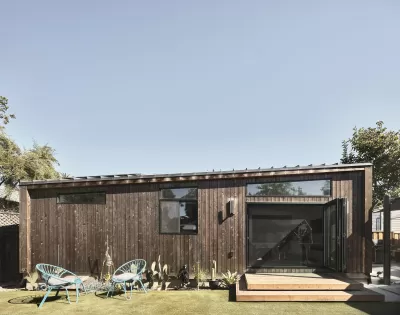
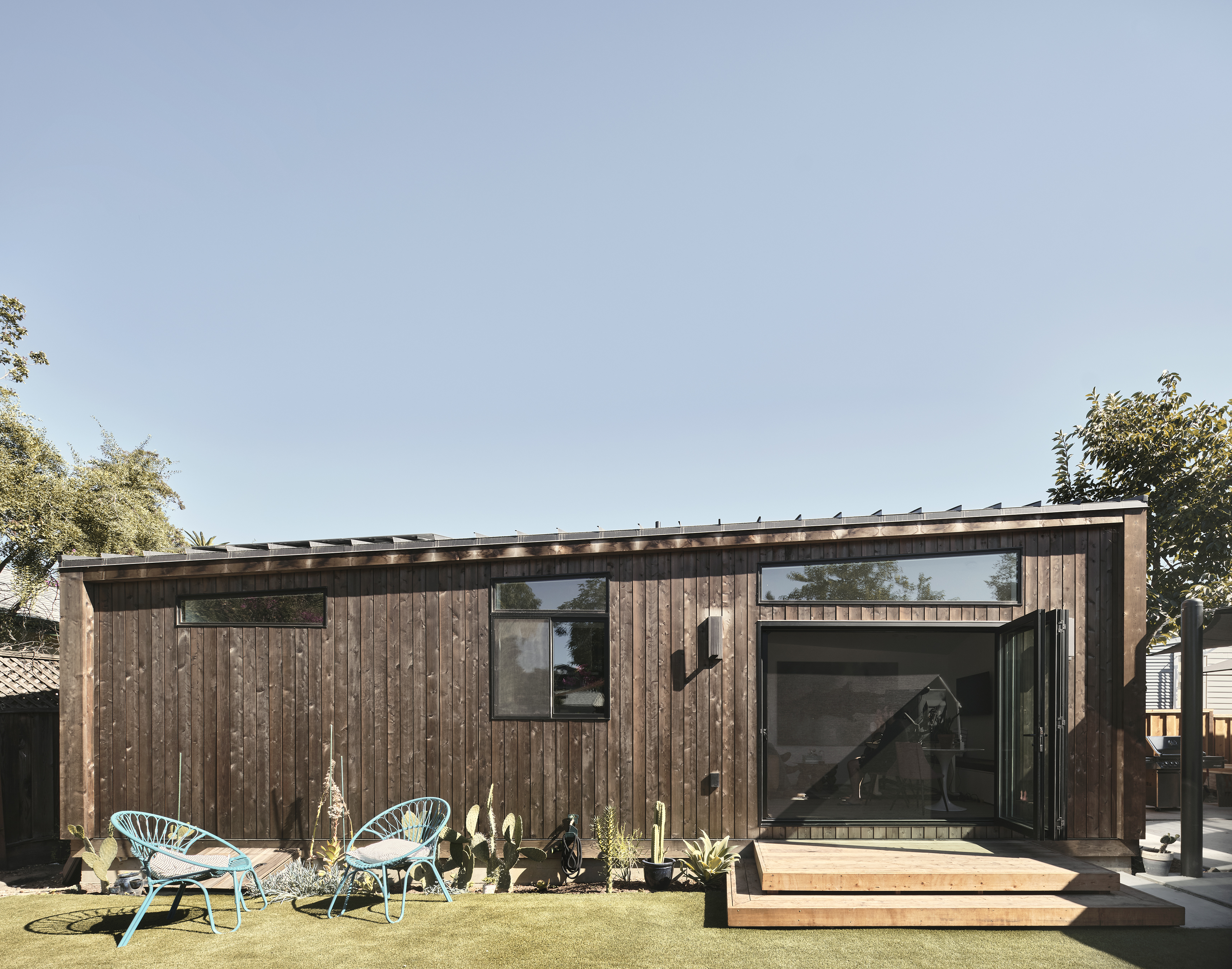
As more states and localities legalize the construction of Accessory Dwelling Units (ADUs) on single-family lots, Kol Peterson describes some examples of ADUs in Northern California's East Bay, where relaxed regulations have led to a growth in ADU construction. But despite upzoning initiatives, Peterson writes, "detached ADUs are encumbered by Title 24 with the same standards and requirements as are used for large detached homes, including glazing requirements and appliances such as water heaters."
According to research from Karen Chappel at the University of California Berkeley’s School of Environmental Design, informal ADUs already make up 17 percent of housing stock in the East Bay, signaling a strong need for legalizing and regulating this housing type to ensure safety while allowing property owners to maximize their density and provide a key element of 'missing middle housing.' Peterson tours a variety of formal and informal ADUs in communities around the region, from custom designs to prefabricated ADUs and affordable units that cost just $60,000 to build.
While upzoning for ADUs and other 'mid-density' housing types has become an increasingly popular policy tool for encouraging denser housing development, experts caution that addressing density restrictions alone won't necessarily create more housing if other regulations and local opposition make construction expensive and cumbersome for developers and homeowners.
FULL STORY: ADU LESSONS FROM THE EAST BAY OF CALIFORNIA


Berkeley Launches ADU Amnesty Program
Owners of unpermitted accessory dwelling units can bring their units up to code and obtain certificates of compliance without facing penalties.

Maine Looks To Legalize ‘Missing Middle Housing’
Maine could become the third state to eliminate single-family-only zoning to encourage light density increases in residential areas and make it easier for homeowners to build accessory dwelling units.
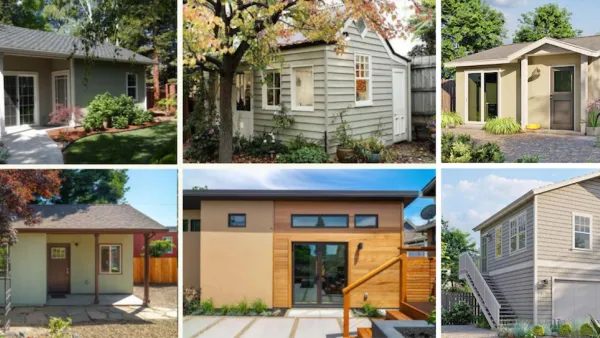
Cincinnati ADU Legalization Slow to Catch On
Only four permits have been filed since the city made ‘granny flats’ legal last year.

Planetizen Federal Action Tracker
A weekly monitor of how Trump’s orders and actions are impacting planners and planning in America.

The state-sanctioned urbicide of Austin
People don’t kill cities. Freeways do.

US to reduce Colorado River water deliveries to Mexico
A new Colorado Treaty amendment reduces Mexico’s Colorado River water allocation by 250,000 acre feet.

5 New England states march closer to 800 megawatt wind energy project
Securing federal approval for the project may be complicated under the Trump administration, which has historically been hostile towards domestic wind power.

Baltimore to break ground on $50 million Transit Priority Project
The project will bring faster bus trips, safer streets and better bike connections to Baltimore.

Airbnb launches $250 million 'last-dollar financing' housing accelerator, makes first investment in Austin
The company will put $6.4 million towards affordable housing development in Texas’ capital.

FREE Course: Walkable City 1: Why Walkability?
After describing his path towards focusing on walkability as the essence of good planning, Jeff Speck marches through his five principal reasons for making more walkable places.
Reinventing Malls: Planning Alchemy—Turning Gray Fields Into Gold
The course focuses on the opportunities and imperatives that shape reinvention of mall sites.

Eagle County Government
Harvard University Graduate School of Design
Nashville Planning Department
The Architects Foundation
University of Cincinnati Online
The Pocatello Development Authority
The Urban Renewal Agency of the City of Pocatello
Journal of the American Planning Association