Owners of unpermitted accessory dwelling units can bring their units up to code and obtain certificates of compliance without facing penalties.



A Berkeley pilot program offers amnesty to homeowners with illegal accessory dwelling units (ADUs) in an effort to bring more housing units online and bring unpermitted units up to code, reports J.K. Dineen in the San Francisco Chronicle.
“During a four-year pilot program that started Jan. 1 and extends through 2028, Berkeley homeowners can approach city planners about getting unpermitted accessory units inspected for safety, and legalized, while being assured that the process will be confidential and no penalties will be assessed on the previously undocumented apartment.”
Owners can opt for a certificate of occupancy for units that need upgrades or a certificate of compliance for units that already meet minimum building and safety standards.
Former City Councilmember Susan Wengraf, who supported the program, “stressed that units need to be safe in order to be legalized: Amnesty doesn’t mean that squalid hovels with shoddy wiring or leaky pipes will be given the city’s blessing.” The city estimates there are as many as 4,000 unpermitted units in Berkeley.
Read the full story: Berkeley is legalizing a type of housing that could add thousands of units to the market


Massachusetts Zoning Reform Sparks ADU Surge
A 2024 law and a 2025 assistance program have spurred a flurry of ADU projects across the state.
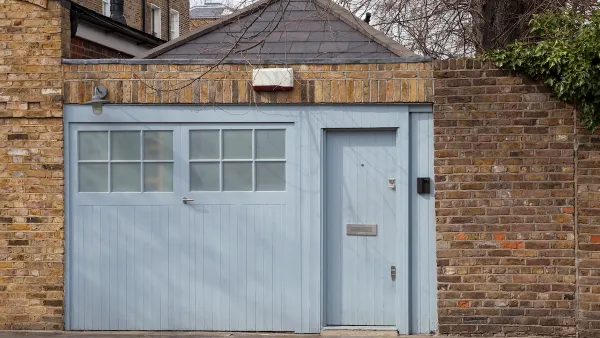
Are ADUs New Jersey’s Affordable Housing Solution?
Accessory units can bring gentle density increases and boost the housing supply with minimal impact on local infrastructure.

How Cities Can Support ADU Production
Although state-level laws are making it easier for homeowners to build accessory dwelling units, high impact and development fees remain a major barrier for many prospective ADU builders.

Planetizen Federal Action Tracker
A weekly monitor of how Trump’s orders and actions are impacting planners and planning in America.

Amtrak, CN end decades-long dispute with eight-year agreement
The new operating agreement establishes an updated framework for the companies to work together, including processes to resolve disputes.

Judges permit Denver to divert 77,000 acre feet from the Colorado River for reservoir expansion
Overuse and climate change have caused the Colorado River’s water levels to plummet.

Atlanta City Council unanimously backs $3.5 billion Beltline light rail project
The resolution was drafted after Atlanta Mayor Andre Dickens pulled support for the Atlanta Streetcar extension last year.

SEPTA to bring nearby frequent transit to over 1 million new riders as part of decade-long plan
The agency's Accelerate plan will also bring frequent transit to twice the amount of jobs that are currently located near it.

NYC plants over 18,000 trees, the most new foliage in a decade
Many of the trees were planted in communities vulnerable to extreme heat.

FREE Course: Walkable City 1: Why Walkability?
After describing his path towards focusing on walkability as the essence of good planning, Jeff Speck marches through his five principal reasons for making more walkable places.
Reinventing Malls: Planning Alchemy—Turning Gray Fields Into Gold
The course focuses on the opportunities and imperatives that shape reinvention of mall sites.

City of Thousand Oaks
City of Wisconsin Rapids
Harvard University Graduate School of Design
The Architects Foundation
University of Cincinnati Online
The Pocatello Development Authority
The Urban Renewal Agency of the City of Pocatello