Several Dutch cities are planning to limit the reach of large investors in the housing market by limiting the resale of cheap or mid-priced homes.


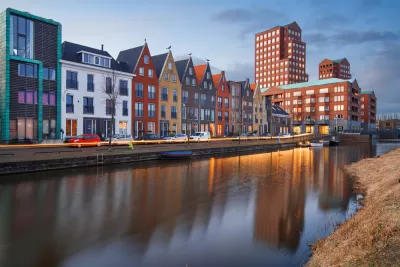
An article for DutchNews.nl reports on the growing number of local governments in the Netherlands preparing to crackdown on the number of private investors buying up large numbers of cheap and mid-price housing in the country's largest cities.
"A third of all houses sold in the four big cities last year ended up in the hands of developers, prompting first-time buyers to take greater financial risks or preventing them to get onto the housing ladder at all," according to the article.
According to a recent survey [Dutch language] of ten local governments, many cities will take advantage of a new rule that will prohibit the resale of a cheap or mid-priced homes for four years. Some of the cities responding to the survey said they plan to ban developers altogether.
"Local councils will have to justify a ban by showing that the lack of cheap and mid-priced homes in some neighbourhoods is distorting the market and is therefore ‘necessary and effective’," according to the article.
Large private investors are also increasing their footprint in many housing markets in North America, prompting a variety of policy responses.
Some cities and provincial governments in Canada have proposed taxes to "non-resident speculation" to slow the spread of large investments in the housing market. In the United States, community ownership and "opportunity to purchase" acts are proposed as mitigation measures.
Policy approaches to keep distressed real estate assets out of the hands of large private investors are in speculative or experimental stages in the U.S. Senator Elizabeth Warren (D-Mass.) first proposed the American Housing and Economic Mobility Act in 2019—the law is still under consideration in the U.S. Senate—to require the Federal Housing Administration to ensure that not less than 75 percent of the single-family residential properties conveyed to the Federal Housing Administration after foreclosure are sold to owner-occupants or "community partners." California's SB 1079, proposed by Democratic State Senator Nancy Skinner and signed into law in September 2020, modified the foreclosure auction process to reduce the advantage big corporations had that allowed them to bulk-purchase many homes at a single auction.
In addition to the links in the previous paragraph, Planetizen frequently publishes articles on the "financialization" of housing, including articles from 2019 and 2021 that provide an introduction to the subject.
FULL STORY: Cities plan to use new law to block investors from housing market


Fast-Rising Rents: Cause or Effect of Institutional Real Estate Investors?
More media attention for the growing influence of large, institutional investors on the housing market.
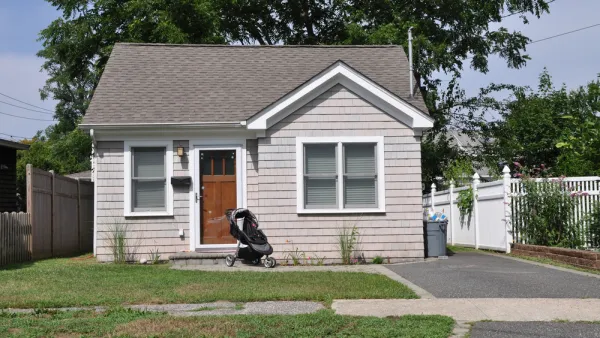
Investment Money Cornering the Real Estate Market
With so many institutional investors buying homes, it's hard for first-time homebuyers to find space in the housing market.

Berlin Voters Want to Expropriate 240,000 Apartments
A potentially watershed vote in the German capital.

Planetizen Federal Action Tracker
A weekly monitor of how Trump’s orders and actions are impacting planners and planning in America.

The state-sanctioned urbicide of Austin
People don’t kill cities. Freeways do.

US to reduce Colorado River water deliveries to Mexico
A new Colorado Treaty amendment reduces Mexico’s Colorado River water allocation by 250,000 acre feet.

5 New England states march closer to 800 megawatt wind energy project
Securing federal approval for the project may be complicated under the Trump administration, which has historically been hostile towards domestic wind power.

Baltimore to break ground on $50 million Transit Priority Project
The project will bring faster bus trips, safer streets and better bike connections to Baltimore.

Airbnb launches $250 million 'last-dollar financing' housing accelerator, makes first investment in Austin
The company will put $6.4 million towards affordable housing development in Texas’ capital.

FREE Course: Walkable City 1: Why Walkability?
After describing his path towards focusing on walkability as the essence of good planning, Jeff Speck marches through his five principal reasons for making more walkable places.
Reinventing Malls: Planning Alchemy—Turning Gray Fields Into Gold
The course focuses on the opportunities and imperatives that shape reinvention of mall sites.

Eagle County Government
Harvard University Graduate School of Design
Nashville Planning Department
The Architects Foundation
University of Cincinnati Online
The Pocatello Development Authority
The Urban Renewal Agency of the City of Pocatello
Journal of the American Planning Association