Agencies can use data resources to improve their decision-making and provide more responsive service.


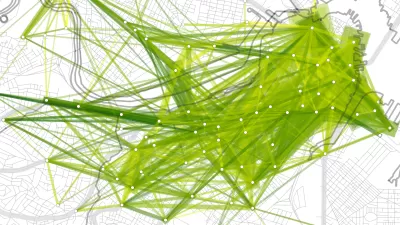
With transit ridership "still down about 54 percent from where it was at this time in 2019," transit agencies are turning to data and technology to explore ways to change their operations and better serve riders, writes Skip Descant.
"New Jersey Transit is partnering with the movement technology firm Replica to fold a number of data resources into planning and decision-making at the agency. The Replica data reflects localized economic activity, ridership changes on any given route, and a look at the overall mobility in an area showing not only the mode of travel, but also the purpose of the trip." Elsewhere, "the Utah Transit Authority in Salt Lake City is joining forces with community partners to offer on-demand rides for late-night workers," and "[t]he San Francisco Municipal Transportation Agency has installed temporary transit lanes on key routes 'to speed up service so that transit riders do not bear the cost of traffic congestion.'"
"In order to be resilient, transit has shown a need to think and act fast. Which is where data, and its analysis, can help," Steven Turell, chief of staff for Replica, told Government Technology. Using data, "you can actually start to optimize much more quickly for the outcomes that you want in the city."
Read the full story: Data, Analysis Are Essential to Planning the Future of Transit

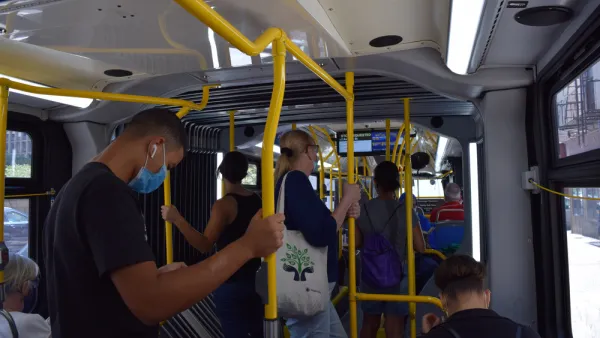
Post-Pandemic Transit Likely To Remain Less Commuter-Focused
While the future of transit ridership depends on a range of still-uncertain factors, the commuter-centric patterns that characterized pre-COVID transit service are probably a thing of the past.
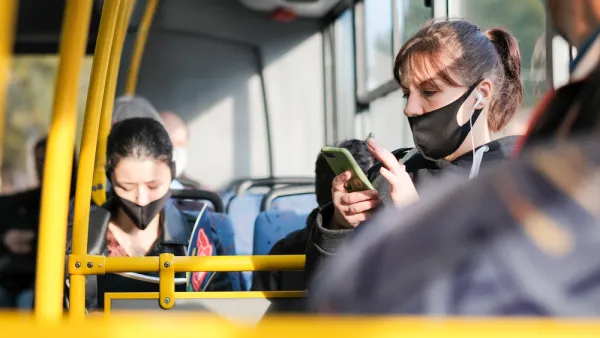
Lessons for Transit Ridership From Past Pandemics
While COVID-19 is a unique moment in American history, experiences from past pandemics shed light on how the pandemic might shape public transit ridership.
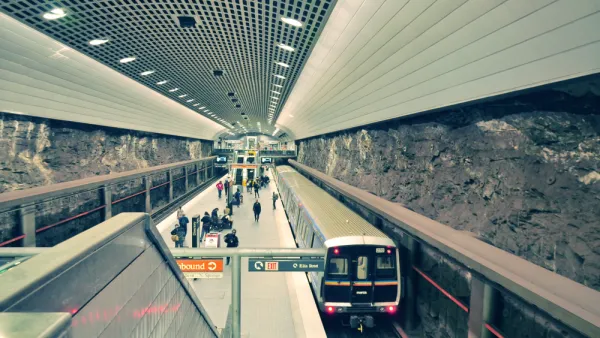
How to Attract Post-Pandemic Transit Riders
After seeing dramatic cuts in service and ridership during the pandemic, transit agencies have a small window of opportunity to gain and retain regular passengers.

Planetizen Federal Action Tracker
A weekly monitor of how Trump’s orders and actions are impacting planners and planning in America.

Amtrak, CN end decades-long dispute with eight-year agreement
The new operating agreement establishes an updated framework for the companies to work together, including processes to resolve disputes.

Judges permit Denver to divert 77,000 acre feet from the Colorado River for reservoir expansion
Overuse and climate change have caused the Colorado River’s water levels to plummet.

NYC DOT wants faster, more permanent street upgrades
The city is examining ways to build more concrete infrastructure without getting entangled in 'decades-long' projects.

'Something we’ve never seen before:' rising utility rates could strain city finances nationwide
Data centers, climate change and other factors have caused utility rates in the United States to increase by 38% since 2020.

Trump to overrule local leaders, lease millions of acres of America’s Pacific Island territories’ seafloors to mining companies
International law says that the Indigenous people of America’s territories have a right to prior and informed consent regarding projects that impact their countries.

FREE Course: Walkable City 1: Why Walkability?
After describing his path towards focusing on walkability as the essence of good planning, Jeff Speck marches through his five principal reasons for making more walkable places.
Reinventing Malls: Planning Alchemy—Turning Gray Fields Into Gold
The course focuses on the opportunities and imperatives that shape reinvention of mall sites.

Harvard University Graduate School of Design
KFH Group Inc.
Greater Baltimore Committee
The Architects Foundation
University of Cincinnati Online
The Pocatello Development Authority
The Urban Renewal Agency of the City of Pocatello