How the Joint Ownership Entity NYC is helping its community developer members stay strong during COVID.


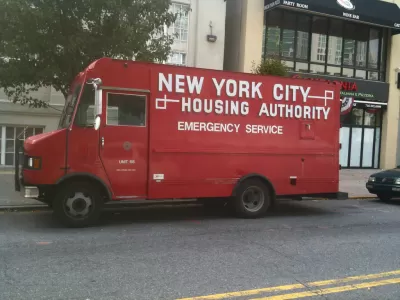
Peter Madden does asset management for a portfolio of around 2,200 units of primarily low-income, subsidized housing across New York City. And yes, most of the time, asset management for housing is as boring as it sounds, even now, during a pandemic that has millions of tenants on the verge of eviction.
The thing is, asset management isn’t supposed to be exciting. There are lots of tasks associated with it, but what asset management boils down to is making sure that there is enough cash flow from the portfolio being set aside today to cover for maintenance or modernization the buildings will need tomorrow. It’s the kind of work that, when it’s done well, doesn’t make headlines. But when it’s done poorly, it looks like headlines about squalid living conditions that no one should have to endure.
As executive director of JOE NYC, short for Joint Ownership Entity NYC, Madden has a portfolio unlike any other in New York City. He doesn’t report to one developer or a lead investor who might be in the business of squeezing the properties for as much profit as possible. He currently reports to 11 community development corporations, each representing a slice of JOE’s portfolio.
Established in 2017, JOE NYC jointly owns housing with each member CDC. The idea is that combining at least part of each CDC’s portfolio into joint ownership with JOE NYC creates an entity with a larger balance sheet, which has the ability to negotiate better bulk purchasing deals from utilities, insurance companies, contractors, and building supply companies, as well as better interest rates from lenders to finance rehab and other projects—the basic tasks of asset management. While these CDCs have been doing asset management with their respective portfolios for years, changes in the real estate landscape spurred them to create JOE NYC.
Since asset management operates on a timeline of years, not months or weeks, in this moment of the COVID-19 pandemic, Madden isn’t thrown for a major loop.
He’s working now on how much cash JOE NYC will be able to set aside from last year and this year so that it can create a cushion for its portfolio buildings as it plans for a protracted economic downturn. Meanwhile, the CDC members’ sense of collaboration has deepened as they are now bound closer together financially.
“It’s not only a financial cushion, but … you feel like somebody’s got your back, group to group and to JOE,” says Ismene Speliotis, executive director of Mutual Housing Association of New York, a JOE NYC founding member.
....
FULL STORY: How Scaled Affordable Housing Asset Management Helps in the Time of COVID

Federal Government Developing More Foreclosure Protections
Millions of American property owners are behind on mortgage payments and facing the prospect of foreclosure and eviction later this year.
CDC's Eviction Moratorium Extended
The CDC's eviction moratorium will stay in place until at least June 30, 2021.
'Never Let a Good Crisis Go to Waste' and Planning in the Pandemic
The latest in a series of compendia collecting news and commentary focusing on the complexities of the COVID-19 pandemic's effect on communities.

Planetizen Federal Action Tracker
A weekly monitor of how Trump’s orders and actions are impacting planners and planning in America.

The state-sanctioned urbicide of Austin
People don’t kill cities. Freeways do.

US to reduce Colorado River water deliveries to Mexico
A new Colorado Treaty amendment reduces Mexico’s Colorado River water allocation by 250,000 acre feet.

5 New England states march closer to 800 megawatt wind energy project
Securing federal approval for the project may be complicated under the Trump administration, which has historically been hostile towards domestic wind power.

Baltimore to break ground on $50 million Transit Priority Project
The project will bring faster bus trips, safer streets and better bike connections to Baltimore.

Airbnb launches $250 million 'last-dollar financing' housing accelerator, makes first investment in Austin
The company will put $6.4 million towards affordable housing development in Texas’ capital.

FREE Course: Walkable City 1: Why Walkability?
After describing his path towards focusing on walkability as the essence of good planning, Jeff Speck marches through his five principal reasons for making more walkable places.
Reinventing Malls: Planning Alchemy—Turning Gray Fields Into Gold
The course focuses on the opportunities and imperatives that shape reinvention of mall sites.

Eagle County Government
Harvard University Graduate School of Design
Nashville Planning Department
The Architects Foundation
University of Cincinnati Online
The Pocatello Development Authority
The Urban Renewal Agency of the City of Pocatello
Journal of the American Planning Association