A community group had sued to prevent the construction of a bridge in Clara Coffey Park in New York City. The court ruled in the favor of the city's plans.


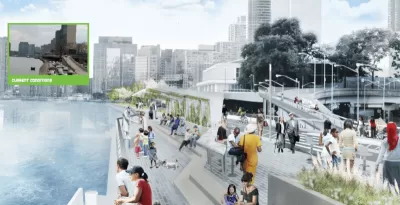
"The [New York] state Supreme Court’s Appellate Division has rejected a lawsuit that sought to stop the erection of a pedestrian and bicycle bridge over a Midtown Manhattan park," reports Eve Kessler.
Calling the court decision a "victory for city agencies over the 'Not in My Back Yard' crowd," Kessler explains that the decision by the Appellate Division sets a precedent that infrastructure is an entirely appropriate use of parkland, and could pave the way for similar victories in the future.
"The bridge — which would span the FDR Drive to connect Sutton Place South at East 54th Street to an as yet unbuilt part of the East River Esplanade — is part of the larger East River Greenway, a mammoth, multi-year project to create waterfront access around Manhattan for residential recreation," according to Kessler.
The group on the other side of the issue, the Cannon Point Preservation Corporation, "sued the city last year claiming the bridge would illegally seize parkland in a vest-pocket greensward, Clara Coffey Park."
FULL STORY: Court Swats Away NIMBY Anti-Bike-Path Claim on East Side

Bikelash Strikes Again in New York City
New York City, which earlier this decade ago experienced wild controversy surrounding the addition of bike lanes and bikeshare to city streets, is once again faced with a battle of drivers versus bike lanes.
[Update] Plug Finally Pulled on the Pier 55 Project in Manhattan
A splashy proposed park to replace Pier 54 in New York City, designed by a starchitect and proposed by a famous billionaire, couldn't weather the storm of controversy in New York City.
Never Built New York: The Pier 55 Park Project for the Hudson River
The Pier 55 proposal made a big splash in New York when it was proposed in 2014, but now it appears headed for the trash bin of history.

Planetizen Federal Action Tracker
A weekly monitor of how Trump’s orders and actions are impacting planners and planning in America.

The state-sanctioned urbicide of Austin
People don’t kill cities. Freeways do.

US to reduce Colorado River water deliveries to Mexico
A new Colorado Treaty amendment reduces Mexico’s Colorado River water allocation by 250,000 acre feet.

Baltimore to break ground on $50 million Transit Priority Project
The project will bring faster bus trips, safer streets and better bike connections to Baltimore.

Airbnb launches $250 million 'last-dollar financing' housing accelerator, makes first investment in Austin
The company will put $6.4 million towards affordable housing development in Texas’ capital.

Guerilla urbanists are building DIY bus stop benches in Chicago
A before-and-after of one of the bus stops with a new bench. The new benches are not officially sanctioned or permitted, but the residents who placed them hope they will be the start of a network of DIY benches across the city.

FREE Course: Walkable City 1: Why Walkability?
After describing his path towards focusing on walkability as the essence of good planning, Jeff Speck marches through his five principal reasons for making more walkable places.
Reinventing Malls: Planning Alchemy—Turning Gray Fields Into Gold
The course focuses on the opportunities and imperatives that shape reinvention of mall sites.

Eagle County Government
Harvard University Graduate School of Design
Nashville Planning Department
The Architects Foundation
University of Cincinnati Online
The Pocatello Development Authority
The Urban Renewal Agency of the City of Pocatello
Journal of the American Planning Association