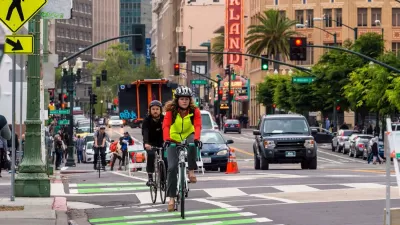
Suddenly, cars aren't the first priority on 10 percent of the roadway in Oakland, California.


[Headline and story updated on April 13, 2020 to better describe the "Oakland Slow Streets" program.]
"Cars will soon be banned from 74 miles of Oakland's residential streets during the coronavirus-inpsired [sic] shelter-in-place, a move bicycle advocates wish would happen in other cities," report Allie Rasmus and Lisa Fernandez.
"The emergency measure, called 'Oakland Slow Streets,' will banish motorized vehicles from 10% of the roadway space in Oakland," according to the article.
Update: cars will not be entirely banished from the streets. Rather, cars will be required to travel at no faster than 10 mph while giving priority to pedestrians and people on bikes, according ot additional information reported by Roger Rudick.
The Oakland Slow Streets program moves Oakland far into the lead of the national trend of cities blocking cars from streets to allow more space for pedestrians and people on bikes. Minneapolis previously opened 18 miles of streets.
Rachel Swan provides additional coverage of the Oakland Slow Streets program in a paywalled article for the San Francisco Chronicle.
FULL STORY: Oakland to close 74 miles of streets to cars, paving way for pedestrians and bicyclists

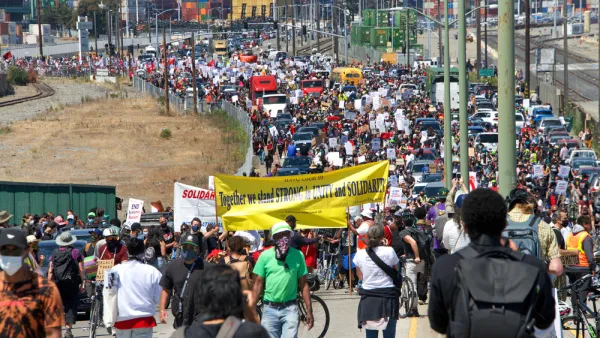
How Oakland Is Fixing its Pandemic Planning Equity Problem
The Oakland Slow Streets program, one of the most controversial developments of the early pandemic, has evolved to become the Essential Places initiative, thanks to new planning practices and a commitment to equity in Oakland, California.
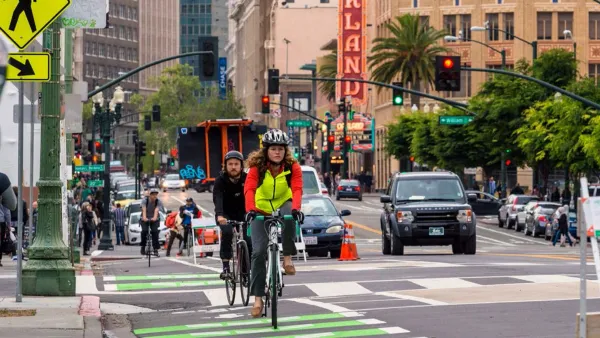
Watch Oakland's Slow Streets Program in Action
Oakland offers a model for other streets looking to provide new space for pedestrians and people on bikes to get exercise at a space physical distance.
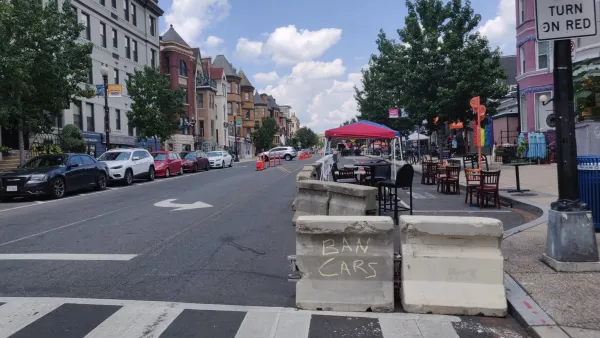
The Slow Streets Reckoning
Slow streets programs provided a quick short-term solution and paved the way for some permanent street closures and realignments. Now, these programs are getting a second look as community groups react to the changes.

The state-sanctioned urbicide of Austin
People don’t kill cities. Freeways do.

US to reduce Colorado River water deliveries to Mexico
A new Colorado Treaty amendment reduces Mexico’s Colorado River water allocation by 250,000 acre feet.

New Jersey’s second-largest city bans standalone data centers
Jersey City will continue to allow co-location facilities, such as those meant for research institutions that store their own data.

Amtrak not solely to blame for New Jersey commuter rail's unreliability, report finds
A new study from the Garden State Initiative found that NJ Transit’s budget grew 20% across a 4 year period, but reliability declined significantly over the same period.

EPA erases limits on planet-warming pollution from power plants
Under Monday’s plan, power plants would still have some limits on how much mercury, arsenic and other contaminants they can emit.

Phoenix announces new on-demand transit service, more frequent RAPID buses
Both new services will launch in October, and are part of Phoenix's Project Effective Access Solutions for Easing Congestion.

FREE Course: Walkable City 1: Why Walkability?
After describing his path towards focusing on walkability as the essence of good planning, Jeff Speck marches through his five principal reasons for making more walkable places.
Reinventing Malls: Planning Alchemy—Turning Gray Fields Into Gold
The course focuses on the opportunities and imperatives that shape reinvention of mall sites.

Eagle County Government
Harvard University Graduate School of Design
Nashville Planning Department
The Architects Foundation
University of Cincinnati Online
The Pocatello Development Authority
The Urban Renewal Agency of the City of Pocatello
Journal of the American Planning Association