More people are driving less and staying at home. The result is significant improvements in air quality in cities across the country.


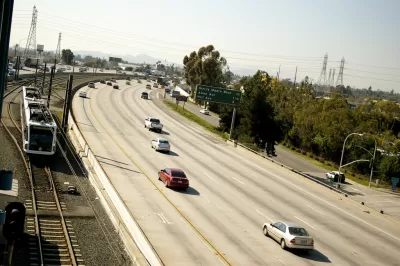
The coronavirus pandemic has brought life to a standstill and a huge drop in car travel as many people stay at home. "A satellite that detects emissions in the atmosphere linked to cars and trucks shows huge declines in pollution over major metropolitan areas, including Los Angeles, Seattle, New York, Chicago and Atlanta," report Brad Plumer and Nadja Popovich.
Plumer and Popovich review maps of emissions from Los Angeles, the San Francisco Bay Area, Seattle, and New York showing significant decreases in nitrogen dioxide levels over the month of March.
In Los Angeles, traffic data also illustrates the drop in car travel and congestion. "On Wednesday at 8 a.m., traffic in the city was moving 53 percent faster than it usually does on a Wednesday morning, according to data from INRIX, a company that analyzes traffic data from vehicle and phone navigation systems. At 5 p.m., when the freeways are typically congested, traffic was moving 71 percent faster than usual."
Read the full story: Traffic and Pollution Plummet as U.S. Cities Shut Down for Coronavirus

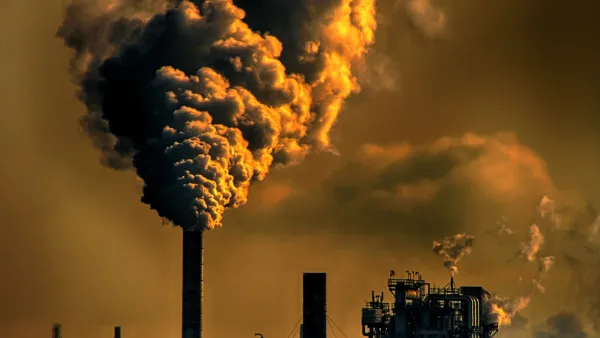
Study: Poor Air Quality Fuels COVID Transmission
Communities exposed to higher levels of air pollution experience higher rates of infection, particularly in areas with high population density.
The Post-Pandemic Economy Could Be Dirtier Than Ever
The environmental gains at the beginning of the pandemic were only temporary., and there are signs more signs every day that the economy will be dirtier than ever in the future.
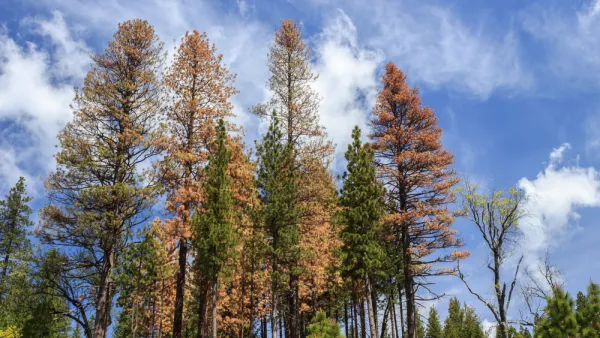
Natural Gas Leaks Responsible for the Death of Trees in Urban Areas, According to a New Study
A new study conducted in Chelsea, Massachusetts is the first to quantify the effects of natural gas leaks on the health of urban trees.

Planetizen Federal Action Tracker
A weekly monitor of how Trump’s orders and actions are impacting planners and planning in America.

California plans to bury El Niño’s downpour
If the state plays its cards right, it may be able to store a billion acre-feet of El Niño’s water in aquifers.

Chicago breaks ground on $3 billion megadevelopment
The new neighborhood, titled Foundry Park, will one day host 3,700 residences.

California High-Speed Rail Authority CEO resigns after $600,000 scandal
Under Ian Choudri, the authority used taxpayer dollars to fund first class flights and trips to nightclubs.

Want to study the Missouri River? Soon, you may need unanimous approval from 10 states
Legislation would require 10 governors’ permission to study or build projects moving water outside the basin.

Desperate measures: Advocates weigh draining Lake Powell to fill Colorado River
Draining the reservoir could reduce evaporation losses by a couple hundred thousand acre-feet.

FREE Course: Walkable City 1: Why Walkability?
After describing his path towards focusing on walkability as the essence of good planning, Jeff Speck marches through his five principal reasons for making more walkable places.
Reinventing Malls: Planning Alchemy—Turning Gray Fields Into Gold
The course focuses on the opportunities and imperatives that shape reinvention of mall sites.

City of Rosemead
Rutgers University, Edward J. Bloustein School of Planning and Public Policy
One Hundred Miles
Hunter College, City University of New York (CUNY)
The Architects Foundation
University of Cincinnati Online
City of Cambridge
Montrose County
The Pocatello Development Authority