A region once brought to a standstill by two inches of snow is now almost completely free of traffic congestion.



"The Georgia Department of Transportation reports a dramatic reduction in traffic Tuesday vs. a typical weekday on many of the region’s major highways," reports David Wickert. "Depending on the corridor, volumes were down as much as 50 percent compared to a typical weekday."
Traffic volumes being down means traffic speeds are also up. The average speed on the Downtown Connector on the same day was 60 mph, according to Wickert.
With one exception, congestion has disappeared from the region's highways: traffic on I-85 south in Gwinnett County was higher than normal on Tuesday, but officials couldn't explain why.
The effect of the coronavirus stands in stark contrast to the infamous "Snowmageddon" event of January 2014, when two inches of snow brought the region to a standstill, inspiring numerous commentaries about the role of sprawl and auto-dependency in the mess that followed.
Read the full story: Coronavirus: Traffic down as much as 50% on metro Atlanta highways

Georgia Mask Ban Reversed After White House Coronavirus Task Force Issues Critical Report
Shortly after a private White House report blasted Georgia's pandemic response, Gov. Brian Kemp issued an executive order allowing cities and counties to impose requirements on mask-wearing. The report was leaked to The Atlanta-Journal Constitution.
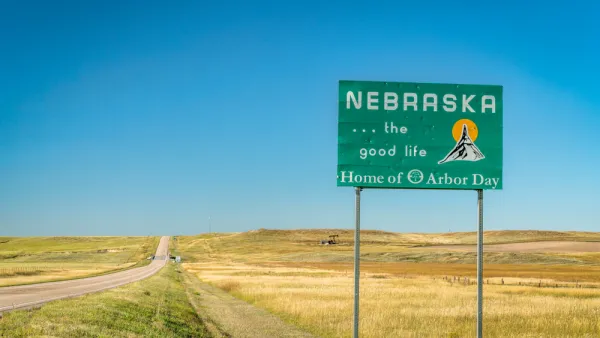
Traffic Returns to Normal in Nebraska
Rural traffic has recovered from COVID-19 lows earlier in the year and has even surpassed historic averages, according to the case study supplied by the state of Nebraska.

Adaptive Reuse Proposal Responds to COVID-19
Designers have gone back to the drawing board to keep proposals moving through the development pipeline in light of lessons from the pandemic.

Planetizen Federal Action Tracker
A weekly monitor of how Trump’s orders and actions are impacting planners and planning in America.

California plans to bury El Niño’s downpour
If the state plays its cards right, it may be able to store a billion acre-feet of El Niño’s water in aquifers.

Desperate measures: Advocates weigh draining Lake Powell to fill Colorado River
Draining the reservoir could reduce evaporation losses by a couple hundred thousand acre-feet.

In Texas, data centers are swallowing promised parkland
Residents who moved to Taylor, Texas for a rural community now have to contend with three data centers in their backyard.

How a Chicago-sized wind farm beat the odds and powered on
The project spanned five presidential administrations and a standoff with a U.S. military base.

MTA gives itself 30 days to transform pit into basketball court
The site has been under construction since 2022; the city originally estimated it would finish the court in 2024.

FREE Course: Walkable City 1: Why Walkability?
After describing his path towards focusing on walkability as the essence of good planning, Jeff Speck marches through his five principal reasons for making more walkable places.
Reinventing Malls: Planning Alchemy—Turning Gray Fields Into Gold
The course focuses on the opportunities and imperatives that shape reinvention of mall sites.

City of Rosemead
Rutgers University, Edward J. Bloustein School of Planning and Public Policy
One Hundred Miles
Hunter College, City University of New York (CUNY)
The Architects Foundation
University of Cincinnati Online
City of Cambridge
Montrose County
The Pocatello Development Authority