Designers have gone back to the drawing board to keep proposals moving through the development pipeline in light of lessons from the pandemic.


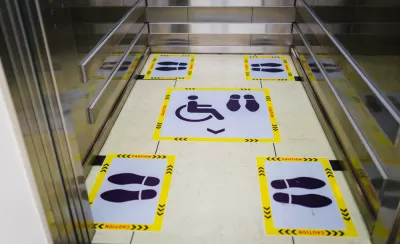
"German developer Newport this week issued new renderings with virus-inspired changes for its $100 million redevelopment of the 222 Mitchell Street building," reports Andy Peters.
The redevelopment plan calls for the developer to rehab 222 Mitchell Street, located near the Gulch redevelopment project proposed by CIM Group, which has made the planning news on several occasions.
"About three-quarters of Newport’s Mitchell street building will be converted to office space. The remainder will be retail," according to Peters. "The company altered its design after COVID hit in March, adding more and larger elevators to the 290,000-square-foot building to meet the expected demand for a less-dense gathering of workers and shoppers. It added outdoor seating areas to restaurant space."
"The developer also adjusted the design to allow office tenants create separate entrance doors and self-contained lobbies," adds Peters.
The development in Atlanta isn't the first to claim a design response to the realities of the novel coronavirus. The Almaden Boulevard Tower in San Jose claimed similar public health advancements in June.
Read the full story: Developer adjusts design of downtown project to reflect COVID-19

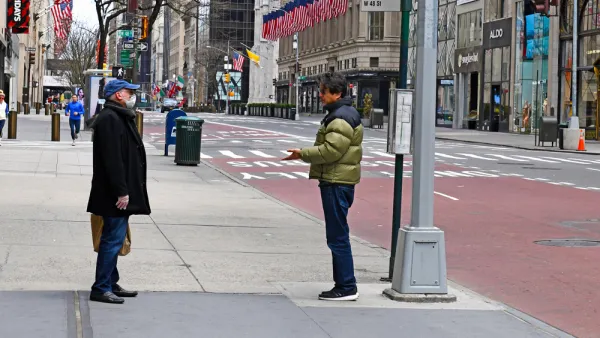
Friday Eye Candy: Covid-19, Then and Now
The New York Times compared images from readers portraying similar scenes in 2020 and 2022.

What Can Lessons From Traffic Safety Teach About the Covid Response?
Finger waggings aren't effective for pedestrian safety—so why should they work for public health? A "safe system" approach, created for traffic safety in Sweden, offers a model for improved pandemic public health outcomes, according to this opinion.

Study: Poor Air Quality Fuels COVID Transmission
Communities exposed to higher levels of air pollution experience higher rates of infection, particularly in areas with high population density.

Planetizen Federal Action Tracker
A weekly monitor of how Trump’s orders and actions are impacting planners and planning in America.

The state-sanctioned urbicide of Austin
People don’t kill cities. Freeways do.

US to reduce Colorado River water deliveries to Mexico
A new Colorado Treaty amendment reduces Mexico’s Colorado River water allocation by 250,000 acre feet.

Nation's most wind-powered state turns to coal as data centers increase energy demand
For the first time in decades, Iowa has increased its generation of coal power.
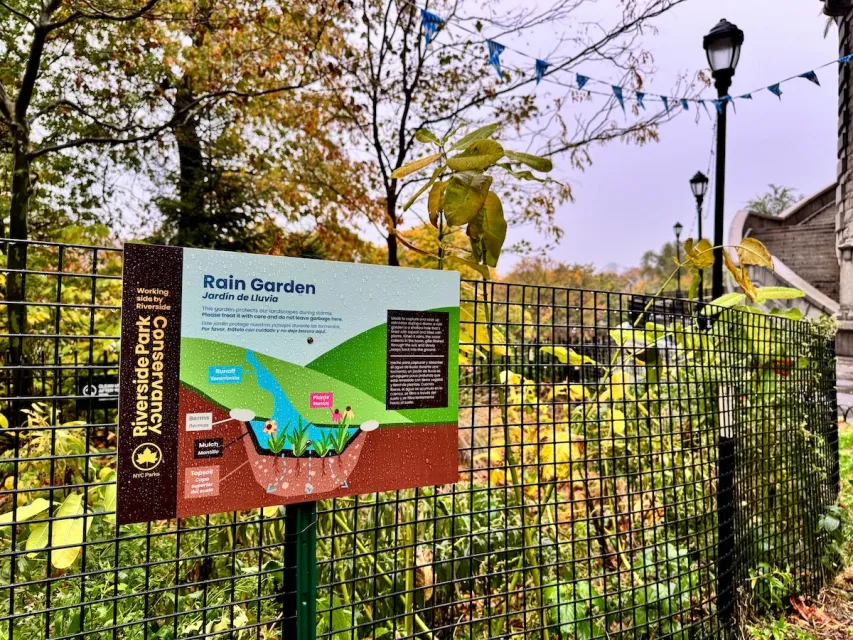
NYC cools commuters with city's first rain garden above a bus stop
New York City officials say the plants in the rain garden can absorb 16 gallons of rainwater during heavy storms.

Brightline West’s future may rely on $6 billion federal loan
The company has until Nov. 2 to make a $400 million equity investment into its proposed high-speed rail line.

FREE Course: Walkable City 1: Why Walkability?
After describing his path towards focusing on walkability as the essence of good planning, Jeff Speck marches through his five principal reasons for making more walkable places.
Reinventing Malls: Planning Alchemy—Turning Gray Fields Into Gold
The course focuses on the opportunities and imperatives that shape reinvention of mall sites.

Greater Baltimore Committee
Eagle County Government
Harvard University Graduate School of Design
The Architects Foundation
University of Cincinnati Online
The Pocatello Development Authority
The Urban Renewal Agency of the City of Pocatello
Journal of the American Planning Association