The sage over The Gulch development project—soon to be renamed Centennial Yards—will continue after project opponents filed an appeal of a June court decision upholding public financing for the project.


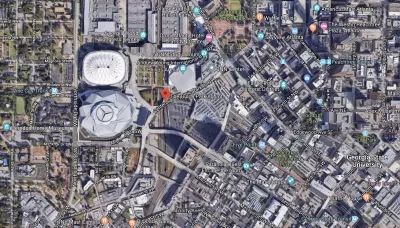
"A dispute over a blockbuster incentive package for downtown Atlanta’s Gulch project could be headed back to court," reports J. Scott Trubey.
The Gulch project, when complete, will be known as Centennial Yards.
"A lawyer for Redlight the Gulch, a group opposed to the up to $1.9 billion in public financing for the project, filed notice on Wednesday that it will appeal a recent judge’s decision to approve part of the agreement," according to Trubey.
"In June, Fulton County Superior Court Chief Judge Robert McBurney issued a ruling that paved the way for the city to issue bonds to be repaid by future sales tax revenue," according to Trubey.
The taxing and funding mechanism is known as an Enterprise Zone, and it's the first of its kind in Atlanta, as detailed in an article by Trubey from October 2018.
Read the full story: Gulch bond controversy could be headed back to court

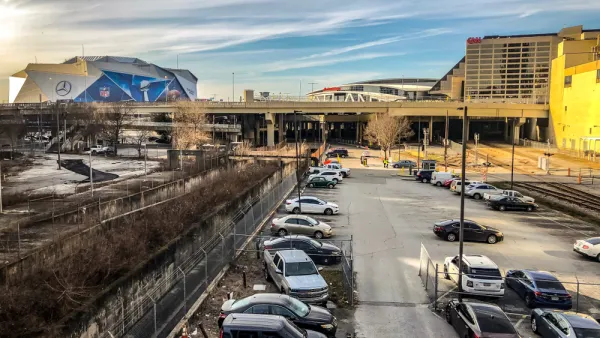
Court Ruling Clears $1.9 Billion in Public Money for Atlanta Mega-Project
A $5 billion redevelopment project in Atlanta, named Centennial Yards, will receive substantial public support.
$1 Billion Redevelopment Planned for a Former Mall in Cutler Bay, Florida
Mall not making money like it used to? How would a $1 billion redevelopment sound?
Latest Plans for Atlanta's 'The Gulch' Megaproject Focuses on the Public Realm
The latest round of plans and designs released for The Gulch by developer Centennial Yards Company plots increased walkability and urban design choices that respond to the existing built environment.

Planetizen Federal Action Tracker
A weekly monitor of how Trump’s orders and actions are impacting planners and planning in America.

California plans to bury El Niño’s downpour
If the state plays its cards right, it may be able to store a billion acre-feet of El Niño’s water in aquifers.

Chicago breaks ground on $3 billion megadevelopment
The new neighborhood, titled Foundry Park, will one day host 3,700 residences.

California High-Speed Rail Authority CEO resigns after $600,000 scandal
Under Ian Choudri, the authority used taxpayer dollars to fund first class flights and trips to nightclubs.

Want to study the Missouri River? Soon, you may need unanimous approval from 10 states
Legislation would require 10 governors’ permission to study or build projects moving water outside the basin.

Desperate measures: Advocates weigh draining Lake Powell to fill Colorado River
Draining the reservoir could reduce evaporation losses by a couple hundred thousand acre-feet.

FREE Course: Walkable City 1: Why Walkability?
After describing his path towards focusing on walkability as the essence of good planning, Jeff Speck marches through his five principal reasons for making more walkable places.
Reinventing Malls: Planning Alchemy—Turning Gray Fields Into Gold
The course focuses on the opportunities and imperatives that shape reinvention of mall sites.

City of Rosemead
Rutgers University, Edward J. Bloustein School of Planning and Public Policy
One Hundred Miles
Hunter College, City University of New York (CUNY)
The Architects Foundation
University of Cincinnati Online
City of Cambridge
Montrose County
The Pocatello Development Authority