Under the new bill, the Highway Trust Fund would need more funding to get through the next five years.


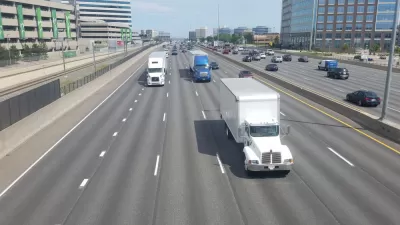
Jeff Davis takes a closer look at the Congressional Budget Office’s updated forecast of the Highway Trust Fund cash flow and the added cost of the Senate Environment and Public Works Committee’s highway bill, S. 2302, introduced by Senator John Barrasso.
"That new CBO baseline estimates that over the next five years, the Highway Trust Fund will need about $72 billion in new revenues or transfers in order to keep paying its bills, assuming current tax rates and the 2020 spending levels given annual inflation increases," says Davis.
Davis crunches the numbers to estimate how S. 2302 would affect the cash flow of the Highway Account. "Under this model, the Highway Account would need an additional $75 billion in additional revenues or transfers to fund the Barrasso bill."
Davis also reviews estimates for the Mass Transit Account, which would need another $27 billion under S. 2302. As a result, the Highway Trust Fund would need a total of $102 billion in additional revenues or transfers to get through the end of the 2025 fiscal year.
FULL STORY: How Does the New CBO Baseline Affect the Senate Highway Bill?

Highway Trust Fund Projected to Become Insolvent Earlier than Expected
As we've noted numerous times, the Highway Trust Fund will become insolvent around the end of the fiscal year - Sept. 30, just when MAP-21, the transportation authorization bill, expires. We were wrong. The new HTF "ticker" explains the bad news.

Trump Administration Proposes to Divert Billions from Mass Transit to Highways; Advocates Sound Alarm
Two proposals from the Trump DOT would eliminate a federal mass transit fund and make it harder for states to allocate funding to transit projects.
Survey Finds Growing Support for a Mileage Fee Over the Gas Tax
An annual survey by the Mineta Transportation Institute found new levels of support for a change in the way the federal government raises money from, and for, highway infrastructure.

The state-sanctioned urbicide of Austin
People don’t kill cities. Freeways do.

US to reduce Colorado River water deliveries to Mexico
A new Colorado Treaty amendment reduces Mexico’s Colorado River water allocation by 250,000 acre feet.

New Jersey’s second-largest city bans standalone data centers
Jersey City will continue to allow co-location facilities, such as those meant for research institutions that store their own data.

Amtrak not solely to blame for New Jersey commuter rail's unreliability, report finds
A new study from the Garden State Initiative found that NJ Transit’s budget grew 20% across a 4 year period, but reliability declined significantly over the same period.

EPA erases limits on planet-warming pollution from power plants
Under Monday’s plan, power plants would still have some limits on how much mercury, arsenic and other contaminants they can emit.

Phoenix announces new on-demand transit service, more frequent RAPID buses
Both new services will launch in October, and are part of Phoenix's Project Effective Access Solutions for Easing Congestion.

FREE Course: Walkable City 1: Why Walkability?
After describing his path towards focusing on walkability as the essence of good planning, Jeff Speck marches through his five principal reasons for making more walkable places.
Reinventing Malls: Planning Alchemy—Turning Gray Fields Into Gold
The course focuses on the opportunities and imperatives that shape reinvention of mall sites.

Eagle County Government
Harvard University Graduate School of Design
Nashville Planning Department
The Architects Foundation
University of Cincinnati Online
The Pocatello Development Authority
The Urban Renewal Agency of the City of Pocatello
Journal of the American Planning Association