Understanding how women use transit does not just help make systems more equitable. It also guides policy and planning changes that benefit all riders.



Research shows that public transit is not meeting the needs of women around issues such as safety, cost, and accessibility. "Yet it’s hard to know how different tactics [to improve transit] address different problems, because few governments and transit agencies take gender into account when collecting ridership data," writes Flavie Halais.
Transport for London is one agency that has regularly collected and analyzed data about women’s travel patterns. Other U.S. agencies are following suit, including the Los Angeles County Metropolitan Transportation Authority, which last year released an in-depth report about how women travel.
Collecting data on how women use transit can be challenging, costly, and time consuming. Still, it is essential to make transit systems more equitable, says Halais. "Big data is, ultimately, political. It’s about asking the right questions and also acting on the answers."
Read the full story: Making Public Transit Fairer to Women Demands Way More Data


L.A. Metro Report Examines How Women Travel
Findings from a new study about the mobility needs and concerns of women in Los Angeles will inform future initiatives and planning.
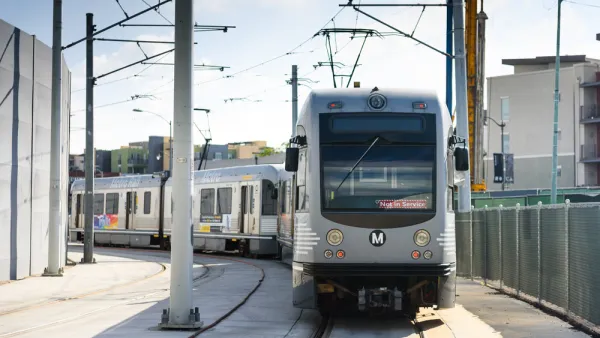
Planned L.A. Crenshaw Line Rollout Prompts Argument
Already delayed, the Crenshaw Line has now sparked debate between stakeholders who favor opposing visions of how the light rail service should link up with the existing Green Line.
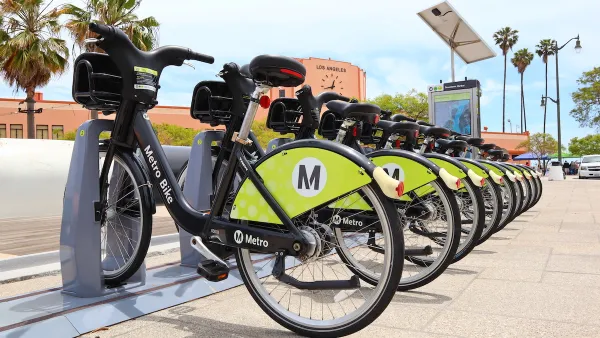
LA Metro Celebrates Bike Month With Free Rides, Discounted Bike Share
Skeptical about riding a bike in Los Angeles? Its transit agency wants to change your mind this May.

Planetizen Federal Action Tracker
A weekly monitor of how Trump’s orders and actions are impacting planners and planning in America.

California plans to bury El Niño’s downpour
If the state plays its cards right, it may be able to store a billion acre-feet of El Niño’s water in aquifers.

Chicago breaks ground on $3 billion megadevelopment
The new neighborhood, titled Foundry Park, will one day host 3,700 residences.

California High-Speed Rail Authority CEO resigns after $600,000 scandal
Under Ian Choudri, the authority used taxpayer dollars to fund first class flights and trips to nightclubs.

Want to study the Missouri River? Soon, you may need unanimous approval from 10 states
Legislation would require 10 governors’ permission to study or build projects moving water outside the basin.

Desperate measures: Advocates weigh draining Lake Powell to fill Colorado River
Draining the reservoir could reduce evaporation losses by a couple hundred thousand acre-feet.

FREE Course: Walkable City 1: Why Walkability?
After describing his path towards focusing on walkability as the essence of good planning, Jeff Speck marches through his five principal reasons for making more walkable places.
Reinventing Malls: Planning Alchemy—Turning Gray Fields Into Gold
The course focuses on the opportunities and imperatives that shape reinvention of mall sites.

City of Rosemead
Rutgers University, Edward J. Bloustein School of Planning and Public Policy
One Hundred Miles
Hunter College, City University of New York (CUNY)
The Architects Foundation
University of Cincinnati Online
City of Cambridge
Montrose County
The Pocatello Development Authority