GM's first non-internal combustion engine vehicle assembly plant will be in the form of 35-year-old plant straddling the Detroit-Hamtramck border thanks in part to a $2.27 billion state tax credit. Electric pickups, SUVs, and AVs will be produced.


"GM President Mark Reuss declared 'The future is here and now' in a conference room at the plant Monday [Jan. 27]," reports Mark Phelan, auto critic and columnist for the Detroit Free Press.
He promised the plant will build electric pickups, SUVs and self-driving shuttles “beginning in late 2021” in a rollout that will include “multiple brands” and the introduction of ”multiple models a year.”
Plant saved
In addition to being GM's first all-electric vehicle assembly plant, also noteworthy is that the automaker chose to "invest $2.2 billion in a plant the company could have just as easily bulldozed," notes Phelan. The Detroit-Hamtramck (ham-TRAM-ik) plant was one of five GM plants slated for closure resulting from consumer preference for SUVs over cars.
Phelan refers to the 300-acre assembly plant site as "Poletown," which a November 2018 post on the GM plant closures referenced.
John Gallagher [of Detroit Free Press] followed up on news of the plant closures with an article about the controversial history of the Detroit-Hamtramck Assembly plant, which displaced the historic neighborhood of Poletown when it was constructed. [Listen here on NPR.]
Economic incentives
"In a statement, a G.M. spokesman said the investments announced on Monday were made possible by a state tax credit from the Michigan Economic Growth Authority," reports
Gov. Gretchen Whitmer, who participated in the event, acknowledged the state's financial help, and the payoff in jobs for the greater community.
“We are proud to be here today, supporting GM in bringing 2,200 good-paying manufacturing jobs for our auto workers and getting Hamtramck back online, helping to bring their vision of an all-electric future to life.”
Batteries from Lordstown, Ohio
Chokshi noted that GM's investment in its electric future has also benefitted another Midwest community affected by those five assembly plant closures.
As part of an existing joint venture, G.M. and South Korea’s LG Chem have invested $2.3 billion in a separate plant near Lordstown, Ohio, which will make the battery cells that will power the electric vehicles made at the Detroit-Hamtramck plant, the company said. Executives have said that the venture, in the same area where G.M. shut down a plant last year, would create more than 1,100 jobs, with a groundbreaking expected later this year.
Uncertain future?
Phelan, the auto critic, expressed caution on the plant's future.
Success is far from certain. It depends on GM’s ability to develop great electric-powered pickups, SUVs and autonomous shuttles, and the American public’s willingness to buy them in significant numbers.
He added that "GM’s executives, designers and engineers [will need to] create electric vehicles that excite buyers and answer questions about driving range and charging time."
Volt to Hummer
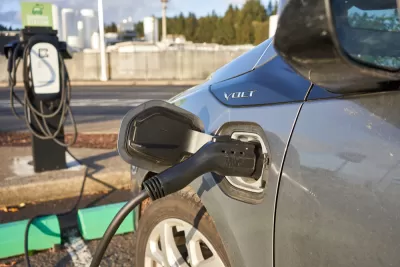
Finally, Phelan advised against bringing back the Hummer, albeit one the runs on battery power. However, Reuss "dropped a broad hint" that it will be included in the lineup. Perhaps that's only fitting, as the plant manufactured GM's first modern EV, the Chevy Volt, which like most of the cars produced by Detroit's Big Three automakers, will be discontinued for the larger sport and crossover utility vehicles.
-
Electric Pickup Truck Manufacturer Scores Huge 'Climate' Order from Amazon, September 23, 2019
-
GM Announces Plant Closures, Shift Toward Larger Vehicles, November 27, 2018
FULL STORY: It's about time Detroit-Hamtramck plant caught a break


GM Announces Plant Closures, Shift Toward Larger Vehicles
General Motors cut the bad environmental and economic news with an announcement that cost cutting measures would allow the company to focus more resources on electric and self-driving cars.
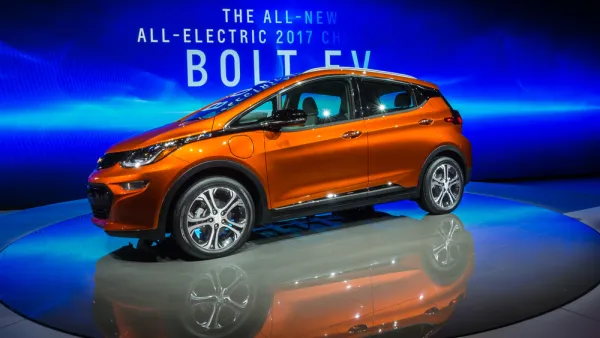
How Detroit Beat the Silicon Valley to the Breakthrough Electric Vehicle
It costs less than $40,000 and gets over 200 miles to a charge. The Tesla Model 3? Yes, and also the Chevy Bolt, which goes to market first. A New York Times technology columnist writes that 'size matters' when it comes to innovation.
Climate Concerns Largely Absent in Auto Showrooms
A consumer survey found that less than a third of respondents considered carbon emissions or the environment when they last purchased a motor vehicle, yet three-quarters of Americans consider climate change a major problem or crisis.

The state-sanctioned urbicide of Austin
People don’t kill cities. Freeways do.

US to reduce Colorado River water deliveries to Mexico
A new Colorado Treaty amendment reduces Mexico’s Colorado River water allocation by 250,000 acre feet.

New Jersey’s second-largest city bans standalone data centers
Jersey City will continue to allow co-location facilities, such as those meant for research institutions that store their own data.

Amtrak not solely to blame for New Jersey commuter rail's unreliability, report finds
A new study from the Garden State Initiative found that NJ Transit’s budget grew 20% across a 4 year period, but reliability declined significantly over the same period.

EPA erases limits on planet-warming pollution from power plants
Under Monday’s plan, power plants would still have some limits on how much mercury, arsenic and other contaminants they can emit.

Phoenix announces new on-demand transit service, more frequent RAPID buses
Both new services will launch in October, and are part of Phoenix's Project Effective Access Solutions for Easing Congestion.

FREE Course: Walkable City 1: Why Walkability?
After describing his path towards focusing on walkability as the essence of good planning, Jeff Speck marches through his five principal reasons for making more walkable places.
Reinventing Malls: Planning Alchemy—Turning Gray Fields Into Gold
The course focuses on the opportunities and imperatives that shape reinvention of mall sites.

Eagle County Government
Harvard University Graduate School of Design
Nashville Planning Department
The Architects Foundation
University of Cincinnati Online
The Pocatello Development Authority
The Urban Renewal Agency of the City of Pocatello
Journal of the American Planning Association