A leading youth engagement in planning program, explained.


Juell Stewart shares news of efforts to attract more youth, especially females and people of color, to the field of planning.
"Youth engagement programs also address the structural barriers that prevent young people from engaging in formal outreach processes by translating the language of planning and the complexities of civic participation in a way that empowers them to take active leadership roles within their communities," explains Stewart. "The bottom line: The earlier youth are introduced to planning principles, the sooner they can begin building both their future careers and communities."
The Chicago Metropolitan Agency for Planning's Future Leaders in Planning (FLIP) program, serves exactly that purpose, under the leadership of Katanya Raby, who features heavily in the article.
FLIP works with high school students of diverse backgrounds from across CMAP's seven-county Chicagoland region, creating a way for kids to learn about what makes the world (and city) around them tick — and the language they can use to describe it. The curriculum uses urban planning as a vehicle to get students to contemplate the deeper social issues that undergird policy decisions and urban development. For Raby, it boils down to one guiding question: "How can we get students to have these conversations earlier and think strategically about how we can build our next generation of leaders?"
The article digs into more detail on the FLIP program, as exemplified by the summer 2019 cohort, and offers more advice on how to get young people of color interested in the field of planning. For instance, the article also five tips for attracting youth to planning, with more details provided in the source article:
- Trust and listen to younger residents
- Ditch the jargon
- Get out of the classroom!
- Work with universities
- Partner with school districts.
Read the full story: Planning for Future Leaders

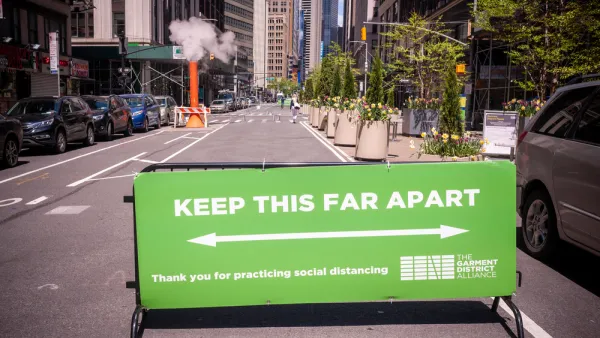
Pandemic Planning Must Reconcile With the Inequities of the Past
The ongoing debate about the role of marginalized communities in the emergency planning programs of the pandemic has now been detailed on the pages of the New York Times.

The State of Public Meetings
Dating back to a tradition begun in the 1630s, public meetings are an essential part of the political systems, and planning processes, of U.S. cities. Public meetings are also broken, according to this article.

The Decade in Urban Planning
A look back at the biggest stories and themes from the world of urban planning in the decade that was the 2010s.

Amtrak, CN end decades-long dispute with eight-year agreement
The new operating agreement establishes an updated framework for the companies to work together, including processes to resolve disputes.

Judges permit Denver to divert 77,000 acre feet from the Colorado River for reservoir expansion
Overuse and climate change have caused the Colorado River’s water levels to plummet.

Nation's most wind-powered state turns to coal as data centers increase energy demand
For the first time in decades, Iowa has increased its generation of coal power.

Boston has spent millions making the Green Line more accessible — and there’s no end in sight
While the city has invested millions into expanding and adding platforms to the Green Line to make it more accessible, new train cars set to arrive next year will be too tall for disabled passengers to board without raising the current platforms.

Idaho may see an 18% drop in federal surface transit funding — the largest estimated cut in the US
Transit systems in rural communities are much more reliant on federal funding to provide their services.

How ‘post-disaster gentrification’ alters neighborhoods after natural calamities
After hurricanes, fires or other calamities, the original residents of a community are often replaced by younger, wealthier residents.

FREE Course: Walkable City 1: Why Walkability?
After describing his path towards focusing on walkability as the essence of good planning, Jeff Speck marches through his five principal reasons for making more walkable places.
Reinventing Malls: Planning Alchemy—Turning Gray Fields Into Gold
The course focuses on the opportunities and imperatives that shape reinvention of mall sites.

City of Wisconsin Rapids
Harvard University Graduate School of Design
KFH Group Inc.
The Architects Foundation
University of Cincinnati Online
The Pocatello Development Authority
The Urban Renewal Agency of the City of Pocatello