On this episode of the price is right, a city of more than 8 million people tries to determine the most effective cost for driving in a dense part of its downtown.


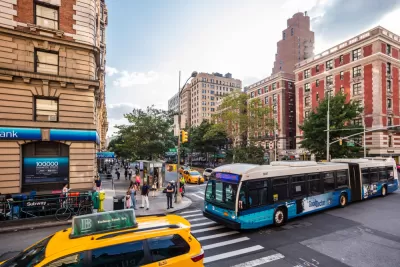
With the state of New York on board with the city of New York's plans to enact congestion pricing, also known as cordon pricing, in a swath of Manhattan below 61st Street, the challenge facing the city now is to determine the right price for the privilege of driving.
"A new report from New York City’s Regional Plan Association, titled 'Congestion Pricing in NYC: Getting It Right,' aims to figure out how much of a fee will reduce exactly how much traffic," according to an article by Jessica Klein.
Another important consideration in setting the price is how much money the fee will generate for public transit, as required by state law.
"The report doesn’t make a recommendation on which price to use, but it does argue that the charge should vary based on vehicle size and time of day, that taxis should be exempt, and that the government should adopt goals for traffic reduction and then adjust the cost to hit those numbers," according to Klein.
Read the full story: What price should New York’s congestion charge be?
NYC Congestion Pricing: Still Working
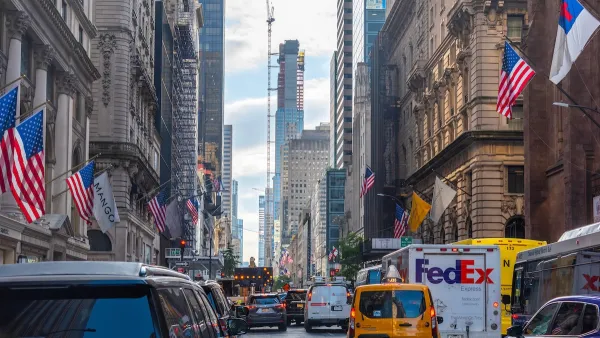
10 million fewer vehicles entered the congestion pricing zone in the first six months of the program than last year, while pedestrian fatalities are at ‘historic lows.’
Judge Extends NYC Congestion Pricing Through at Least June 9
A federal judge halted the Trump administration’s effort to kill the program, which remains in limbo as a lawsuit filed by the MTA moves forward.
USDOT Threatens to Pull New York Highway Funding
The Trump administration wants the state to kill New York City’s congestion pricing program despite its demonstrated success.

Planetizen Federal Action Tracker
A weekly monitor of how Trump’s orders and actions are impacting planners and planning in America.

California plans to bury El Niño’s downpour
If the state plays its cards right, it may be able to store a billion acre-feet of El Niño’s water in aquifers.

Desperate measures: Advocates weigh draining Lake Powell to fill Colorado River
Draining the reservoir could reduce evaporation losses by a couple hundred thousand acre-feet.

In Texas, data centers are swallowing promised parkland
Residents who moved to Taylor, Texas for a rural community now have to contend with three data centers in their backyard.

How a Chicago-sized wind farm beat the odds and powered on
The project spanned five presidential administrations and a standoff with a U.S. military base.

MTA gives itself 30 days to transform pit into basketball court
The site has been under construction since 2022; the city originally estimated it would finish the court in 2024.

FREE Course: Walkable City 1: Why Walkability?
After describing his path towards focusing on walkability as the essence of good planning, Jeff Speck marches through his five principal reasons for making more walkable places.
Reinventing Malls: Planning Alchemy—Turning Gray Fields Into Gold
The course focuses on the opportunities and imperatives that shape reinvention of mall sites.

City of Rosemead
Rutgers University, Edward J. Bloustein School of Planning and Public Policy
One Hundred Miles
Hunter College, City University of New York (CUNY)
The Architects Foundation
University of Cincinnati Online
City of Cambridge
Montrose County
The Pocatello Development Authority