In Portland, Oregon, transportation advocates are questioning the justifications for crosswalk closures in the city.


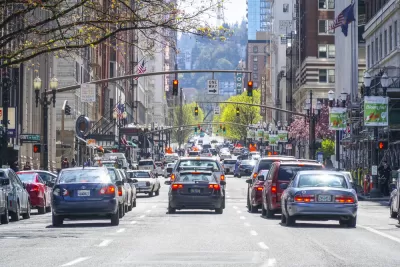
"In Oregon we’ve had it drilled into our heads that 'every intersection is a crosswalk.' It turns out that’s not exactly true," write Catie Gould and Jonathan Maus. But in Portland, they say, "no crossing" signs have been installed at intersections throughout the city.
"These [signs] are used to give notice to road users that state or local statutes or ordinances exclude designated types of traffic from using particular roadways or facilities," note Gould and Maus. People can still cross at these intersections, but the signs then leave pedestrians responsible if a crash occurs.
They add that the City of Portland and the Oregon Department of Transportation are putting up the signs, but the closure decisions are being made without public input. Critics say that while the signs are legal, the reasons for eliminating crosswalks are not always clear and restricting public access to roadways need better justifications.
FULL STORY: As ‘No Crossing’ signs proliferate, every intersection is no longer a crosswalk

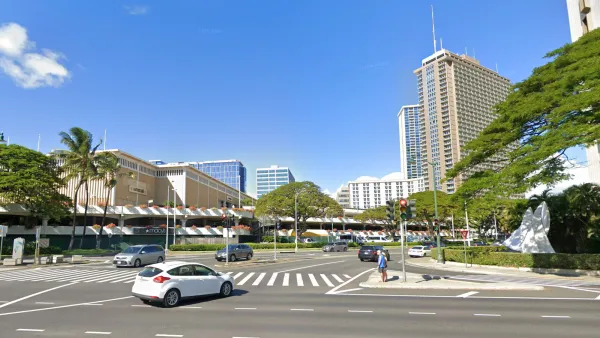
Hawaii DOT takes action after reporters call attention to dangerous crosswalk
The state made changes to a treacherous intersection after reporting revealed that traffic light timing was posting a threat to pedestrians.

Crosswalks Near NYC Schools More Dangerous Than Average
A child and a crossing guard were killed in school crosswalks within one week as the NYPD cuts crossing guard jobs.
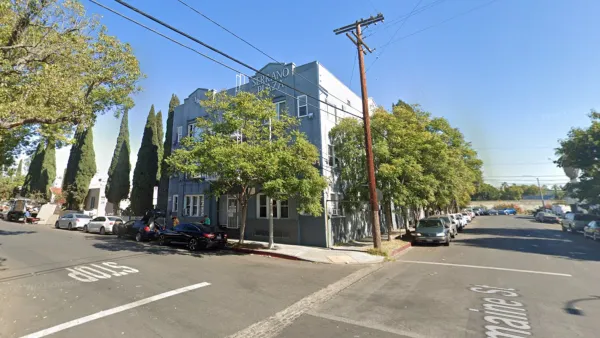
DIY Crosswalks Appear in Hollywood
A group claiming the city of Los Angeles fails to protect pedestrians is taking action on their own, painting a set of crosswalks at a busy residential intersection.

Planetizen Federal Action Tracker
A weekly monitor of how Trump’s orders and actions are impacting planners and planning in America.

The state-sanctioned urbicide of Austin
People don’t kill cities. Freeways do.

US to reduce Colorado River water deliveries to Mexico
A new Colorado Treaty amendment reduces Mexico’s Colorado River water allocation by 250,000 acre feet.

Baltimore to break ground on $50 million Transit Priority Project
The project will bring faster bus trips, safer streets and better bike connections to Baltimore.

Airbnb launches $250 million 'last-dollar financing' housing accelerator, makes first investment in Austin
The company will put $6.4 million towards affordable housing development in Texas’ capital.

Guerilla urbanists are building DIY bus stop benches in Chicago
A before-and-after of one of the bus stops with a new bench. The new benches are not officially sanctioned or permitted, but the residents who placed them hope they will be the start of a network of DIY benches across the city.

FREE Course: Walkable City 1: Why Walkability?
After describing his path towards focusing on walkability as the essence of good planning, Jeff Speck marches through his five principal reasons for making more walkable places.
Reinventing Malls: Planning Alchemy—Turning Gray Fields Into Gold
The course focuses on the opportunities and imperatives that shape reinvention of mall sites.

Eagle County Government
Harvard University Graduate School of Design
Nashville Planning Department
The Architects Foundation
University of Cincinnati Online
The Pocatello Development Authority
The Urban Renewal Agency of the City of Pocatello
Journal of the American Planning Association