Colorful, engaging crosswalks aren’t the norm, but they’re popping up around the country. And while they aren’t in line with federal guidelines, they have transformed streets and intersections.


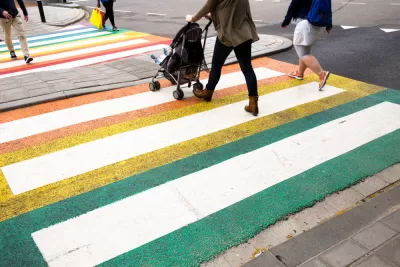
Brett Dahlberg reports on the creative crosswalks of Rochester, New York, including one near a music school that looks like piano keys. "Just off Main Street, in Rochester's Beechwood neighborhood, there's another colorful intersection. The sidewalks here are green, the crosswalks are blue, and there's a big, red and yellow sun that covers the whole street. The art has been here a little over a year."
Advocates say these interesting crosswalks bring benefits far beyond just adding an artistic element to public spaces. They also slow down traffic, make spaces safer and more inviting, and get people out of their cars. "[Rochester resident Joseph] Hutchings says the intersection art makes a big difference for families. He says there are more children outside playing and more adults walking places or riding bikes," notes Dahlberg.
But, he says, federal guidelines for crosswalks are specific about features like the transverse white lines, line spacing, and the type of reflective paint that needs to be used. Some cities have abandoned their colorful crosswalks after the Federal Highway Administration deemed them distracting to drivers.
FULL STORY: Walking On Painted Keys: Creative Crosswalks Meet Government Resistance

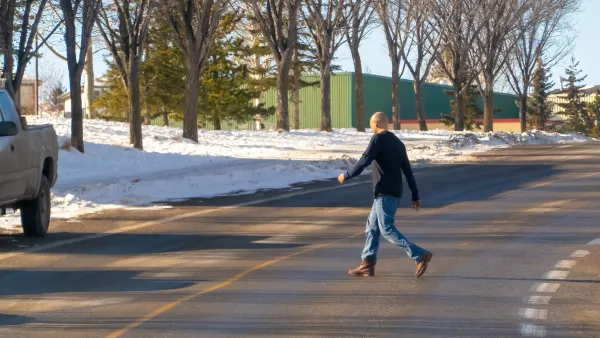
Study: Midblock pedestrian crossings are more common than we think
One in six crossings in the study took place outside of a marked crosswalk.
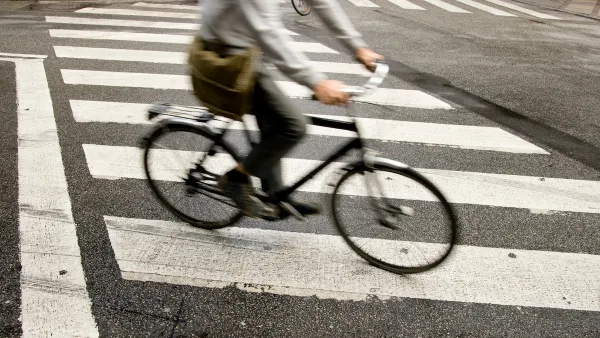
A Little-Known Loophole Puts Cyclists at Risk
Crosswalk laws in most U.S. states don’t offer legal protections to people on bikes, scooters, or mobility devices.
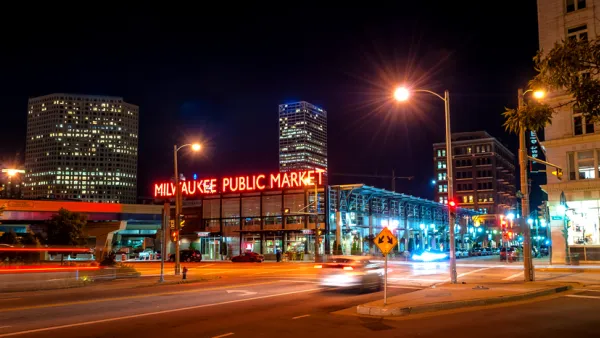
Milwaukee Traffic Calming Projects Take Aim at Reckless Driving
The city is using restriping, delineators, and other traffic calming measures to fight reckless driving and improve pedestrian safety.

Planetizen Federal Action Tracker
A weekly monitor of how Trump’s orders and actions are impacting planners and planning in America.

The state-sanctioned urbicide of Austin
People don’t kill cities. Freeways do.

US to reduce Colorado River water deliveries to Mexico
A new Colorado Treaty amendment reduces Mexico’s Colorado River water allocation by 250,000 acre feet.

Amtrak not solely to blame for New Jersey commuter rail's unreliability, report finds
A new study from the Garden State Initiative found that NJ Transit’s budget grew 20% across a 4 year period, but reliability declined significantly over the same period.

EPA erases limits on planet-warming pollution from power plants
Under Monday’s plan, power plants would still have some limits on how much mercury, arsenic and other contaminants they can emit.

Phoenix announces new on-demand transit service, more frequent RAPID buses
Both new services will launch in October, and are part of Phoenix's Project Effective Access Solutions for Easing Congestion.

FREE Course: Walkable City 1: Why Walkability?
After describing his path towards focusing on walkability as the essence of good planning, Jeff Speck marches through his five principal reasons for making more walkable places.
Reinventing Malls: Planning Alchemy—Turning Gray Fields Into Gold
The course focuses on the opportunities and imperatives that shape reinvention of mall sites.

Eagle County Government
Harvard University Graduate School of Design
Nashville Planning Department
The Architects Foundation
University of Cincinnati Online
The Pocatello Development Authority
The Urban Renewal Agency of the City of Pocatello
Journal of the American Planning Association