Crosswalk laws in most U.S. states don’t offer legal protections to people on bikes, scooters, or mobility devices.


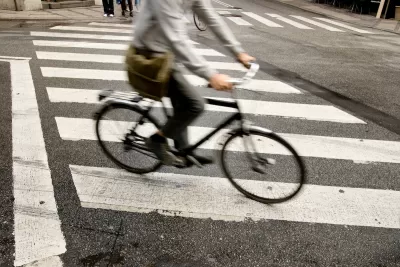
According to a piece by Cara Hamann in the Des Moines Register, “There is a glaring gap in crosswalk laws in the United States, but this loophole is often unknown, so little is being done to fix it.”
Hamann is referring to the fact that many crosswalk laws only explicitly protect pedestrians—people on foot—excluding people on bikes or using wheelchairs, scooters, or other mobility devices. This matters because, in cases where a driver fatally struck a person on a bike or other device, the driver can walk away with no criminal charges.
For Hamann, an injury epidemiologist, “Bicycles, wheelchairs, scooters, and other devices move humans whose lives matter and they should be legally protected in crosswalks just like people on foot.”
The solution, Hamann writes, is simple: “change the word ‘pedestrian’ to ‘persons’” and eliminate the loophole in state laws.
FULL STORY: The most deadly traffic policy you've never heard of

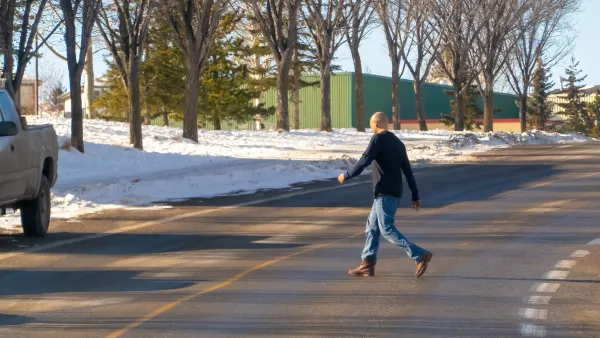
Study: Midblock pedestrian crossings are more common than we think
One in six crossings in the study took place outside of a marked crosswalk.
Reducing Cyclist-Pedestrian Accidents in Japan
New rules in Japan say that cyclists are liable for accidents between themselves and pedestrians, especially on the country's sidewalks.
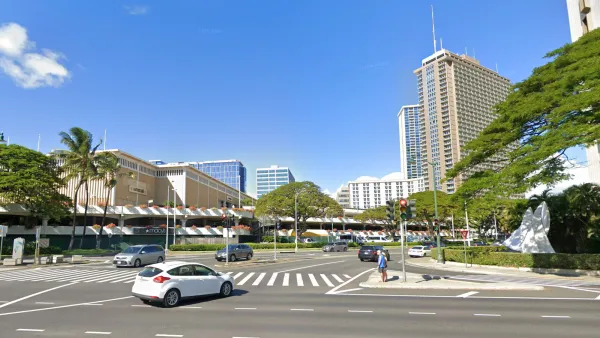
Hawaii DOT takes action after reporters call attention to dangerous crosswalk
The state made changes to a treacherous intersection after reporting revealed that traffic light timing was posting a threat to pedestrians.

The state-sanctioned urbicide of Austin
People don’t kill cities. Freeways do.

US to reduce Colorado River water deliveries to Mexico
A new Colorado Treaty amendment reduces Mexico’s Colorado River water allocation by 250,000 acre feet.

New Jersey’s second-largest city bans standalone data centers
Jersey City will continue to allow co-location facilities, such as those meant for research institutions that store their own data.

Amtrak not solely to blame for New Jersey commuter rail's unreliability, report finds
A new study from the Garden State Initiative found that NJ Transit’s budget grew 20% across a 4 year period, but reliability declined significantly over the same period.

EPA erases limits on planet-warming pollution from power plants
Under Monday’s plan, power plants would still have some limits on how much mercury, arsenic and other contaminants they can emit.

Phoenix announces new on-demand transit service, more frequent RAPID buses
Both new services will launch in October, and are part of Phoenix's Project Effective Access Solutions for Easing Congestion.

FREE Course: Walkable City 1: Why Walkability?
After describing his path towards focusing on walkability as the essence of good planning, Jeff Speck marches through his five principal reasons for making more walkable places.
Reinventing Malls: Planning Alchemy—Turning Gray Fields Into Gold
The course focuses on the opportunities and imperatives that shape reinvention of mall sites.

Eagle County Government
Harvard University Graduate School of Design
Nashville Planning Department
The Architects Foundation
University of Cincinnati Online
The Pocatello Development Authority
The Urban Renewal Agency of the City of Pocatello
Journal of the American Planning Association