People on bikes or men on bikes?


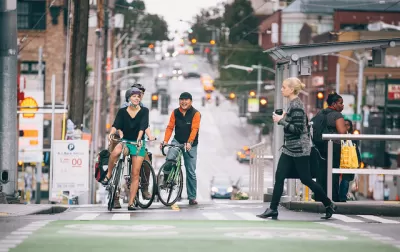
Gene Balk digs into data from Seattle to evaluate the demographics of people on bikes in Seattle. The finding of this analysis: most people on bikes in Seattle are actually men on bikes.
Citing data from Nielsen, Balk places the share of white male cyclists in the city at 55 percent. But, men of color are just as likely to bike, according to the data. The real discrepancy is between the genders.
"In the Seattle area, of the estimated 169,000 cyclists, 128,000 are men — about 76%," according to Balk. "While men here are a little more likely than the national average to bike, women are a little less likely. In fact, among large metro areas, there is only one where cycling is more male-skewed: Sacramento, California."
Balk interviews Aviva Stephens, creator of the blog Biking in the Rain, for an explanation of why more women don't bike Seattle. Stephens, "can reel off a number of reasons why women are less likely to bike," explains Balk. "But the lack of a connected network of bikes lanes is at the top of the list."
Read the full story: Who bikes in Seattle? Bicycling gender gap one of the biggest in the U.S.

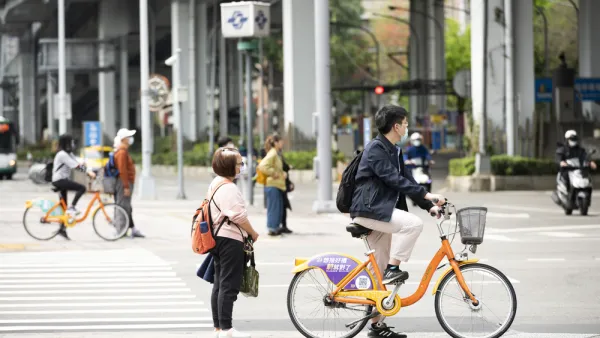
Bikes Gain Popularity as People Ditch Subways and Buses
Bike counts and bike share rides are increasing in two of the country's largest cities as commuters look for transportation modes that allow for physical distancing.
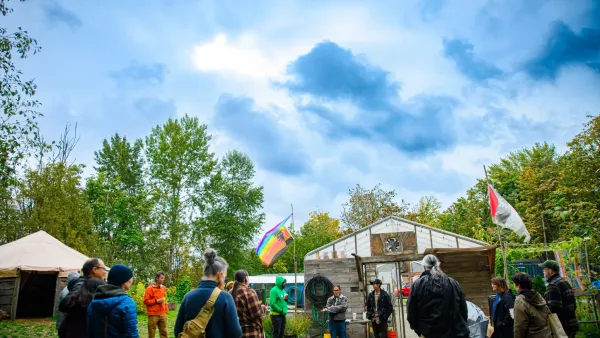
Seattle land ‘rematriated’ to Duwamish Tribe
Volunteer efforts transformed the space from a hazardous waste zone to a community gathering spot.
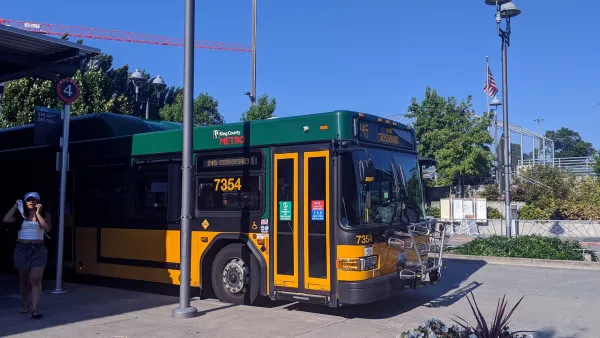
King County Metro adds 3,000 weekly bus trips, more connections to rail
King County Metro and Sound Transit are both making major adjustments to their bus networks to improve light rail connectivity across the region.

Planetizen Federal Action Tracker
A weekly monitor of how Trump’s orders and actions are impacting planners and planning in America.

The state-sanctioned urbicide of Austin
People don’t kill cities. Freeways do.

US to reduce Colorado River water deliveries to Mexico
A new Colorado Treaty amendment reduces Mexico’s Colorado River water allocation by 250,000 acre feet.

Nation's most wind-powered state turns to coal as data centers increase energy demand
For the first time in decades, Iowa has increased its generation of coal power.

NYC cools commuters with city's first rain garden above a bus stop
New York City officials say the plants in the rain garden can absorb 16 gallons of rainwater during heavy storms.

Brightline West’s future may rely on $6 billion federal loan
The company has until Nov. 2 to make a $400 million equity investment into its proposed high-speed rail line.

FREE Course: Walkable City 1: Why Walkability?
After describing his path towards focusing on walkability as the essence of good planning, Jeff Speck marches through his five principal reasons for making more walkable places.
Reinventing Malls: Planning Alchemy—Turning Gray Fields Into Gold
The course focuses on the opportunities and imperatives that shape reinvention of mall sites.

Greater Baltimore Committee
Eagle County Government
Harvard University Graduate School of Design
The Architects Foundation
University of Cincinnati Online
The Pocatello Development Authority
The Urban Renewal Agency of the City of Pocatello
Journal of the American Planning Association