The Indiana Utility Regulatory Commission is concerned about the lack of renewable options for replacing a coal plant in Wabash County.



"The Indiana Utility Regulatory Commission [on April 24] rejected a Vectren proposal to build an 850-megawatt natural gas-fueled power plant to replace its aging coal-burning A.B. Brown Generating Station" in Wabash County, Indiana, reports Mark Wilson for The Evansville Courier & Press. The new power plant would have replaced Brown's two 245-megawatt generating units and one 90-megawatt unit at Vectren's F.C. Culley power plant in Warrick County.
The commission, which is required by state statute to make decisions in the public interest to ensure the utilities provide safe and reliable service at just and reasonable rates, based their decision on the cost and economic risk to ratepayers of the $781 million natural gas power plant replacement proposed by Vectren rather than environmental reasons which would favor carbon-free renewable energy sources such as wind and solar.
According to the 38-page order posted on the IURC website [pdf]: "The proposed large scale single resource investment for a utility of Vectren South’s size does not present an outcome which reasonably minimizes the potential risk that customers could sometime in the future be saddled with an uneconomic investment or serve to foster utility and customer flexibility in an environment of rapid technological innovation."
The IURC order took Vectren to task for not adequately considering various combinations of other less expensive alternatives, especially renewable energy sources, of which it said there was a lack of evidence that Vectren "...made a serious effort to determine the price and availability of renewables."
In essence, the commission was concerned that the new natural gas plant might become a stranded asset, defined by the Carbon Tracker Initiative, a London-based not-for-profit think tank researching the impact of climate change on financial markets, as:
[F]ossil fuel supply and generation resources which, at some time prior to the end of their economic life (as assumed at the investment decision point), are no longer able to earn an economic return (i.e. meet the company’s internal rate of return), as a result of changes associated with the transition to a low-carbon economy.
The commission's action was welcomed by the environmental community.
"I am grateful to the IURC for this decision,” said Wendy Bredhold, senior campaign representative with Sierra Club’s Beyond Coal Campaign. “Vectren made the right decision to retire its coal plants and now has an opportunity within their 20-year planning process this year to do the right thing and replace coal with clean and affordable wind, solar, energy efficiency and battery storage.”
Evansville-based Vectren, which serves 145,000 electric customers in southwestern Indiana, is not anti-renewable energy. On March 20, the utility received approval from IURC to build a 50-megawatt (MW) solar farm. The approval "marks the next step toward Vectren’s carbon reduction plan of lowering carbon emissions by 60% over 2005 levels by 2024," according to their news release [pdf].
However, the Hoosier State is heavily dependent on coal power, reports Gavin Blade of Utility Dive on the commission's denial of the proposed natural gas plant.
The decision is notable in a conservative state traditionally served by centralized coal generators that still derives more than 70% of its electricity from the resource. Each of the IURC's regulators was appointed by a Republican governor, typically more friendly to fossil fuel interests.
Scott Pruitt back in the news
The IURC did approve the part of the utility's plan "to retrofit Vectren’s largest, most-efficient coal-fired generation unit, Culley Unit 3 (270 MW), to ensure it remains in compliance with EPA rules related to coal ash and wastewater handling," states their April 24 press release [pdf]. Surprisingly, it was opposed by the coal industry, including the former administrator of the U.S. Environmental Protection Agency. "Coal interests argued at the IURC that potential changes to the federal rules mean that regulators should delay any upgrades or plant retirements, as they may not be needed," reports Blade.
Coal interests also took that argument to the state legislature this month, with Pruitt lobbying GOP lawmakers to institute a generation moratorium that would prevent Vectren and NIPSCO [Northern Indiana Public Service Company] from replacing their old coal plants with new assets. But the legislature twice refused to take up that language, and regulators rejected the notion as well.
Finally, Blade reports on some surprising information the Affordable Clean Energy rule (ACE), EPA's lax replacement of the more rigorous Clean Power Plan rule proposed under President Obama (but never implemented). Apparently, from a utility's perspective, it is even costlier than the Obama plan while paradoxically causing up to 1,400 premature deaths annually.
During testimony, Vectren Vice President of Environmental Affairs and Corporate Sustainability Angila Retherford said that "ACE would increase uncertainty and could actually increase the cost of compliance," according to the order. "For units with high heat rates — such as A.B. Brown — ACE would cause significant future compliance costs."
Hat tip to Ned Ford.
FULL STORY: Denied: Indiana Utility Regulatory Commission rejects Vectren's power plant proposal

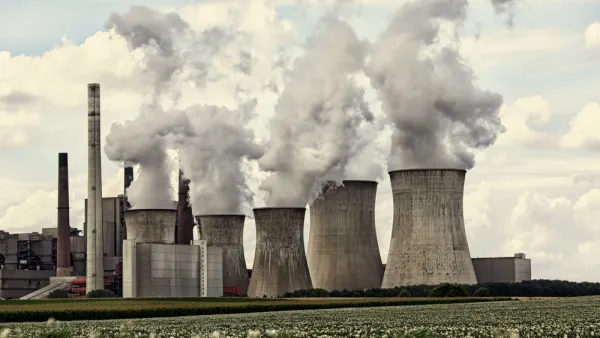
It's Official: Obama's Clean Power Plan Has Been Replaced by the Trump Administration
It took less than a year for the EPA to finalize the Affordable Clean Energy rule, which will allow older coal-burning plants to continue operating, in the Trump administration's most consequential environmental rollback accomplished to date.
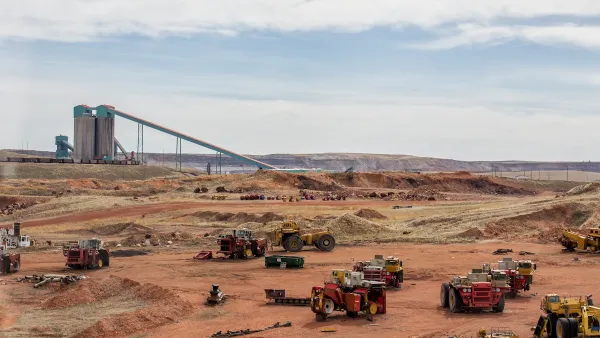
A Win for ‘Keep it in the Ground’
Coal mining in Wyoming will take a major hit as a result of a U.S. Department of Interior plan to cease future leasing of coal mines in the nation's most productive coal mining basin. The decision casts a spotlight on the presidential election.
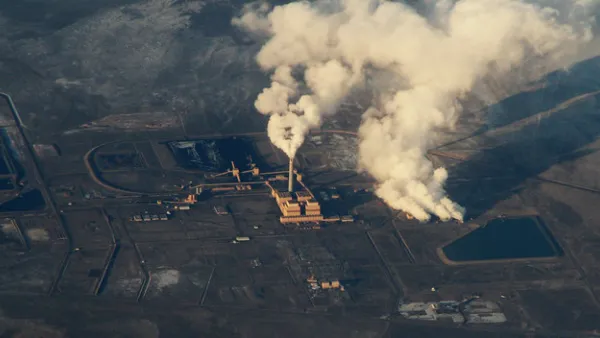
Shuttering a Large Coal Plant: A Tale of Two States
Environmentalists in California are upset that Los Angeles will build a new 840-megawatt natural gas plant to replace a 1,800-megawatt coal plant. The coal plant has been crucial to the economic development of Millard County, Utah.

The state-sanctioned urbicide of Austin
People don’t kill cities. Freeways do.

US to reduce Colorado River water deliveries to Mexico
A new Colorado Treaty amendment reduces Mexico’s Colorado River water allocation by 250,000 acre feet.

New Jersey’s second-largest city bans standalone data centers
Jersey City will continue to allow co-location facilities, such as those meant for research institutions that store their own data.

Amtrak not solely to blame for New Jersey commuter rail's unreliability, report finds
A new study from the Garden State Initiative found that NJ Transit’s budget grew 20% across a 4 year period, but reliability declined significantly over the same period.

EPA erases limits on planet-warming pollution from power plants
Under Monday’s plan, power plants would still have some limits on how much mercury, arsenic and other contaminants they can emit.

Phoenix announces new on-demand transit service, more frequent RAPID buses
Both new services will launch in October, and are part of Phoenix's Project Effective Access Solutions for Easing Congestion.

FREE Course: Walkable City 1: Why Walkability?
After describing his path towards focusing on walkability as the essence of good planning, Jeff Speck marches through his five principal reasons for making more walkable places.
Reinventing Malls: Planning Alchemy—Turning Gray Fields Into Gold
The course focuses on the opportunities and imperatives that shape reinvention of mall sites.

Eagle County Government
Harvard University Graduate School of Design
Nashville Planning Department
The Architects Foundation
University of Cincinnati Online
The Pocatello Development Authority
The Urban Renewal Agency of the City of Pocatello
Journal of the American Planning Association